
Weight Loss Education, Weight Loss Medication
Zepbound vs Wegovy: 9 Essential Differences for Patients

Jul
Zepbound vs Wegovy is one of the most common comparisons patients make when considering medical weight management. Both are prescription medicines used alongside nutrition and physical activity, but they contain different active ingredients and do not work in exactly the same way. Zepbound contains tirzepatide, while Wegovy contains semaglutide.
The better choice is not simply the medicine associated with a larger average number in a study. Your health history, treatment goal, previous side effects, other medicines, insurance coverage, and ability to continue treatment all matter. This Zepbound vs Wegovy guide explains the evidence without promising that one result will apply to every patient.
Zepbound vs Wegovy: Quick Comparison
| Feature | Zepbound | Wegovy |
|---|---|---|
| Active ingredient | Tirzepatide | Semaglutide |
| Main hormone targets | GIP and GLP-1 receptors | GLP-1 receptor |
| Usual injection schedule | Once weekly | Once weekly |
| Dose approach | Gradual escalation | Gradual escalation |
| Common concerns | Nausea, diarrhea, vomiting, constipation | Nausea, diarrhea, vomiting, constipation |
| Patient decision | Individual medical review required | Individual medical review required |
This table is an overview, not a dosing or switching instruction. The current FDA Zepbound prescribing information and FDA Wegovy prescribing information contain the complete approved uses, warnings, forms, and administration instructions.
9 Essential Zepbound vs Wegovy Differences
1. They contain different active ingredients
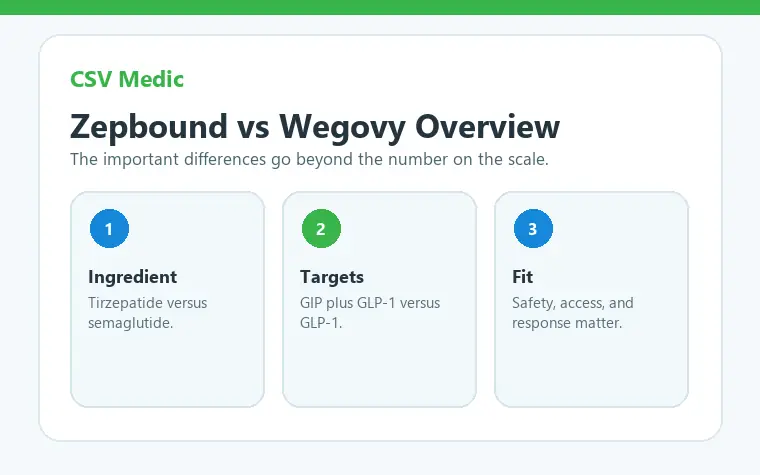
The first difference between Wegovy and Zepbound is the molecule. Wegovy uses semaglutide, a GLP-1 receptor agonist. Zepbound uses tirzepatide, which activates GIP and GLP-1 receptors. Both pathways can influence appetite, fullness, food intake, and metabolic signals, but a dual target does not automatically make Zepbound appropriate for every person.
2. Their approved uses are not identical
Approved uses can change as regulators review new evidence. The 2026 Wegovy label includes chronic weight reduction and cardiovascular-risk indications for qualifying patients, as well as additional approved uses described in the label. Zepbound is approved for chronic weight management in qualifying adults and for moderate-to-severe obstructive sleep apnea in adults with obesity. A provider should match the prescription to an approved indication and the patient’s medical needs.
3. Average weight-loss results differed in a direct trial
The phase 3b SURMOUNT-5 study directly compared tirzepatide with semaglutide in adults with obesity without diabetes. At 72 weeks, the average percentage change in body weight was about 20.2% with tirzepatide and 13.7% with semaglutide. That is useful Zepbound vs Wegovy weight loss evidence, but it is an average from a defined research population. Individual results can be lower, higher, or limited by tolerability and treatment discontinuation.
The study should not be read as a guarantee that Zepbound is better than Wegovy for every patient. A person who tolerates one medicine, can obtain it consistently, and follows an appropriate care plan may do better than someone who cannot remain on the medicine associated with a larger trial average.

4. Dose escalation and available forms differ
Both medicines use gradual dose escalation to reduce gastrointestinal problems, but their milligram amounts are not interchangeable. Wegovy and Zepbound also have product-specific forms and instructions. Never use the number printed on one prescription to calculate the dose of the other. The current label and the pharmacy instructions should guide administration.
5. Side effects overlap but may feel different
Zepbound vs Wegovy side effects commonly include nausea, diarrhea, vomiting, constipation, abdominal discomfort, and reduced appetite. Both labels also contain important warnings and contraindications. Personal tolerance can differ even when two medicines share a type of side effect. Our detailed Zepbound side-effects guide explains symptoms that deserve prompt medical attention.
6. Cost is determined by more than the list price
A Zepbound vs Wegovy cost comparison depends on insurance, diagnosis, prior authorization, deductible, pharmacy network, prescribed presentation, and any lawful assistance for which the patient qualifies. A lower advertised cash figure does not prove that a medicine will cost less after the plan processes the claim. Patients should verify the exact product and monthly out-of-pocket amount.
7. Insurance can favor one option
Coverage policies often determine whether Zepbound or Wegovy is practical. Some plans require a BMI threshold, a weight-related condition, documentation of previous treatment, or participation in a lifestyle program. Coverage may also differ by approved indication. The future CSV Medic guide on Wegovy insurance coverage will explain formularies, prior authorization, and appeals in detail.
8. Switching requires a new clinical plan
Switching from Wegovy to Zepbound or switching from Zepbound to Wegovy is not a simple dose conversion. A prescriber needs to consider the current dose, time since the last injection, side effects, glucose medicines, hydration, and the reason for changing treatment. Taking both together or overlapping doses without instructions can increase risk.
9. The best choice depends on the whole patient
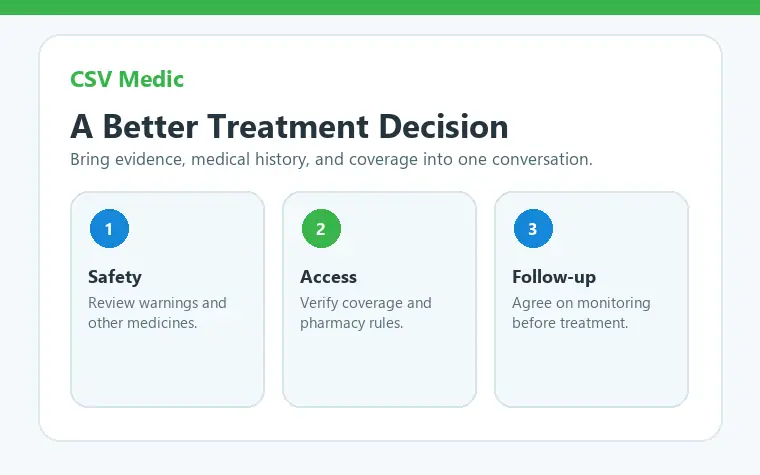
When patients ask which is better, Wegovy or Zepbound, the safest answer is that the decision is individual. A provider may consider cardiovascular disease, diabetes, sleep apnea, digestive disease, gallbladder or pancreatic history, kidney function, pregnancy plans, previous response, and other medicines. CSV Medic’s GLP-1 prescription guide describes the information usually reviewed before treatment.
How to Prepare for a Medication Comparison Visit
- Bring a complete medication and supplement list.
- Record previous weight-management treatments and why they stopped.
- Share any history of pancreatitis, gallbladder disease, severe digestive symptoms, kidney problems, or diabetic eye disease.
- Ask the insurer which product, strength, pharmacy, and indication are covered.
- Discuss pregnancy plans and the timing instructions in the current prescribing information.
- Agree on follow-up, nutrition, activity, hydration, and warning symptoms before the first dose.
Patients can also review CSV Medic’s medical weight-loss programs and online consultation guide to understand how medical screening and follow-up fit into care.
Frequently Asked Questions About Zepbound vs Wegovy
Is Zepbound better than Wegovy?
Tirzepatide produced greater average weight reduction than semaglutide in SURMOUNT-5, but that does not establish the best medicine for every patient. Tolerability, approved indication, access, and health history still matter.
What is the difference between Zepbound and Wegovy?
Zepbound contains tirzepatide and targets GIP and GLP-1 receptors. Wegovy contains semaglutide and targets the GLP-1 receptor. Their labels, dose schedules, forms, and approved uses also differ.
Which is better, Wegovy or Zepbound, for side effects?
Both can cause gastrointestinal side effects. One patient may tolerate Wegovy better while another may tolerate Zepbound better. Severe or persistent symptoms should be reviewed rather than managed by changing the dose independently.
Can you switch from Wegovy to Zepbound?
A licensed prescriber can determine whether a switch is reasonable and provide timing and starting-dose instructions. There is no safe universal conversion chart for patients to apply themselves.
Does Wegovy or Zepbound work faster?
Response is gradual and affected by dose escalation, adherence, side effects, nutrition, activity, and individual biology. Early scale changes should not be used to accelerate a prescribed schedule.
Can Wegovy and Zepbound be used together?
Their prescribing information does not support combining them. Do not overlap or combine GLP-1-based medicines unless a licensed clinician has provided a medically appropriate plan.
How to Interpret Wegovy vs Zepbound Results Responsibly
A Wegovy vs Zepbound weight loss comparison is useful only when the underlying studies are comparable. Check whether participants had diabetes, how long they remained in treatment, which doses were reached, and whether the analysis counted people who discontinued. A social-media before-and-after post supplies none of that context and cannot establish which medicine caused the change.
The Wegovy vs Zepbound side effects discussion also needs context. A symptom reported in a trial may be mild and temporary for one participant but treatment-limiting for another. Rates from separate studies should not be treated as a precise head-to-head ranking unless the populations and methods are aligned.
Patients often ask which is better Wegovy or Zepbound after seeing a large average result. The direct trial supports a meaningful group-level difference, yet medical decisions also require screening for contraindications, reviewing other medicines, discussing pregnancy plans, and confirming that follow-up and coverage are sustainable.
In practical terms, Wegovy vs Zepbound should be revisited after treatment begins. The care team can review appetite, nutrition, hydration, bowel symptoms, activity, weight trend, laboratory findings when appropriate, and whether the person can continue treatment safely. A well-tolerated plan that a patient can follow may be more valuable than chasing a study average without adequate monitoring.
A useful Zepbound vs Wegovy follow-up compares progress with the original health goal, not with another person’s result. A second Zepbound vs Wegovy review may be appropriate when coverage changes, side effects persist, or the expected clinical response has not developed after an adequate supervised trial.
For another treatment comparison, see Saxenda vs Zepbound. Patients ready to discuss their history can begin with CSV Medic’s consultation pathway.
Sources and Further Reading
The medical and regulatory information in this guide was checked against the following prescribing information, government guidance, clinical-trial records, and peer-reviewed studies.
- FDA Zepbound prescribing information (2026)
- FDA Wegovy prescribing information (2026)
- SURMOUNT-5 direct comparison study
- SURMOUNT-5 ClinicalTrials.gov record
- FDA Zepbound chronic weight-management approval
- FDA Zepbound obstructive-sleep-apnea approval
- STEP 5 two-year semaglutide study
- STEP 4 semaglutide maintenance study
- NIDDK prescription weight-management medications
About the Author and Medical Review
This article was medically reviewed and published by Dr Spencer and the CSV Medic editorial team in collaboration with licensed healthcare providers specializing in medical weight management. CSV Medic content is checked against current prescribing information, regulatory guidance, and peer-reviewed clinical research.
Medical Disclaimer
This article is for informational purposes only and does not constitute medical advice, diagnosis, or a prescription. Medication choice, dose, eligibility, insurance coverage, and monitoring must be determined by a licensed healthcare provider. Do not start, stop, switch, combine, or change the dose of any prescription medication without medical guidance. Seek urgent care for severe or rapidly worsening symptoms.
