
Weight Loss Education, Weight Loss Medication
Ozempic Alternatives: 9 Evidence-Based Options
Sep
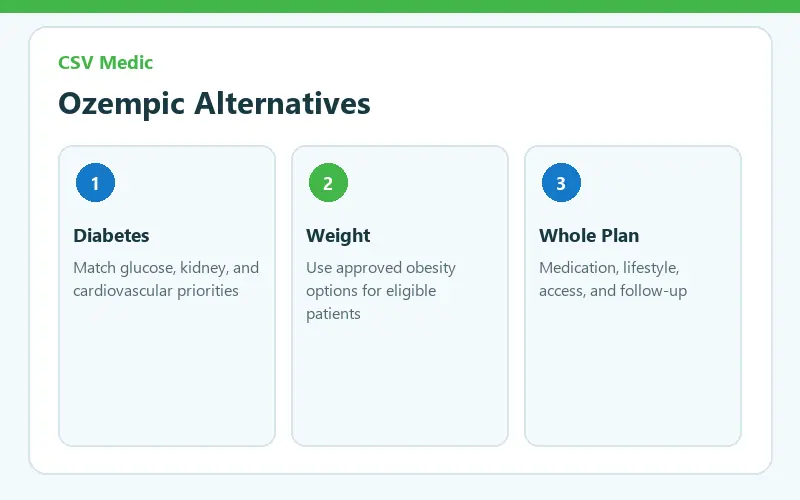
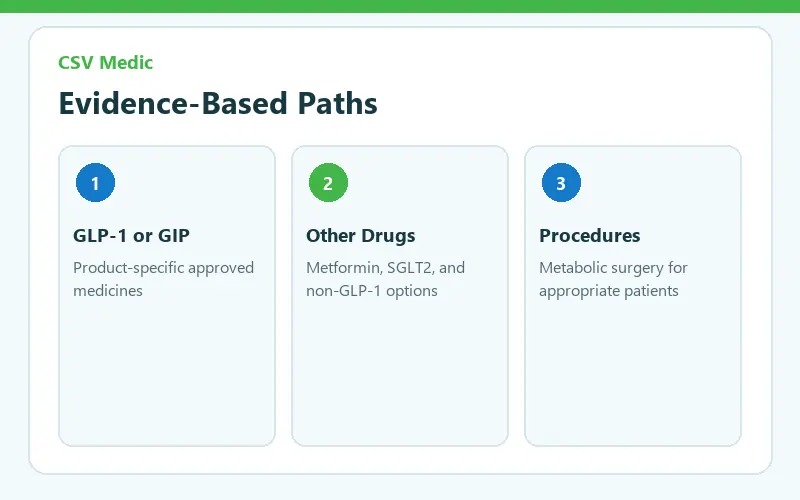
Ozempic alternatives depend on the problem being treated. For type 2 diabetes, alternatives may include other GLP-1 medicines, tirzepatide, metformin, SGLT2 inhibitors, DPP-4 inhibitors, sulfonylureas, insulin, and additional therapies selected around glucose, cardiovascular disease, kidney disease, cost, and adverse effects. For chronic weight management, FDA-approved options include Wegovy, Zepbound, Saxenda, Contrave, Qsymia, and orlistat products for eligible patients.
There is no single Ozempic alternative that is best for everyone. Ozempic has specific diabetes, cardiovascular, and kidney-risk indications, while many popular “natural Ozempic” products have not shown equivalent outcomes and are not substitutes for prescribed care.
This guide compares evidence-based medications, lifestyle treatment, metabolic surgery, cost strategies, and safety questions. It helps patients prepare for a clinician conversation without recommending a personal switch.
Key Takeaways
- The reason for using Ozempic determines which alternatives are medically relevant.
- Wegovy contains semaglutide but has different approved weight-management indications and instructions.
- Mounjaro and Zepbound contain tirzepatide under different diabetes and obesity labels.
- Other diabetes medicines may better fit kidney, cardiovascular, glucose, hypoglycemia, or cost priorities.
- Non-GLP-1 obesity medicines remain useful for some patients.
- Metabolic surgery is an evidence-based treatment, not a failure of willpower or medication.
- No supplement is a proven “natural Ozempic” equivalent.
- Compounded semaglutide is not an FDA-approved generic or automatically an appropriate substitute.
- Switching requires a plan for timing, dose, side effects, glucose, appetite, and medication interactions.
Why Do People Look for Ozempic Alternatives?
Common reasons include gastrointestinal side effects, lack of glucose response, insufficient weight change, contraindications, pregnancy plans, insurance denial, supply interruption, dislike of injections, or a preference for a treatment with different cardiovascular or kidney evidence.
The first question is not “Which drug is strongest?” It is “What outcome are we treating?” Ozempic may be prescribed for glycemic control, reduction of major cardiovascular events in certain adults, or kidney and cardiovascular risk reduction in certain adults with type 2 diabetes and chronic kidney disease.
The current FDA Ozempic label defines those uses. A substitute must be evaluated against the same clinical goal, not only against appetite suppression.
Ozempic Alternative Comparison
| Option | Main role | Route | Important distinction |
|---|---|---|---|
| Wegovy | Chronic weight management and label-specific risk reduction | Weekly injection or approved tablet presentation | Semaglutide brand with different indication and instructions |
| Mounjaro | Type 2 diabetes | Weekly injection | Tirzepatide diabetes brand |
| Zepbound | Chronic weight management; certain adults with obesity and OSA | Weekly injection | Tirzepatide obesity brand |
| Trulicity | Type 2 diabetes; label-specific CV indication | Weekly injection | Dulaglutide, not semaglutide |
| Victoza | Type 2 diabetes; label-specific CV indication | Daily injection | Liraglutide diabetes brand |
| Rybelsus | Type 2 diabetes | Daily tablet | Oral semaglutide with strict administration requirements |
| Metformin | Type 2 diabetes | Tablet/liquid | Longstanding first-line option for many patients |
| SGLT2 inhibitor | Type 2 diabetes; product-specific heart/kidney benefits | Tablet | Different mechanism and safety profile |
1. Wegovy for Chronic Weight Management
Wegovy contains semaglutide, but it is not simply Ozempic with a new label. It has approved chronic weight-management indications, product-specific dosing, devices, and clinical evidence. Current labeling includes injection and tablet presentations, and FDA approved a higher-dose Wegovy HD injection in 2026 for certain adults.
Wegovy may be relevant when the primary diagnosis is obesity or overweight with a qualifying weight-related condition. It is not automatically appropriate when Ozempic was selected for diabetes, kidney, or cardiovascular indications.
Compare Wegovy versus Ozempic and review the FDA Wegovy label.
2. Mounjaro or Zepbound
Mounjaro and Zepbound contain tirzepatide, a dual GIP and GLP-1 receptor agonist. Mounjaro is the diabetes brand; Zepbound is the chronic weight-management brand and has an additional approved use for certain adults with obesity and obstructive sleep apnea.
Tirzepatide may produce greater average weight reduction than some comparators in trials, but averages do not decide individual treatment. Gastrointestinal effects, gallbladder and pancreatitis warnings, thyroid C-cell tumor contraindications, other medicines, pregnancy plans, and access remain important.
The FDA Zepbound approval announcement and Mounjaro versus Ozempic provide context.
3. Other GLP-1 Receptor Agonists
Other approved GLP-1 medicines include dulaglutide, liraglutide, and exenatide products for diabetes, plus Saxenda for chronic weight management. They differ in injection frequency, cardiovascular data, kidney considerations, age indications, tolerability, devices, and cost.
An older drug is not necessarily a poor choice. Daily liraglutide may offer a different stopping experience or insurance pathway, while weekly dulaglutide may fit a diabetes plan. Selection should use current guidelines and the product label.
The American Diabetes Association Standards of Care organize treatment around cardiovascular, kidney, glucose, weight, hypoglycemia, and patient-priority factors.
4. Metformin
Metformin remains a common foundational treatment for type 2 diabetes. It improves insulin sensitivity and reduces hepatic glucose production. It is available as an inexpensive generic and does not usually cause hypoglycemia alone.
Metformin’s average weight effect is smaller than that seen in obesity trials of semaglutide or tirzepatide. It can cause gastrointestinal symptoms and may contribute to vitamin B12 deficiency with long-term use. Kidney function affects eligibility and dosing.
Metformin is an alternative for some treatment goals, not a direct replacement for every Ozempic indication.
5. SGLT2 Inhibitors
SGLT2 inhibitors such as empagliflozin and dapagliflozin increase urinary glucose excretion. Product-specific evidence supports heart-failure and chronic-kidney-disease benefits in addition to glucose lowering.
Risks can include genital infections, volume depletion, and rare diabetic ketoacidosis, sometimes with glucose levels lower than expected. Surgery, fasting, acute illness, and very low-carbohydrate diets require planning.
For a patient whose priority is heart failure or kidney disease, an SGLT2 inhibitor may be part of the plan with or without a GLP-1 medicine. It is not chosen solely by comparing pounds lost.
The NIDDK diabetes medicines overview explains major medication classes.
6. DPP-4 Inhibitors, Sulfonylureas, and Insulin
DPP-4 inhibitors are oral glucose-lowering medicines with modest effects and generally neutral weight impact. They should not normally be combined with a GLP-1 receptor agonist because the mechanisms overlap without adding meaningful benefit.
Sulfonylureas can lower glucose effectively and are often inexpensive, but they can cause hypoglycemia and weight gain. Insulin is essential in type 1 diabetes and may be needed in type 2 diabetes when hyperglycemia is severe, during pregnancy, acute illness, or when other approaches are insufficient.
These are legitimate medicines, not “old failures.” Their suitability depends on the patient’s physiology, glucose pattern, risk, and goals.
7. Non-GLP-1 Weight-Loss Medicines
For chronic weight management, non-GLP-1 options include:
- naltrexone/bupropion extended release as Contrave;
- phentermine/topiramate extended release as Qsymia;
- orlistat as prescription Xenical or lower-dose over-the-counter Alli;
- short-term sympathomimetic medicines for selected patients under current labeling.
Each has a different mechanism and contraindication profile. Contrave requires attention to uncontrolled hypertension, seizure risk, opioid use, and psychiatric history. Qsymia requires strict pregnancy prevention because topiramate can cause fetal harm. Orlistat reduces dietary fat absorption and can cause gastrointestinal effects and affect fat-soluble vitamins or other medicines.
CSV Medic compares Xenical versus Alli and provides a Contrave results and safety guide.
The NIDDK prescription medications for obesity resource gives an evidence-based overview.
8. Metabolic and Bariatric Surgery
Metabolic surgery is among the most effective treatments for severe obesity and can improve diabetes, sleep apnea, blood pressure, mobility, and quality of life. Procedures include sleeve gastrectomy and Roux-en-Y gastric bypass, with selection based on anatomy, reflux, diabetes, nutrition, and risk.
The 2022 ASMBS and IFSO indications statement expanded evidence-based eligibility beyond older rules.
Surgery requires preparation, lifelong nutritional monitoring, and follow-up. It can be considered before or after medication, and some patients use both at different stages.
9. Intensive Lifestyle and Behavioral Treatment
Lifestyle treatment is not merely “try harder.” Effective programs use structured nutrition, activity, sleep, behavioral strategies, monitoring, and support. They can improve health with or without medication.
Useful elements include:
- a sustainable energy deficit without nutrient deprivation;
- adequate protein and fiber based on medical needs;
- resistance exercise to preserve strength and lean tissue;
- aerobic activity adapted to fitness and disability;
- screening for sleep apnea and inadequate sleep;
- review of medicines that contribute to weight gain;
- cognitive and behavioral support;
- a maintenance plan for plateaus and regain.
The USPSTF behavioral weight-loss recommendation supports intensive, multicomponent interventions for adults with obesity.
Is There a Natural Ozempic?
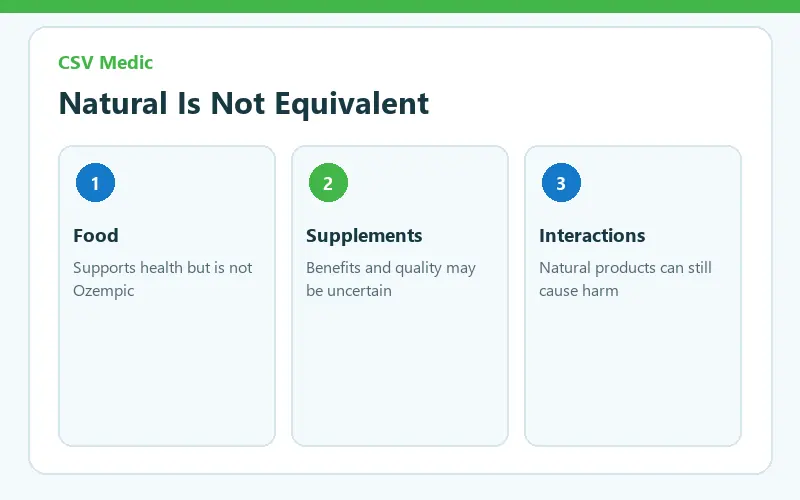
No food, herb, fiber powder, probiotic, or supplement is clinically equivalent to Ozempic. Searches for natural Ozempic often lead to berberine, psyllium, green tea, apple cider vinegar, or probiotic products. Some may affect glucose, satiety, or digestion modestly, but they have not reproduced Ozempic’s product-specific cardiovascular, kidney, glucose, and safety evidence.
“Natural” does not mean risk free. Supplements can interact with diabetes medicines, anticoagulants, transplant medicines, and other drugs. Product contamination and inaccurate labeling can occur.
Fiber-rich foods, protein, sleep, and physical activity support metabolic health, but they should be described as foundations of care rather than drug substitutes.
Are Compounded Products Ozempic Alternatives?
Compounding can be appropriate for a patient whose clinical needs cannot be met by an available FDA-approved product when legal requirements are satisfied. A compounded product is not FDA approved and is not a generic Ozempic.
FDA has warned about dosing errors, fraudulent labels, adverse events, and salt forms in unapproved semaglutide products. The agency’s GLP-1 compounding concerns should be reviewed before treating a low price or online questionnaire as evidence of quality.
CSV Medic’s peptide therapy safety guide explains how approval, compounding, and research-use products differ.
How to Switch Safely

Switching from Ozempic to another medicine requires a plan for:
- the reason Ozempic was prescribed;
- the last dose and current exposure;
- the starting instructions for the new medicine;
- nausea, vomiting, bowel symptoms, and hydration;
- glucose monitoring and hypoglycemia risk;
- insulin or sulfonylurea adjustment;
- pregnancy planning;
- kidney, retinal, gallbladder, and gastrointestinal history;
- prior authorization and supply continuity.
Do not overlap medicines containing semaglutide or combine GLP-1 therapies without explicit product-specific guidance. A gap or transition that is appropriate for one patient may be unsafe for another.
Cost and Access Strategies
Lower-cost options may include a generic diabetes medicine, a non-GLP-1 obesity medicine, insurance formulary exception, manufacturer assistance for eligible patients, or a structured lifestyle program. The least expensive medication is not necessarily the least expensive overall if it fails the treatment goal or creates adverse effects.
Review:
- the full annual cost, not only the first month;
- consultation and laboratory fees;
- insurance criteria and renewal rules;
- shipping and supplies;
- the plan during shortages;
- whether advertised prices require a membership;
- whether the listed product is branded, compounded, or research use only.
CSV Medic’s Ozempic cost guide gives a framework for comparing costs.
How Alternatives to Ozempic Are Chosen
Alternatives to Ozempic should be ranked against the patient’s main clinical priority rather than against one viral outcome. A patient with established heart failure may need a different medication emphasis than a patient with severe hyperglycemia, chronic kidney disease, obesity without diabetes, recurrent hypoglycemia, or a near-term pregnancy plan.
Clinicians also consider how a drug fits the rest of the regimen. Some combinations add complementary benefits, while others duplicate a pathway, increase gastrointestinal burden, or raise hypoglycemia risk. Kidney function, liver disease, eye disease, pancreatitis history, gallbladder symptoms, gastrointestinal motility, blood pressure, and mental-health history can change the choice.
Cost and continuity are clinical factors. A drug that works only while introductory pricing lasts may not support durable care. Before switching, confirm prior authorization, the dispensing pharmacy, expected supply, monitoring costs, and what happens during travel or a shortage.
Searches for drugs like Ozempic often mix diabetes treatment with weight-loss treatment. That can lead to unsafe comparisons. A medication may lower glucose without an obesity indication, support weight management without the same kidney data, or provide cardiovascular benefit in a different population. The prescription should preserve the original treatment goal while improving the specific problem that prompted the switch.
Finally, response should be reassessed after enough time at a tolerated therapeutic dose. Weight, A1C, blood pressure, symptoms, strength, nutrition, and quality of life can all matter. If benefit does not justify risk, burden, or cost, another approach may be more appropriate.
Patient Discussions Are Not Comparative Trials
A Reddit discussion comparing Mounjaro and Ozempic and patient forums can reveal common concerns about appetite, side effects, and insurance. They cannot establish which drug is safer or more effective for an individual.
People may use different diagnoses, doses, sources, and concurrent treatments. Use anecdotes to create questions for a clinician, not to choose or switch medication.
Frequently Asked Questions
What is the closest alternative to Ozempic?
It depends on the indication. Wegovy contains semaglutide for chronic weight management, while other GLP-1 and diabetes medicines may address different goals.
Is Mounjaro better than Ozempic?
Neither is universally better. Trial averages, diabetes control, cardiovascular and kidney priorities, side effects, and access must be considered.
What drugs are like Ozempic?
Other GLP-1 receptor agonists include semaglutide, dulaglutide, liraglutide, and exenatide products. Tirzepatide activates both GIP and GLP-1 receptors.
Is there a natural Ozempic alternative?
No supplement or food is equivalent to Ozempic. Lifestyle measures support health but should not be marketed as the same treatment.
Can metformin replace Ozempic?
Metformin may be appropriate for some diabetes goals but does not replicate every Ozempic indication or outcome.
What is an Ozempic alternative for weight loss?
FDA-approved options include Wegovy, Zepbound, Saxenda, Contrave, Qsymia, and orlistat products for eligible patients, plus intensive lifestyle care and metabolic surgery.
Can I use compounded semaglutide instead?
Only after a qualified prescriber determines a legitimate need and a compliant licensed pharmacy is verified. It is not an FDA-approved generic.
Are there oral alternatives?
Yes. Diabetes and obesity treatment include oral medicines, but suitability depends on the diagnosis and safety profile. Current Wegovy labeling also includes an oral presentation with specific instructions.
What if Ozempic causes severe side effects?
Contact the prescriber promptly. Severe abdominal pain, persistent vomiting, dehydration, allergic symptoms, or major vision changes may require urgent care.
Will weight return after switching?
Weight can change when treatment changes. A long-term nutrition, activity, behavioral, and medication plan can reduce avoidable regain.
Conclusion
Ozempic alternatives range from other GLP-1 and dual-agonist medicines to metformin, SGLT2 inhibitors, non-GLP-1 obesity drugs, intensive lifestyle treatment, and metabolic surgery. The right option must match the original indication and the patient’s medical priorities. “Natural Ozempic” marketing and unapproved compounded products should not be treated as proven equivalents.
Browse CSV Medic’s weight-loss programs and weight-loss medications or contact the team for information about legally available products and pharmacy services. A clinician must determine eligibility and the safest transition.
Medical disclaimer: This article is educational and does not provide personal medical advice, diagnosis, or a switching schedule. Do not stop or replace prescribed medicine without a qualified clinician.
Editorial review: Prepared for CSV Medic and intended for Dr Spencer’s review before publication. Approval and labeling information checked September 1, 2026.
