
Weight Loss Education, Weight Loss Medication
Zepbound vs Mounjaro: 8 Important Differences Explained
Jul
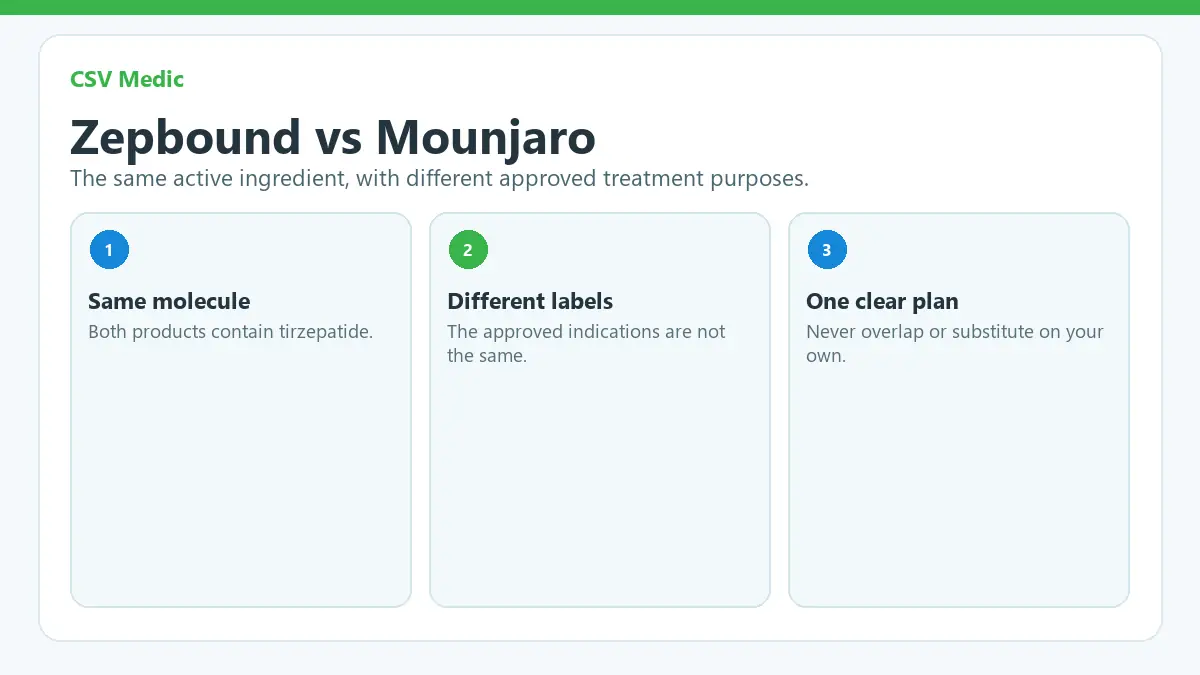
Zepbound vs Mounjaro can look like a comparison between two different medicines, but both contain tirzepatide. The important differences are the FDA-approved indication, product labeling, insurance rules, and the clinical reason a provider selects one brand. Zepbound is associated with approved weight-management and obstructive-sleep-apnea uses, while Mounjaro is approved to improve glycemic control in people with type 2 diabetes.
Because the active ingredient is the same, patients should not use Zepbound and Mounjaro together or treat them as interchangeable supplies. A prescription must match the product, diagnosis, dose, and monitoring plan. This Zepbound vs Mounjaro guide explains what changes and what stays the same.
Zepbound vs Mounjaro: Quick Answer
| Question | Zepbound | Mounjaro |
|---|---|---|
| Active ingredient | Tirzepatide | Tirzepatide |
| Primary approved purpose | Weight management; qualifying OSA use | Type 2 diabetes glycemic control |
| Mechanism | GIP and GLP-1 receptor agonist | GIP and GLP-1 receptor agonist |
| Administration | Product-specific weekly injection instructions | Product-specific weekly injection instructions |
| Can they be combined? | No routine combined use | No routine combined use |
Always use the current Zepbound label and Mounjaro label rather than assuming instructions for one brand apply to the other.

8 Important Zepbound vs Mounjaro Differences
1. The approved indications are different
The clearest Zepbound vs Mounjaro difference is the approved use. Zepbound is prescribed for chronic weight management in qualifying adults and has an approved indication for moderate-to-severe obstructive sleep apnea in adults with obesity. Mounjaro is a diabetes medicine approved to improve blood-glucose control in people with type 2 diabetes.
2. The active ingredient and basic mechanism are the same
Both brands contain tirzepatide, which activates GIP and GLP-1 receptors. That shared ingredient helps explain why weight change can occur in tirzepatide trials, including diabetes studies. It does not erase the legal and clinical distinction between a prescription for obesity and a prescription for diabetes.
3. Weight-loss expectations depend on the study population
A Zepbound vs Mounjaro weight loss comparison should not combine percentages from unrelated trials as though they were one head-to-head study. Diabetes status, starting weight, dose, follow-up length, and study design affect results. For an obesity-focused comparison of tirzepatide and semaglutide, patients can read our Zepbound vs Wegovy guide after publication.
4. Side-effect profiles substantially overlap
Zepbound vs Mounjaro side effects overlap because both contain tirzepatide. Common reactions include nausea, diarrhea, reduced appetite, vomiting, constipation, indigestion, and abdominal pain. Important warnings and contraindications are described in each label. The patient’s diabetes medicines can add considerations such as hypoglycemia risk.

5. Dosing must follow the named prescription
Patients searching for Zepbound vs Mounjaro dosing should know that matching milligram strengths do not authorize self-substitution. The pharmacy label identifies the prescribed product and presentation. A clinician may need to reassess timing, tolerability, glucose, and dose if coverage forces a change.
6. Insurance evaluates the diagnosis and benefit
Zepbound vs Mounjaro cost often differs because insurers process them under different benefits and diagnoses. A plan may cover Mounjaro for type 2 diabetes but exclude anti-obesity medicines, or it may cover Zepbound only after prior authorization. Never ask a provider to submit an inaccurate diagnosis to obtain coverage.
7. A brand change is not a reason to double a dose
If a prescription changes from Mounjaro to Zepbound or the reverse, the patient should receive written instructions. Using remaining pens from one prescription while starting the other can result in duplicate tirzepatide exposure. Contact the prescriber or pharmacist when the product name or presentation changes.
8. The best brand follows the condition being treated
For a person with obesity but no diabetes, Zepbound may be the appropriately indicated tirzepatide brand if treatment is otherwise suitable. For a person with type 2 diabetes, Mounjaro may be considered within a diabetes plan. Patients with both conditions require an individualized decision that accounts for glucose treatment, weight goals, contraindications, coverage, and monitoring.
Questions to Ask Before Starting Tirzepatide
- Which diagnosis and approved indication does this prescription address?
- How could my diabetes medicines affect low-blood-sugar risk?
- What symptoms require a call, an appointment, or urgent care?
- What is the written dose-escalation plan for this exact product?
- What should I do if the pharmacy dispenses a different brand or presentation?
- Which nutrition, hydration, activity, and follow-up steps are part of treatment?
CSV Medic’s weight-loss program overview, GLP-1 prescription guide, and online consultation guide explain how patient history and monitoring fit into a treatment decision.

Frequently Asked Questions About Zepbound vs Mounjaro
Are Zepbound and Mounjaro the same drug?
They contain the same active ingredient, tirzepatide, but they are separately labeled brands with different approved indications. Patients should use only the product written on the prescription.
What is Zepbound vs Mounjaro for weight loss?
Zepbound carries the obesity-focused indication. Mounjaro’s approved role is type 2 diabetes. Weight changes observed in diabetes trials do not change the approved indication printed in the Mounjaro label.
Is Zepbound stronger than Mounjaro?
They use the same active ingredient. Strength should be discussed as the prescribed tirzepatide dose and treatment purpose, not as a claim that one brand name is inherently stronger.
Can I switch between Zepbound and Mounjaro?
A prescriber may change the product when clinically appropriate, but patients need specific instructions and should not substitute, overlap, or convert doses themselves.
Do Zepbound and Mounjaro have the same side effects?
Their shared ingredient creates substantial overlap. Individual risk also depends on medical history, other medicines, diabetes status, dose, hydration, and the ability to tolerate escalation.
Which costs less, Zepbound or Mounjaro?
The answer depends on the insurer, diagnosis, formulary, deductible, pharmacy, and product presentation. Patients should request a benefit check for the exact prescription rather than compare advertised prices.
How to Discuss Mounjaro vs Zepbound With a Provider
The phrase Mounjaro vs Zepbound can make the medicines sound like interchangeable packages, but the visit should begin with the diagnosis and treatment goal. A person seeking obesity care needs a different label-based conversation from a person whose priority is glycemic control in type 2 diabetes.
For a fair Mounjaro vs Zepbound weight loss discussion, bring the starting weight, recent weight trend, diabetes status, current glucose medicines, previous incretin treatment, side effects, and reasons a prior plan ended. Those details help the clinician interpret evidence in the context of one patient rather than a brand comparison.
Coverage can also change the answer. Ask the insurer to check the exact product for the documented indication, including prior authorization, quantity limits, preferred pharmacies, deductible, and expected monthly cost. A denial for one product does not authorize a patient to substitute the other without a new prescription.
Finally, agree on monitoring before treatment starts. The plan should explain dose escalation, what to do after a missed dose, which symptoms require a prompt call, how diabetes medicines will be reviewed, and when response will be reassessed. This turns a Zepbound vs Mounjaro comparison into a safer long-term care decision.
What to Monitor During Early Tirzepatide Treatment
Early follow-up should include more than a scale reading. Patients can record appetite, meal tolerance, fluid intake, nausea, vomiting, bowel changes, abdominal pain, and the timing of each dose. People with diabetes may also need glucose records and specific instructions for other glucose-lowering medicines.
Rapidly worsening symptoms, inability to keep fluids down, severe abdominal pain, signs of an allergic reaction, or symptoms of low blood glucose require prompt guidance. Routine questions can be collected for the scheduled visit, but urgent concerns should not wait for the next appointment.
A structured review helps the prescriber decide whether to continue, delay escalation, investigate another cause, or change the plan. Patients should not respond to a difficult week by skipping ahead, splitting doses, or using another tirzepatide brand without instructions.
For more detail about symptoms during tirzepatide treatment, review Zepbound side effects. A personalized discussion can begin through the CSV Medic consultation form.
Sources and Further Reading
The medical and regulatory information in this guide was checked against the following prescribing information, government guidance, clinical-trial records, and peer-reviewed studies.
- FDA Zepbound prescribing information (2026)
- FDA Mounjaro prescribing information (2026)
- FDA Zepbound chronic weight-management approval
- FDA Mounjaro Drug Trials Snapshot
- FDA new-drug approvals for 2022
- SURPASS-2 tirzepatide and semaglutide study
- SURPASS-2 ClinicalTrials.gov record
- Review of gastrointestinal adverse events with tirzepatide
- NIDDK type 2 diabetes guide
About the Author and Medical Review
This article was medically reviewed and published by Dr Spencer and the CSV Medic editorial team in collaboration with licensed healthcare providers specializing in medical weight management. CSV Medic content is checked against current prescribing information, regulatory guidance, and peer-reviewed clinical research.
Medical Disclaimer
This article is for informational purposes only and does not constitute medical advice, diagnosis, or a prescription. Medication choice, dose, eligibility, insurance coverage, and monitoring must be determined by a licensed healthcare provider. Do not start, stop, switch, combine, or change the dose of any prescription medication without medical guidance. Seek urgent care for severe or rapidly worsening symptoms.
