
Weight Loss Education, Weight Loss Medication
Ipamorelin Peptide: 10 Essential Evidence and Safety Facts
Sep
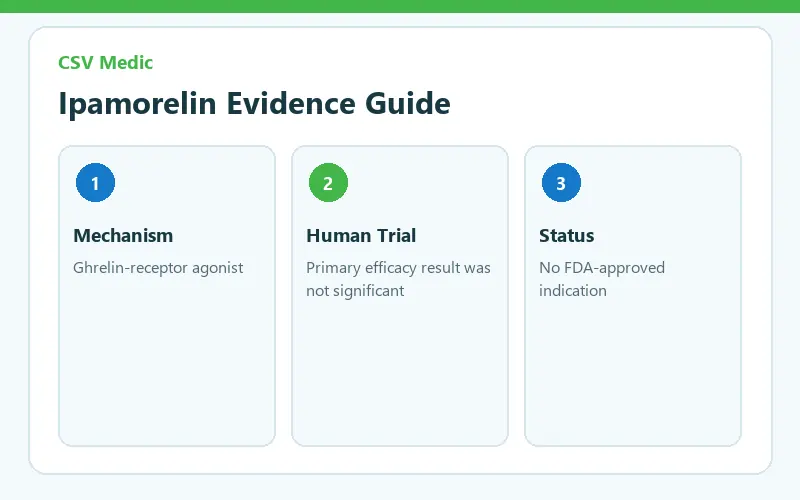
Ipamorelin peptide is a synthetic growth hormone secretagogue and ghrelin-receptor agonist. It has been investigated in human research, including a hospital study of postoperative ileus, but it is not an FDA-approved drug and there is no FDA-approved ipamorelin protocol for weight loss, muscle gain, anti-aging, growth hormone deficiency, or general wellness.
Online clinics often describe ipamorelin as selective, gentle, or safer than older growth hormone-releasing peptides. Those descriptions do not resolve the central evidence gaps. FDA reviewers found limited effectiveness information, no adequate safety data for the commonly promoted subcutaneous route, and concerns involving glucose regulation, immune reactions, aggregation, peptide impurities, and product characterization.
This guide explains what ipamorelin does in research, what the human trial found, why ipamorelin peptide benefits remain uncertain, how the 2024 PCAC review affects compounding discussions, and why online dosage instructions should not replace specialist care.
Key Takeaways
- Ipamorelin is a synthetic pentapeptide that activates the ghrelin receptor and can stimulate growth hormone release.
- It has not been FDA approved for any condition.
- A phase 2 trial in postoperative bowel-surgery patients did not show a significant improvement in the main efficacy outcome.
- FDA and PCAC reviewed ipamorelin-related bulk substances in 2024 and the committee recommended against inclusion on the 503A Bulks List.
- FDA identified insufficient clinical safety and effectiveness evidence for commonly proposed uses and routes.
- Potential concerns include glucose intolerance, immune reactions, peptide aggregation, impurities, and effects associated with growth hormone signaling.
- There is no FDA-approved ipamorelin peptide dosage or validated CJC-1295/ipamorelin wellness protocol.
- “Before and after” photos cannot establish product identity, causation, or safety.
- Combining ipamorelin with CJC-1295 increases uncertainty rather than creating proof of benefit.
- Patients should use licensed medical care and approved treatments for diagnosed endocrine or metabolic conditions.
What Is Ipamorelin Peptide?
Ipamorelin is a synthetic chain of five amino acids. It acts as an agonist at the growth hormone secretagogue receptor, also called the ghrelin receptor. Activation can stimulate the pituitary gland to release growth hormone.
This does not make ipamorelin the same as injected recombinant human growth hormone. It also does not mean that every change in growth hormone produces a useful clinical outcome. Hormone pathways are tightly regulated, and manipulating them may affect glucose metabolism, fluid balance, tissue growth, sleep, appetite, and other systems.
Ipamorelin is commonly marketed for body composition, recovery, sleep, “anti-aging,” and growth hormone support. Those uses are not FDA-approved indications. A substance can influence a biomarker without demonstrating that patients feel better, function better, or experience fewer complications.
For broader context, read CSV Medic’s peptide therapy guide and peptides for muscle growth and fat loss.
What Has Ipamorelin Been Studied For?
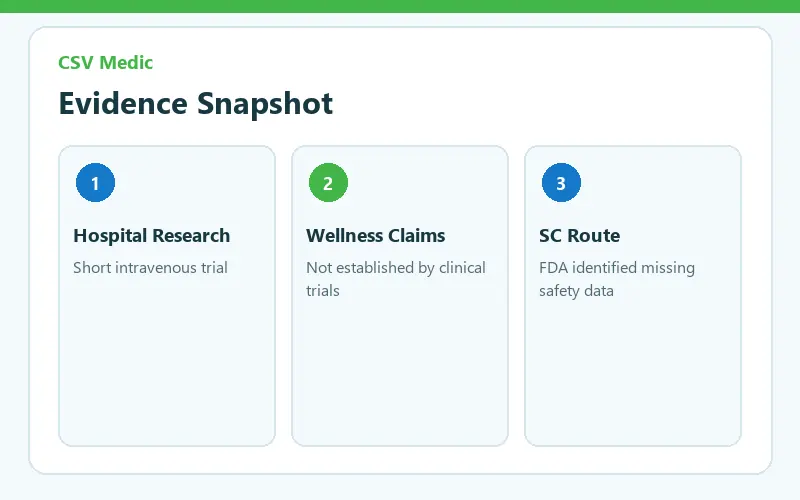
Ipamorelin has been investigated primarily for its effects on growth hormone release and gastrointestinal motility. The most relevant published human trial evaluated intravenous ipamorelin for postoperative ileus following bowel resection.
Postoperative ileus is a temporary impairment of intestinal movement after surgery. Researchers hypothesized that ghrelin-receptor stimulation could help restore gastrointestinal function.
The phase 2 randomized trial enrolled 117 patients. The median time to the first tolerated solid meal was shorter numerically in the ipamorelin group, but the difference was not statistically significant. The investigators also reported no significant differences in key secondary efficacy outcomes.
This trial cannot validate subcutaneous wellness injections. It involved a defined hospital population, intravenous administration, controlled manufacturing, protocol monitoring, and a short treatment period.
Ipamorelin Peptide Benefits: Claims Versus Clinical Evidence
Common ipamorelin peptide benefits promoted online include increased lean mass, reduced fat, faster recovery, better sleep, improved energy, and restoration of youthful growth hormone patterns.
| Online claim | Evidence-based interpretation |
|---|---|
| Builds muscle | Growth hormone signaling can affect tissue biology, but meaningful muscle gain has not been established in robust ipamorelin trials |
| Burns fat | No FDA-approved obesity indication or validated weight-loss outcome |
| Improves sleep | Online reports do not establish an effective sleep treatment |
| Accelerates recovery | No adequate comparative trials for routine injury recovery |
| Reverses aging | Aging is not an approved indication and cannot be reduced to one hormone marker |
| Is safer because it is selective | Selectivity does not eliminate glucose, immune, impurity, or unknown long-term risks |
The correct language is that ipamorelin has been investigated as a ghrelin-receptor agonist. It is not accurate to state that it produces these marketed benefits in routine patients.
Is Ipamorelin FDA Approved?
No. Ipamorelin is not FDA approved for any medical condition.
In October 2024, PCAC reviewed ipamorelin free base and ipamorelin acetate for possible inclusion on the Section 503A Bulks List. The committee recommended against inclusion. PCAC provides advice to FDA; its vote is not approval of a finished product.
FDA’s ipamorelin briefing document concluded that use of ipamorelin-related bulk substances in compounding may raise safety concerns. FDA identified a lack of adequate clinical effectiveness data and no safety data for the commonly proposed subcutaneous route. The agency also discussed possible glucose intolerance and diabetes risk associated with stimulation of growth hormone pathways.
FDA lists ipamorelin acetate among substances that may present significant safety risks in compounding. The agency specifically notes possible immunogenicity related to aggregation or peptide impurities for certain routes. See the current FDA bulk-substance safety table.
Ipamorelin Peptide Dosage: Why Online Charts Are Unreliable
There is no FDA-approved ipamorelin peptide dosage for muscle growth, weight loss, sleep, anti-aging, or growth hormone deficiency. There is also no approved CJC-1295/ipamorelin dosage for a combined wellness product.
Online protocols often convert milligrams in a vial into micrograms per injection. That arithmetic cannot answer whether:
- the product contains the stated substance;
- the concentration is accurate;
- the route has adequate safety evidence;
- the vial is sterile and free from endotoxin;
- the patient has a contraindication;
- long-term stimulation of the GH/IGF-1 pathway is appropriate;
- a combination product has been studied;
- symptoms are a drug effect, contamination, or another illness.
The hospital trial used intravenous dosing under a research protocol. It should not be copied into a subcutaneous self-treatment schedule.
CSV Medic provides educational information, not individualized instructions for unapproved peptides. Patients can learn more about peptide injection risks and consult a licensed clinician.
Ipamorelin Side Effects and Important Unknowns
The available evidence is not sufficient to calculate reliable rates for all ipamorelin side effects in wellness settings. FDA reviewed adverse events in the postoperative trial, reports involving compounded products, and risks associated with growth hormone stimulation.
Potential or reported concerns include:
- headache, flushing, fatigue, nausea, vomiting, or sleep changes;
- abdominal symptoms and changes in gastrointestinal function;
- fluid retention, joint discomfort, numbness, or tingling;
- increased blood glucose, glucose intolerance, or worsening diabetes risk;
- injection-site reactions, infection, or sterile abscess;
- immune reactions to the peptide, aggregates, or impurities;
- inaccurate concentration or contamination;
- uncertain effects with repeated long-term use.
The published postoperative study reported high overall adverse-event rates in both the ipamorelin and placebo groups because participants had undergone major surgery. That setting makes it difficult to transfer the safety experience to healthy consumers.
FDA has also posted recalls involving compounded sermorelin/ipamorelin products because of potential sterility failures. Compounded drugs can meet important patient needs, but they do not undergo FDA premarket approval review. FDA’s compounding questions and answers explains the distinction.
Is Ipamorelin FDA Approved for Growth Hormone Deficiency?
No. FDA-approved therapies exist for specific diagnosed growth disorders, but ipamorelin is not one of them. A diagnosis of adult growth hormone deficiency requires specialist evaluation because symptoms such as fatigue, increased fat mass, reduced exercise capacity, and low mood are nonspecific.
Testing and interpretation can be complex. Using a secretagogue without a confirmed diagnosis may delay evaluation of sleep apnea, thyroid disease, anemia, depression, medication effects, diabetes, cardiovascular disease, or another treatable cause.
Ipamorelin Versus Sermorelin
| Feature | Ipamorelin | Sermorelin |
|---|---|---|
| Primary receptor pathway | Ghrelin receptor agonist | Growth hormone-releasing hormone analog |
| FDA status | Not approved | No currently marketed FDA-approved sermorelin product for wellness use |
| Common marketing | Body composition, sleep, recovery | Growth hormone support and anti-aging |
| Evidence limitations | Sparse condition-specific human evidence | Limited relevance to broad wellness claims |
| Main concern | Unproven benefit plus metabolic, immune, and quality risks | Unproven wellness benefit plus hormone and product-quality risks |
CSV Medic’s sermorelin evidence review provides a more detailed comparison.
CJC-1295 and Ipamorelin Before and After Claims
Searches for CJC 1295 ipamorelin before and after commonly lead to body photographs, scale changes, or strength reports. These images cannot establish causation.
Important missing information may include:
- calorie intake and protein consumption;
- resistance training and activity changes;
- use of testosterone, GLP-1 medicines, or other substances;
- hydration and fluid retention;
- lighting, pose, timing, and image editing;
- product identity and concentration;
- adverse effects and people who stopped treatment.
Before-and-after marketing preferentially shows favorable outcomes. Controlled trials reduce this selection bias by defining outcomes and including all randomized participants.
CJC 1295 Ipamorelin Side Effects
Combining CJC-1295 with ipamorelin is frequently marketed as a way to amplify growth hormone release. Controlled evidence does not establish that the combination improves patient-centered outcomes or is safe for long-term wellness use.
Possible CJC 1295 ipamorelin side effects include those associated with either ingredient, injection risks, and effects of increased GH/IGF-1 signaling. A reaction cannot easily be assigned to one component when both are administered together.
FDA separately identified serious adverse events associated with CJC-1295, including increased heart rate and a systemic vasodilatory reaction. Adding ingredients creates more variables in manufacturing, dosing, interactions, and adverse-event investigation.
Ipamorelin Versus Semaglutide
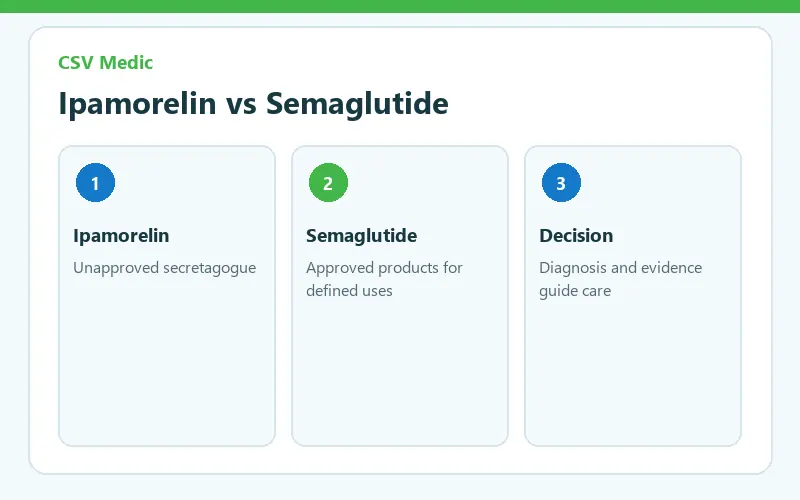
An ipamorelin vs semaglutide comparison is not a comparison of equivalent weight-loss drugs.
| Feature | Ipamorelin | Semaglutide products |
|---|---|---|
| Drug class | Ghrelin-receptor agonist/growth hormone secretagogue | GLP-1 receptor agonist |
| FDA approval | None | Specific products approved for defined indications |
| Chronic weight-management evidence | Not established | Large product-specific clinical trials exist |
| Standard label | No | Yes for approved products |
| Main use in online marketing | Recovery, body composition, wellness | Diabetes or chronic weight management depending on product |
Semaglutide still requires screening, a prescription, monitoring, and management of contraindications and side effects. Learn how evidence-based programs are evaluated in the GLP-1 prescription guide.
Who Should Avoid Experimental Ipamorelin Products?
Self-directed use is especially concerning for:
- pregnant or breastfeeding people;
- children or adolescents outside specialist care;
- people with active cancer or unexplained growths;
- patients with diabetes, prediabetes, or unstable glucose control;
- people with untreated sleep apnea;
- patients with serious heart, kidney, liver, or pituitary disease;
- people taking growth hormone, insulin, glucose-lowering drugs, or multiple hormones;
- competitive athletes subject to anti-doping rules;
- anyone buying a research-use product for personal injection.
Sudden breathing difficulty, throat swelling, severe chest symptoms, fainting, confusion, or signs of a serious infection require urgent medical care.
How to Evaluate an Ipamorelin Product Claim
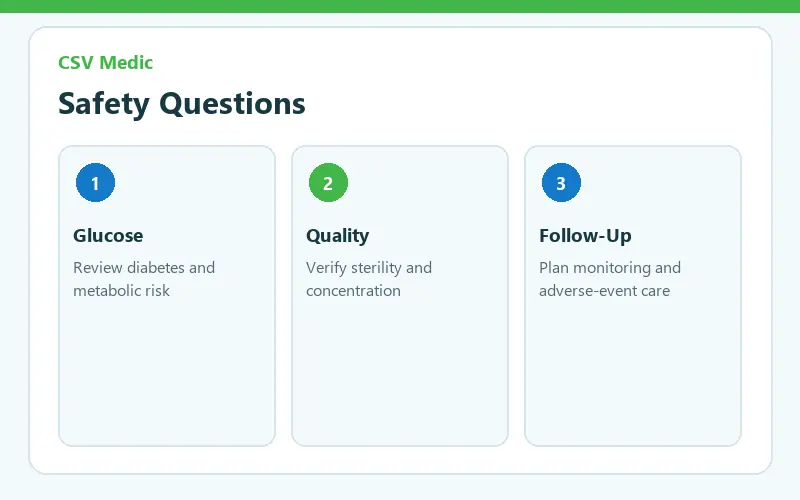
Ask whether the page:
- states clearly that ipamorelin is not FDA approved;
- distinguishes intravenous research from subcutaneous wellness use;
- reports the negative primary result from the human postoperative trial;
- explains the 2024 FDA and PCAC findings;
- identifies the exact chemical form and route;
- names a licensed prescriber and dispensing pharmacy;
- describes lot-specific potency, sterility, and endotoxin testing;
- provides follow-up and adverse-event reporting;
- avoids guaranteed muscle, fat-loss, sleep, or anti-aging outcomes.
The FDA consumer information on compounded drugs provides an appropriate quality checklist.
Patient Forums: Useful Questions, Not Clinical Proof
A Reddit discussion of CJC-1295 and ipamorelin side effects illustrates how difficult it is for users to interpret headaches, sleep changes, pain, and product combinations.
Such reports are anecdotal. They rarely verify diagnosis, product identity, dose accuracy, contamination, or concurrent treatments. They can highlight questions clinicians should address, but they cannot determine frequency, safety, or an appropriate protocol.
Myths Versus Facts About Ipamorelin
Myth: A selective secretagogue is automatically safe
Fact: Receptor selectivity may change pharmacology, but it does not eliminate glucose effects, immune reactions, manufacturing impurities, sterility failures, or unknown long-term consequences.
Myth: A higher growth hormone result proves the treatment is working
Fact: A laboratory change is a surrogate observation. Patients need evidence that treatment improves function, symptoms, or disease outcomes without unacceptable harm.
Myth: A compounded product is an FDA-approved alternative
Fact: Compounded drugs are not FDA approved. Compounding can address a genuine patient-specific need, but it is not a way to reproduce an approved evidence package for an unapproved ingredient.
Myth: A normal aging symptom proves growth hormone deficiency
Fact: Fatigue, sleep disruption, reduced fitness, and body-composition changes have many possible causes. Endocrine diagnosis requires appropriate clinical and laboratory assessment.
Evidence-Based Ways to Support Muscle and Recovery
Adults seeking better recovery or body composition can begin with interventions supported by broader evidence: progressive resistance training, adequate dietary protein, sufficient total energy during demanding training, sleep treatment, alcohol moderation, and management of diabetes or thyroid disease. A physical therapist or sports-medicine clinician can evaluate persistent pain and injury.
During medical weight loss, rapid loss and inadequate nutrition can reduce lean tissue. CSV Medic’s muscle growth and fat-loss guide explains why strength training and nutrition remain important even when medication is used.
Frequently Asked Questions
What is ipamorelin peptide used for?
It has been investigated as a ghrelin-receptor agonist, including research in postoperative ileus. Online uses for muscle gain, fat loss, sleep, and anti-aging are not FDA-approved indications.
Is ipamorelin FDA approved?
No. Ipamorelin is not FDA approved for any condition.
Does ipamorelin build muscle?
Robust clinical evidence has not established meaningful muscle gain or improved function from routine ipamorelin use.
Does ipamorelin help weight loss?
Ipamorelin is not an approved obesity medicine, and reliable weight-loss outcomes have not been established.
What did the main human trial show?
In a randomized phase 2 postoperative ileus trial, the primary efficacy difference between ipamorelin and placebo was not statistically significant.
Is there an approved ipamorelin peptide dosage?
No. There is no FDA-approved dose for wellness, body composition, sleep, or growth hormone deficiency.
Is combining CJC-1295 and ipamorelin safer or more effective?
That has not been established. Combining unapproved substances adds uncertainty and makes adverse reactions harder to interpret.
Can a compounding pharmacy make ipamorelin?
Compounding is governed by federal and state requirements. The 2024 PCAC recommendation weighed against adding ipamorelin-related substances to the 503A Bulks List. A patient should verify current law and pharmacy licensing rather than assume that “compounded” means approved.
Are online ipamorelin reviews reliable?
Reviews can describe individual experiences, but they cannot verify product quality or establish average benefit and risk.
Selected Medical Sources
- FDA October 2024 PCAC meeting materials
- FDA ipamorelin briefing document
- FDA PCAC voting questions
- ClinicalTrials.gov: phase 2 ipamorelin trial
- PubMed: randomized postoperative ileus study
- FDA compounding questions and answers
- FDA information for consumers and clinicians
- FDA safety-risk list for compounded bulk substances
Together, these records show the difference between a registered trial, a published result, an advisory vote and FDA approval. None provides an approved wellness or body-composition protocol for ipamorelin.
Conclusion
Ipamorelin peptide can stimulate a biologically important pathway, but biomarker activity is not the same as a proven treatment. The available human trial did not meet its primary efficacy goal, FDA identified significant evidence and safety gaps, and no FDA-approved dose exists for the body-composition and anti-aging uses promoted online.
Patients researching peptide products can browse CSV Medic’s educational blog and use How It Works to learn about legally available services without assuming that an unapproved peptide is offered or appropriate.
Editorial and Medical Review Status
This educational draft was prepared from FDA materials, peer-reviewed literature and public-health guidance available on September 1, 2026. It is saved for medical and editorial review by Dr Spencer before publication. References, regulatory status and internal links should be checked again on the publication date because peptide regulation can change.
Medical disclaimer: This material is educational and is not medical advice, a diagnosis, a prescription, or a dosing guide. Do not inject a research-use product. Consult a qualified healthcare professional regarding symptoms, approved treatments, interactions, and current compounding rules.
