
Weight Loss Education, Weight Loss Medication
Zepbound Doses: 9 Essential Titration and Safety Facts

Jul
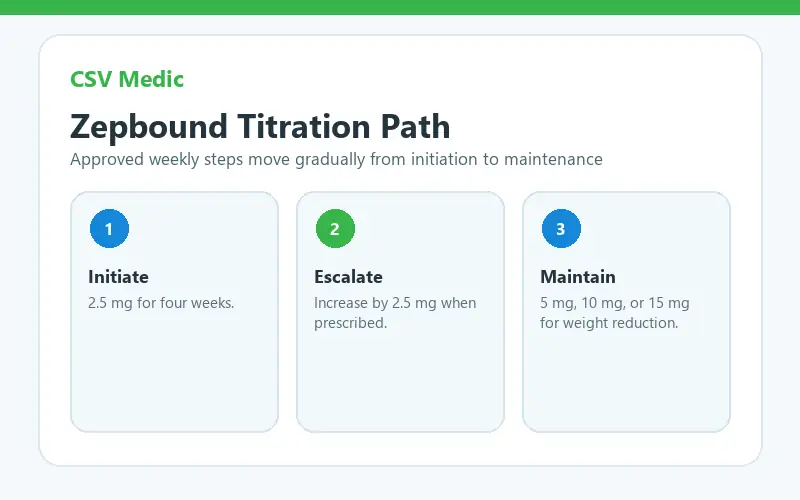
Zepbound doses follow a gradual schedule because the body needs time to adjust to tirzepatide. The FDA-approved starting dose is 2.5 mg once weekly for four weeks. It is an initiation dose, not a maintenance dose. After that, a prescriber may increase treatment in 2.5 mg steps, but only after at least four weeks at the current level and only when response and tolerability support a change.
Patients often see several Zepbound doses online and assume the highest number should produce the fastest result. That is not how safe treatment works. The goal is to find an effective maintenance dose that the individual can tolerate, not to reach 15 mg as quickly as possible. This guide explains the approved schedule, maintenance options, injection presentations, missed-dose rules, common questions, and warning signs without replacing a clinician’s instructions.
Zepbound Doses at a Glance
| Stage | Weekly dose | General purpose | Minimum time before another increase |
|---|---|---|---|
| Starting stage | 2.5 mg | Treatment initiation | 4 weeks |
| First maintenance option | 5 mg | Weight reduction and maintenance | At least 4 weeks |
| Intermediate step | 7.5 mg | Escalation step when prescribed | At least 4 weeks |
| Maintenance option | 10 mg | Weight reduction; also an OSA maintenance option | At least 4 weeks |
| Intermediate step | 12.5 mg | Escalation step when prescribed | At least 4 weeks |
| Maximum maintenance option | 15 mg | Maximum approved weekly dose | No higher approved dose |
The current FDA Zepbound prescribing information is the controlling source for approved Zepbound doses and administration. Weight-reduction maintenance doses are 5 mg, 10 mg, or 15 mg once weekly. For moderate-to-severe obstructive sleep apnea in adults with obesity, the listed maintenance doses are 10 mg or 15 mg once weekly.
1. Why Zepbound Starts at 2.5 mg
The 2.5 mg starting level is designed to introduce tirzepatide gradually. Gastrointestinal effects such as nausea, diarrhea, vomiting, constipation, abdominal discomfort, and indigestion are common with this medicine. Beginning lower and waiting before an increase can reduce the risk that these effects become difficult to manage.
The 2.5 mg level should not be judged as a failed maintenance treatment after only a few injections. Its role is initiation. The response during this stage gives the prescriber useful information about tolerability, hydration, appetite, bowel symptoms, and whether the patient is ready for the next part of the Zepbound dosing schedule.
2. How the Zepbound Dosing Schedule Progresses
After four weeks at 2.5 mg, the approved schedule moves to 5 mg once weekly. If a higher dose is clinically appropriate, Zepbound doses can then increase by 2.5 mg after at least four weeks on the current dose. A common stepwise pathway is 2.5 mg, 5 mg, 7.5 mg, 10 mg, 12.5 mg, and 15 mg.
That sequence is not a target every patient must complete. The FDA label tells clinicians to consider treatment response and tolerability when selecting a maintenance dose. A person may remain at a lower approved maintenance level when it is effective and better tolerated. A temporary appetite change or one week without scale movement is not a reason to accelerate Zepbound doses independently.
Approved maintenance doses for weight reduction
- 5 mg once weekly
- 10 mg once weekly
- 15 mg once weekly
Approved maintenance doses for obstructive sleep apnea
- 10 mg once weekly
- 15 mg once weekly
The maximum approved Zepbound dose is 15 mg once weekly. The intermediate 7.5 mg and 12.5 mg levels are used during escalation, while the label identifies 5 mg, 10 mg, and 15 mg as maintenance choices for long-term weight reduction.
Patients comparing Zepbound doses for weight loss should focus on the approved maintenance options and their own response rather than treating the maximum Zepbound dose as a universal goal. CSV Medic’s How It Works page outlines the review and follow-up process used to keep medication decisions patient-specific.
3. Zepbound Doses and Expected Weight-Loss Response
Clinical trials compared groups assigned to different maintenance levels, but trial averages do not predict one person’s outcome. In SURMOUNT-1, participants began at 2.5 mg and increased in 2.5 mg steps every four weeks until reaching an assigned 5 mg, 10 mg, or 15 mg level. The ClinicalTrials.gov SURMOUNT-1 results record documents the design, participant flow, outcomes, and adverse events.
Higher assigned Zepbound doses produced larger average weight changes in that research population, but they also require more escalation and may not be tolerated by everyone. A medically useful result includes more than the number on a scale. Providers may also review waist measurement, blood pressure, glucose markers, sleep-apnea symptoms, nutrition, strength, side effects, and whether treatment can be continued safely.
For broader treatment context, the CSV Medic Zepbound vs Wegovy comparison explains why average trial results should not be treated as a guaranteed personal result.
4. Zepbound Vials, Pens, and KwikPen Presentations
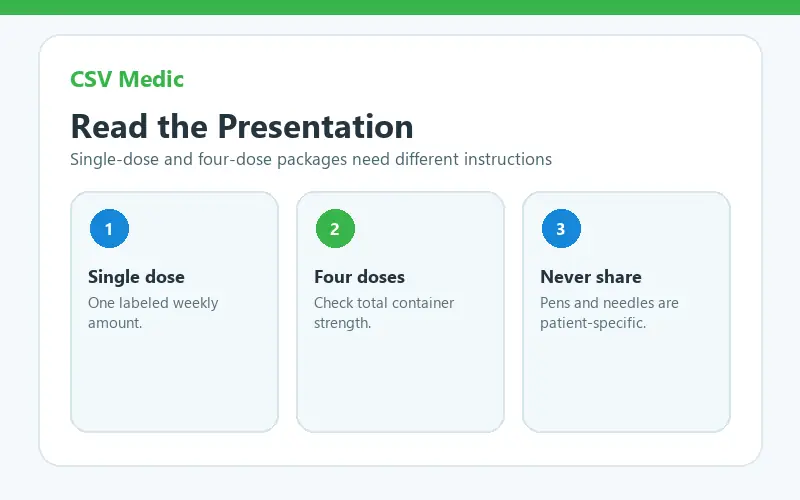
Zepbound injection presentations have expanded, so the package and concentration matter. The 2026 label lists single-dose pens and single-dose vials containing one weekly dose. It also lists multi-dose vials and single-patient-use KwikPens that contain four doses. The total milligrams printed on a multi-dose presentation are not the amount injected at one time.
| Presentation example | What the label means | Patient safety point |
|---|---|---|
| Single-dose pen or vial | One labeled weekly dose | Use exactly as the pharmacy label directs |
| Multi-dose vial | Four weekly doses in one container | Use the presentation-specific instructions |
| Single-patient-use KwikPen | Four doses for one patient | Never share the device between patients |
Zepbound vials should not be compared by total container milligrams alone. Concentration, device, dose volume, storage, needle requirements, and instructions can differ. Patients should receive presentation-specific teaching from a pharmacist or clinician and should not transfer a dose from one device to another unless the official instructions require it.
5. How to Use a Zepbound Injection Safely
Zepbound is injected under the skin of the abdomen, thigh, or upper arm according to the prescribing information. Injection sites should be rotated. Patients should inspect the medicine and device, follow the supplied instructions, and use a clean technique. A pharmacist should demonstrate the exact device when the presentation changes.
Do not share a pen, KwikPen, or needle. Do not combine tirzepatide with another tirzepatide-containing product or a GLP-1 receptor agonist unless a qualified prescriber has provided a medically appropriate plan. The label states that coadministration is not recommended. Our Zepbound vs Mounjaro guide explains why two products containing tirzepatide are not meant to be stacked.
6. What to Do After a Missed Zepbound Dose
The FDA label states that a missed dose may be taken as soon as possible within four days, or 96 hours, after the scheduled time. If more than four days have passed, the missed dose should be skipped and the next dose taken on the regular scheduled day. Two doses should not be taken within 72 hours of each other.
Patients who miss several injections, have persistent vomiting, or are uncertain which presentation they have should contact the prescriber or pharmacist before restarting. The correct plan may depend on how long treatment was interrupted and whether side effects were present.
7. When a Dose Increase Should Be Delayed
A dose increase may need to wait when nausea, vomiting, diarrhea, constipation, reflux, or reduced food and fluid intake remain significant. Escalating through ongoing symptoms can worsen dehydration and may contribute to kidney problems. The prescriber may keep the current level longer, reduce to a better tolerated maintenance level, or reassess treatment.
Severe abdominal pain, persistent vomiting, signs of dehydration, jaundice, a serious allergic reaction, or symptoms of low blood sugar in someone using glucose-lowering medicine require prompt medical review. See the CSV Medic Zepbound side-effects guide for a patient-friendly warning-sign checklist.
8. Diet and Lifestyle During Dose Escalation
Zepbound doses work within a broader treatment plan that includes a reduced-calorie eating pattern and increased physical activity. During escalation, smaller meals, slower eating, adequate fluids, and limiting very high-fat meals may help some patients manage nausea or fullness. Individual nutrition needs still depend on medical history, kidney function, diabetes treatment, food access, and activity.
Protein intake and resistance exercise are especially important when weight is decreasing because the goal is to preserve function and lean tissue. A dietitian or clinician can help adjust meal size and nutrient intake when appetite becomes very low. The CSV Medic weight-loss program overview describes how medication, nutrition, movement, and follow-up fit together.
9. How Providers Choose Among Zepbound Doses
The choice is based on response, side effects, the approved indication, other medicines, and the patient’s health history. A higher number is not automatically better. Providers may review gallbladder and pancreatic history, severe digestive disease, kidney concerns, pregnancy plans, thyroid cancer history, diabetes medicines, and symptoms that developed after earlier Zepbound doses.
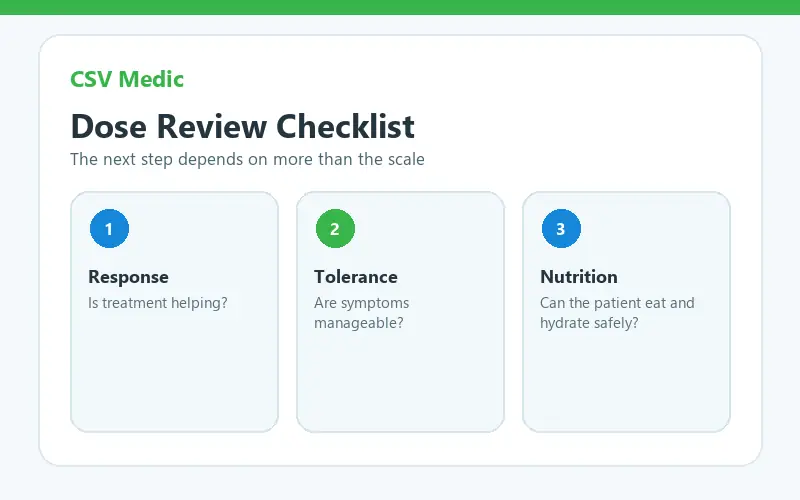
A good follow-up visit should answer three questions: Is the medicine helping? Is the current dose tolerated? Can the patient maintain adequate nutrition, hydration, activity, and monitoring? If any answer is no, the next step may be to wait, lower the dose, investigate symptoms, or discuss another treatment rather than continuing automatic escalation.
Frequently Asked Questions About Zepbound Doses
What are the available Zepbound doses?
Approved weekly strengths are 2.5 mg, 5 mg, 7.5 mg, 10 mg, 12.5 mg, and 15 mg. The 2.5 mg level starts treatment. Approved maintenance levels for weight reduction are 5 mg, 10 mg, and 15 mg.
What is the Zepbound starting dose?
The approved starting dose is 2.5 mg once weekly for four weeks. It is used for treatment initiation and is not an approved maintenance dose.
How quickly can Zepbound dosing increase?
After the first four weeks, a prescribed increase occurs in 2.5 mg steps only after at least four weeks at the current dose. A clinician may keep the same level longer when side effects or other concerns are present.
Is 15 mg the best Zepbound dose?
Fifteen milligrams is the maximum approved weekly dose, not the required or best choice for every patient. The best maintenance level balances treatment response with tolerability and safety.
Can I stay on 5 mg?
Five milligrams is an approved maintenance dose for weight reduction. Whether to remain there depends on response, side effects, the treatment goal, and the prescriber’s assessment.
Can I split Zepbound doses?
Patients should not split, combine, or calculate a different injection from an approved presentation. Use the exact device and weekly amount prescribed and contact the pharmacy when the label is unclear.
Can I change my injection day?
The label allows the weekly day to be changed when the time between two doses is at least 72 hours. Confirm the plan when there has also been a missed dose or a treatment interruption.
Do I need to reach the maximum dose to lose weight?
No. Some patients respond at a lower approved maintenance level. Treatment should be individualized rather than advanced solely to reach the highest strength.
Are Zepbound doses the same as Mounjaro doses?
Both products contain tirzepatide, but they have different approved indications and product-specific labels. Patients should follow the prescription they received and never use both products together.
Where can I discuss my current dose?
CSV Medic’s consultation pathway explains how a licensed provider reviews health history, current treatment, side effects, and follow-up needs. General service and treatment questions are also covered in the CSV Medic FAQ.
The Bottom Line
Zepbound doses are intentionally gradual. The approved pathway starts at 2.5 mg weekly, moves to 5 mg after four weeks, and allows later 2.5 mg increases only after at least four weeks at the current level. The safest maintenance choice is the lowest approved level that supports the treatment goal and remains tolerable under medical supervision. Use the current label, pharmacy instructions, and clinician guidance instead of online dose conversions or rapid-escalation advice.
Medical Sources and Further Reading
The clinical and regulatory information in this guide was checked against the following government resources, prescribing information, trial records, and peer-reviewed studies.
- FDA: 2026 Zepbound prescribing information
- DailyMed: Zepbound current labeling
- ClinicalTrials.gov: SURMOUNT-1 results
- PubMed: Tirzepatide once weekly for obesity
- FDA: Concerns with unapproved GLP-1 products
- FDA: Understanding compounded-drug risks
- FDA: Report medication problems through MedWatch
- NIDDK: Health risks of overweight and obesity
- CDC: Adult physical activity guidelines
- ClinicalTrials.gov: Tirzepatide study search
About the Author and Medical Review
This article was medically reviewed and published by Dr Spencer and the CSV Medic editorial team in collaboration with licensed healthcare providers specializing in medical weight management. CSV Medic content is checked against current regulatory information, prescribing information, clinical-trial records, and peer-reviewed research.
Medical Disclaimer
This article is for educational purposes only and does not provide a diagnosis, prescription, or personal dosing instruction. A licensed healthcare provider must determine whether a medication is appropriate, select the dose, and monitor treatment. Never start, stop, combine, reconstitute, split, or change a prescription or experimental product without professional guidance. Seek urgent medical care for severe or rapidly worsening symptoms.
