
Weight Loss Education, Weight Loss Medication
Contrave Reviews: 9 Essential Results and Safety Facts

Jul
Contrave reviews can be helpful for understanding the questions patients ask, but they cannot predict whether the medicine will work for you. Contrave is an FDA-approved prescription tablet that combines naltrexone and bupropion. It is used with a reduced-calorie eating plan and physical activity for chronic weight management in eligible adults.
A balanced review should cover more than success stories. It should explain who may qualify, how the two ingredients work, what clinical trials found, why the first month may feel different from later months, and which warnings require careful screening. These nine facts use prescribing information and clinical evidence rather than relying on isolated Contrave reviews.
What Is Contrave and How Does It Work?
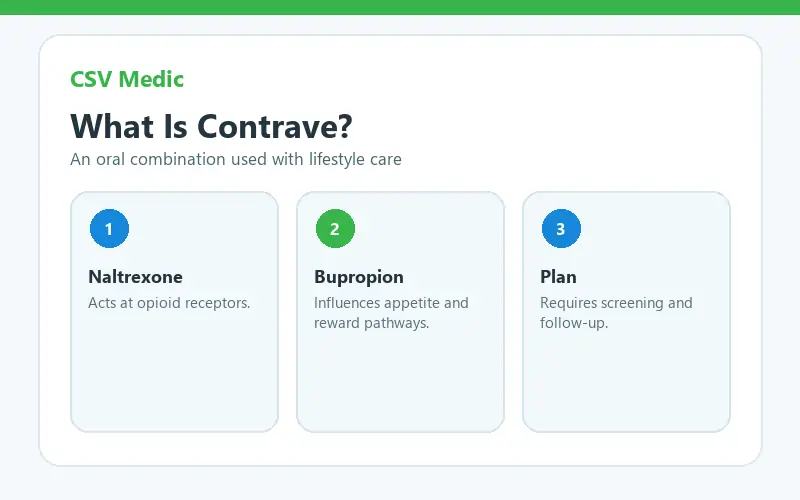
Contrave contains naltrexone, an opioid antagonist, and bupropion, a medicine also used in other products for depression and smoking cessation. Together they are thought to affect brain pathways involved in appetite and reward. Contrave is not a stimulant and is not the same as a GLP-1 injection. It is taken by mouth according to a gradual schedule in the prescribing information.
The FDA indication includes adults with obesity or adults with overweight plus at least one weight-related condition, subject to the full label and a clinician’s assessment. Contrave for weight loss should not be selected from BMI alone. Seizure risk, blood pressure, opioid use, eating-disorder history, pregnancy, mental health, and interacting medicines all matter.
Nine Essential Facts Behind Contrave Reviews
1. Contrave results vary
Some patients report less hunger or fewer cravings; others stop because of side effects or limited benefit. In clinical trials, average weight loss was greater with Contrave plus lifestyle intervention than with placebo plus lifestyle intervention. The average includes strong, modest, and minimal responders, so Contrave reviews should be treated as personal experiences rather than a forecast.
2. The first month is an adjustment period
Contrave dosage is increased gradually during the first weeks under the FDA label. That schedule is intended to improve tolerability and reduce risk. Contrave side effects first week discussions commonly mention nausea, headache, constipation, dizziness, dry mouth, or sleep changes. Patients should follow the prescribed schedule and contact the prescriber before changing it.
3. There is an early response checkpoint
The prescribing information includes a reassessment after the maintenance phase has had time to work. If a patient has not lost the specified percentage of baseline weight by that point, continued treatment is unlikely to produce meaningful benefit and the medicine should be discontinued as directed by the prescriber. This stopping rule makes monitoring more useful than simply collecting Contrave reviews.
4. Nausea is common but not the only concern
Contrave side effects can include nausea, constipation, headache, vomiting, dizziness, insomnia, dry mouth, and diarrhea. A clinician should also explain serious warnings and interactions. Persistent vomiting, severe headache, confusion, seizure, suicidal thoughts, allergic symptoms, eye pain, or a major rise in blood pressure requires prompt medical attention.

5. Opioid use is a major safety issue
Naltrexone blocks opioid receptors. Contrave should not be used with chronic opioids, and starting it in a person who is physically dependent on opioids can precipitate withdrawal. Trying to overcome the blockade with large opioid doses can be dangerous. Tell the prescriber about pain medicines, cough products, diarrhea medicines, and treatment for opioid use disorder.
6. Seizure and blood-pressure screening matter
Bupropion can increase seizure risk, particularly in people with certain medical histories, eating disorders, abrupt alcohol or sedative withdrawal, or interacting medications. Contrave can also raise blood pressure and heart rate. Baseline and follow-up measurements are part of responsible care. A popular before-and-after story cannot replace this screening.
7. A high-fat meal changes exposure
The current FDA label warns patients not to take Contrave with a high-fat meal because exposure to the ingredients can increase significantly. This is a practical example of why medication instructions matter. Patients should ask how to take the tablets, what to do after a missed dose, and which medicines or foods require special attention.
8. Mental-health monitoring is essential
Contrave carries warnings related to bupropion, including suicidal thoughts and behaviors in younger people taking antidepressants and neuropsychiatric symptoms. Any new agitation, severe mood change, unusual behavior, or suicidal thinking needs immediate professional help. Patients and families should know who to contact before treatment begins.
9. Lifestyle care still affects the outcome
Contrave reviews with positive results often describe changes in eating patterns, activity, or accountability alongside medication. The prescription is intended as an adjunct, not a replacement for care. A structured medical weight loss program can address protein, fiber, sleep, emotional eating, and conditions that make weight management harder.
Contrave Reviews and Before-and-After Results
Contrave before and after photos can show a visible change, but they cannot confirm the timeline, starting health, adherence, editing, or other treatments. A better assessment uses a consistent scale, waist measurements, blood pressure, symptoms, energy, and laboratory markers when appropriate. The aim is better health and sustainable function, not a dramatic photograph.
Searches for 1 month Contrave results pictures reflect understandable impatience. One month is often still early because the dose is introduced gradually and the body is adjusting. Some people notice appetite changes sooner, but the formal response decision occurs later. Never increase tablets faster to chase a photo-based result.
What Contrave Reviews Miss About Medication Comparisons
| Option | Form | Main consideration |
|---|---|---|
| Contrave | Oral naltrexone/bupropion tablet | Opioid use, seizure risk, blood pressure, mental-health warnings |
| GLP-1-based medicine | Usually injection; some oral options | Gastrointestinal history, contraindications, access, long-term plan |
| Phentermine | Oral sympathomimetic | Cardiovascular effects, duration, stimulant-related concerns |
Contrave vs phentermine is not a simple stronger-versus-weaker comparison. The medicines work differently and have different contraindications. Likewise, choosing between Contrave and a GLP-1 treatment depends on diagnosis, previous response, side effects, preferences, cost, and coverage. Review our online weight loss consultation guide to prepare a complete medication history, and browse the CSV Medic education library for comparisons of prescription options.
Contrave Reviews Cannot Replace Contraindication Screening
The full FDA label lists contraindications that include uncontrolled hypertension, seizure disorder or seizure history, anorexia or bulimia, use of other bupropion-containing products, chronic opioid use or acute opioid withdrawal, use of monoamine oxidase inhibitors within the specified period, and known allergy to the ingredients. It is also not used during pregnancy for weight loss.
- Tell the provider about every prescription, over-the-counter drug, and supplement.
- Disclose opioid use even when it is occasional or comes from another clinic.
- Discuss seizure, eating-disorder, liver, kidney, eye, and mental-health history.
- Check blood pressure before and during treatment.
- Ask for a written plan for side effects, missed doses, and the response checkpoint.
A licensed consultation can compare Contrave with other approved options without promising that one medicine fits everyone. Contrave reviews cannot tell whether your medical history creates a contraindication. Patients should also ask about insurance requirements, medication shortages, and how support will continue if treatment changes.

Frequently Asked Questions About Contrave Reviews
Does Contrave work for weight loss?
Clinical trials show that Contrave plus lifestyle intervention can produce greater average weight loss than lifestyle intervention with placebo. Individual response varies, and the label includes an early stopping rule for insufficient response.
How long does it take for Contrave to work?
Some patients notice appetite changes during the first weeks, but the dose is introduced gradually and response is assessed over months. Follow the prescriber’s timeline instead of changing the schedule yourself.
What are common Contrave side effects?
Common effects include nausea, constipation, headache, vomiting, dizziness, insomnia, dry mouth, and diarrhea. Serious warnings and interactions require patient-specific review.
Can I take Contrave with an opioid?
Contrave is contraindicated with chronic opioid use and during acute opioid withdrawal. Discuss every opioid-containing medicine with the prescriber and never try to overcome naltrexone blockade.
What do Contrave reviews say about the first month?
Experiences differ. Some describe appetite changes; others report nausea or sleep problems. Reviews cannot determine your dose, suitability, or expected result.
Is Contrave better than a GLP-1 medicine?
There is no universal best choice. Oral versus injectable preference, contraindications, expected benefit, side effects, cost, and follow-up all matter.
Can I stop Contrave suddenly?
Speak with the prescriber before stopping or changing any prescription. The clinician can consider the reason, current dose, symptoms, and next steps.
The Bottom Line
Contrave reviews are most useful when they lead to better questions, not when they replace medical evidence. Contrave is an established prescription with measurable benefits for some eligible adults and important contraindications for others. A safe decision includes opioid and seizure screening, blood-pressure and mental-health monitoring, correct administration, lifestyle support, and an honest response checkpoint.
Medical Sources and Further Reading
The following independent medical and regulatory sources support the clinical and safety information in this article:
- FDA: Current Contrave prescribing information
- DailyMed: Naltrexone and bupropion extended-release
- PubMed: Naltrexone-bupropion obesity trial
- PubMed: Naltrexone-bupropion intensive behavior modification trial
- FDA: Medication guides and safe use information
About the Author and Medical Review
This article was medically reviewed and published by the CSV Medic editorial team in collaboration with licensed healthcare providers specializing in weight management. CSV Medic content is developed under the guidance of medical professionals and checked against current regulatory information, prescribing information, and peer-reviewed research.
Medical Disclaimer
This article is for informational purposes only and does not constitute medical advice, diagnosis, or a prescription. Always consult a licensed healthcare provider before starting, stopping, or changing a medication or peptide product. Approval status, availability, insurance coverage, and individual suitability can change. Seek urgent medical care for severe or rapidly worsening symptoms.
