
Weight Loss Education, Weight Loss Medication
Wegovy Doses: 9 Essential Titration and Safety Facts
Sep
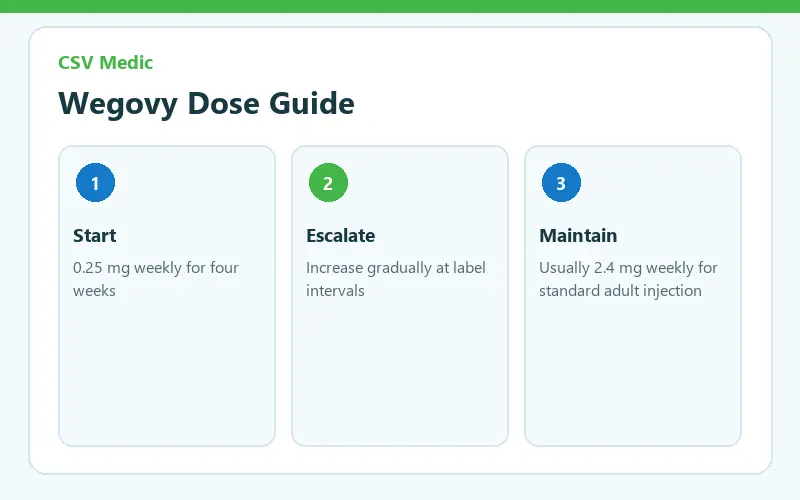
Wegovy doses are increased gradually because the medicine affects appetite and the gastrointestinal tract. Under the current FDA label, the standard weekly Wegovy injection begins at 0.25 mg for four weeks, then generally increases every four weeks through 0.5 mg, 1 mg, and 1.7 mg before the usual adult maintenance dose of 2.4 mg. Some patients may use a different maintenance plan under the product label and prescriber’s direction.
The dose on a Wegovy pen is not a target to reach as quickly as possible. Titration helps the body adapt and gives the clinician time to assess nausea, vomiting, constipation, hydration, nutrition, glucose, and other risks. A delayed or modified escalation is a clinical decision, not a failure.
This educational guide explains the Wegovy dosing schedule, how to inject Wegovy using product instructions, where to inject Wegovy, missed-dose rules, the newer higher-dose presentation, and the distinction between injection and tablet labels. It does not replace the prescription label or give an individualized schedule.
Key Takeaways
- Standard Wegovy injection starts at 0.25 mg once weekly for four weeks.
- The usual escalation proceeds to 0.5 mg, 1 mg, 1.7 mg, and then 2.4 mg at four-week intervals.
- The 0.25 mg, 0.5 mg, and 1 mg stages are escalation doses, not standard adult maintenance doses.
- The usual adult maintenance dose for standard injection is 2.4 mg weekly, with label-specific alternatives in some situations.
- FDA approved a 7.2 mg Wegovy HD presentation in 2026 for certain adults; it is not a universal next step.
- Adolescents, adults, and patients using different Wegovy formulations do not necessarily follow identical instructions.
- Wegovy tablets and Wegovy injections have different strengths, administration requirements, and schedules.
- Never combine Wegovy with another semaglutide product or GLP-1 medicine unless the current label and prescriber specifically support the plan.
- Persistent vomiting, severe abdominal pain, dehydration, allergic symptoms, or major vision changes require medical attention.
Wegovy Dosing Chart for Standard Injection
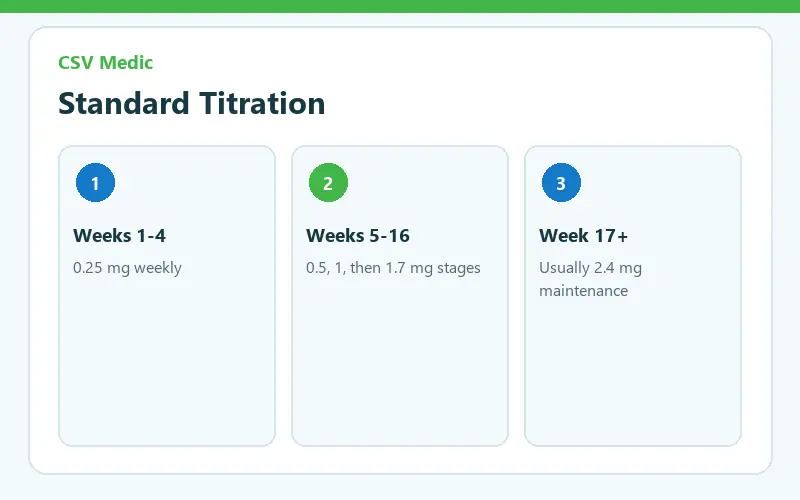
The current FDA Wegovy prescribing information should be checked with the dispensed product. The standard adult escalation is summarized below.
| Treatment weeks | Wegovy injection dose | Purpose |
|---|---|---|
| 1–4 | 0.25 mg once weekly | Initiation |
| 5–8 | 0.5 mg once weekly | Escalation |
| 9–12 | 1 mg once weekly | Escalation |
| 13–16 | 1.7 mg once weekly | Escalation |
| Week 17 onward | Usually 2.4 mg once weekly | Maintenance |
This Wegovy dosing chart is a label summary, not a prescription. The exact maintenance decision depends on the approved indication, age, response, tolerability, and formulation. Patients should use the instructions attached to their prescription.
Why Wegovy Doses Increase Slowly
Semaglutide activates GLP-1 receptors, reduces appetite and food intake, and delays gastric emptying. Increasing too rapidly may worsen nausea, vomiting, diarrhea, constipation, abdominal discomfort, dehydration, and treatment discontinuation.
Titration also creates structured checkpoints. At each stage, the prescriber can ask:
- Is the patient drinking and eating adequately?
- Are symptoms mild, improving, or worsening?
- Is constipation becoming severe?
- Has glucose changed in a person taking diabetes medicines?
- Are there signs of gallbladder disease or pancreatitis?
- Is the patient losing weight too quickly or losing strength?
- Is treatment still aligned with the approved indication and goals?
The answer may be to continue, delay escalation, reduce the dose where labeling permits, treat another cause, or stop the medicine. Patients should not click-count pens, split products, or create unofficial intermediate strengths.
Wegovy Dosage and Maintenance Decisions
The usual standard-injection maintenance dose for adults is 2.4 mg once weekly. The label describes circumstances in which 1.7 mg may be considered for some adult weight-management patients based on response and tolerability. Different indications or age groups may have specific requirements.
The lowest starting stages are not intended as routine maintenance in the standard label. That does not mean a patient should escalate while significantly unwell. It means the prescriber should decide whether delaying, adjusting, or discontinuing is safer than improvising an indefinite schedule.
CSV Medic’s Wegovy versus Ozempic guide explains why Ozempic pen strengths should not be used to reconstruct a Wegovy regimen.
Wegovy HD 7.2 mg: What Changed in 2026?
In March 2026, FDA approved Wegovy HD, a 7.2 mg weekly injection for certain adults with obesity. The FDA Wegovy HD announcement describes the supporting study and the intended population.
This approval does not mean every adult should move from 2.4 mg to 7.2 mg. The higher-dose product has its own selection criteria, escalation instructions, efficacy data, and adverse-effect profile. Gastrointestinal reactions remain important, and altered skin sensations were reported more frequently at the higher dose in the supporting program.
Patients should verify the exact brand presentation and package. A compounded vial labeled “semaglutide 7.2 mg” is not Wegovy HD and has not automatically met the approved product’s manufacturing, device, clinical, or labeling standards.
Wegovy Injection Versus Wegovy Tablets
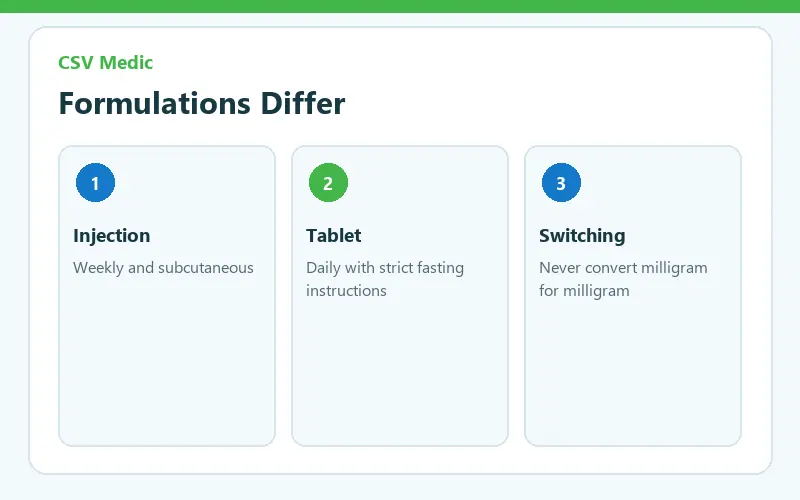
Wegovy now includes injection and tablet presentations under current labeling. They are not milligram-for-milligram substitutes. Oral absorption is affected by timing, water volume, food, beverages, and other oral medicines.
| Feature | Wegovy injection | Wegovy tablets |
|---|---|---|
| Route | Subcutaneous | Oral |
| Frequency | Once weekly | Once daily |
| Administration | Approved injection sites | Empty stomach with strict timing instructions |
| Strength comparison | Product-specific | Not equivalent milligram for milligram to injection |
| Switching | Prescriber and label instructions required | Prescriber and label instructions required |
The tablet is swallowed whole in the morning on an empty stomach with up to four ounces of plain water. Patients wait at least 30 minutes before eating, drinking, or taking other oral medicines. Tablets should not be split, crushed, or chewed.
An Ozempic pill, Ozempic tablet, oral semaglutide brand, and Wegovy tablet are not automatically the same product. Brand, indication, formulation, and current approval must be verified.
How to Inject Wegovy
Patients should read the Instructions for Use supplied with their exact pen. General steps include:
- Check the name, dose, expiration date, and appearance of the medicine.
- Wash and dry hands.
- Choose an approved injection area with intact skin.
- Clean the area if instructed and allow it to dry.
- Remove the pen cap only when ready.
- Place the pen against the skin as shown in the product instructions.
- Hold it in place for the full indicated time and confirm delivery.
- Dispose of the used pen or needle as directed.
Do not use a pen that is damaged, frozen, overheated, expired, or has unclear contents. Do not transfer medicine between devices or syringes. Do not share pens.
The FDA sharps-safety guide explains disposal at home and during travel.
Where to Inject Wegovy
Approved Wegovy injection sites include the abdomen, thigh, or upper arm. Rotate the site each week. Avoid skin that is tender, bruised, red, hard, scarred, or otherwise abnormal.
“Where to inject Wegovy for the best weight loss” is a misleading question. The chosen approved site is about safe administration, not spot reduction. Injecting near abdominal fat does not selectively remove abdominal fat.
If another injectable medicine is used, injections should not be given immediately next to each other. The prescriber or pharmacist can demonstrate technique.
What Time Should Wegovy Be Injected?
Wegovy injection can generally be taken at any time of day, with or without meals, on the selected weekly day. Consistency helps prevent missed or duplicate doses.
Some patients choose a day that allows them to observe symptoms, but there is no universal “best time” that guarantees fewer side effects. Work schedules, diabetes medicines, travel, and procedures may affect the plan.
Changing the Weekly Injection Day
The weekly day can be changed when the interval rules in the current label are met. Patients should verify the required gap rather than relying on memory or an old forum post. A calendar, medication reminder, or pharmacy app can help.
Changing days repeatedly can create confusion and accidental extra doses. Record the date, dose, and pen strength after each administration.
Missed Wegovy Dose
The missed-dose instruction depends on how soon the next scheduled dose is due and whether multiple doses have been missed. The FDA label and pharmacy directions should guide the response.
General principles are:
- do not take two doses together to “catch up”;
- check the time remaining before the next scheduled dose;
- contact the prescriber after two or more consecutive missed doses because reinitiation may reduce gastrointestinal reactions;
- do not restart at a high dose after a long interruption without advice.
A supply delay, procedure, illness, or travel interruption may require a different plan. The Wegovy insurance guide and Wegovy coupon guide can help patients anticipate access problems.
Delaying Dose Escalation
The label allows clinicians to consider delaying escalation when a dose is not tolerated. That decision should assess symptom severity, hydration, nutrition, bowel function, and alternative causes.
A reasonable clinical conversation asks:
- Is the symptom mild and improving?
- Can the patient keep fluids down?
- Is there severe or localized abdominal pain?
- Are glucose readings changing?
- Is another medicine contributing?
- Is the patient eating enough protein and micronutrients?
- Would a pause create a new risk?
“Stay on the lowest dose forever” and “always increase every four weeks” are both oversimplifications when detached from the label and clinical context.
Wegovy Dose Side Effects
Common reactions include nausea, diarrhea, vomiting, constipation, abdominal pain, headache, fatigue, dyspepsia, dizziness, abdominal distension, belching, hypoglycemia in people with type 2 diabetes, flatulence, gastroenteritis, and reflux disease.
Important warnings include:
- thyroid C-cell tumor risk observed in rodents;
- acute pancreatitis;
- acute gallbladder disease;
- hypoglycemia with insulin or insulin secretagogues;
- acute kidney injury from volume depletion;
- severe gastrointestinal adverse reactions;
- hypersensitivity;
- diabetic retinopathy complications in people with type 2 diabetes;
- increased heart rate;
- aspiration risk during anesthesia or deep sedation.
In January 2026, FDA reported that its review did not find an increased risk of suicidal behavior or ideation with GLP-1 obesity medicines and requested removal of that warning from affected labels. The FDA safety communication demonstrates why current labels matter.
When to Seek Medical Help
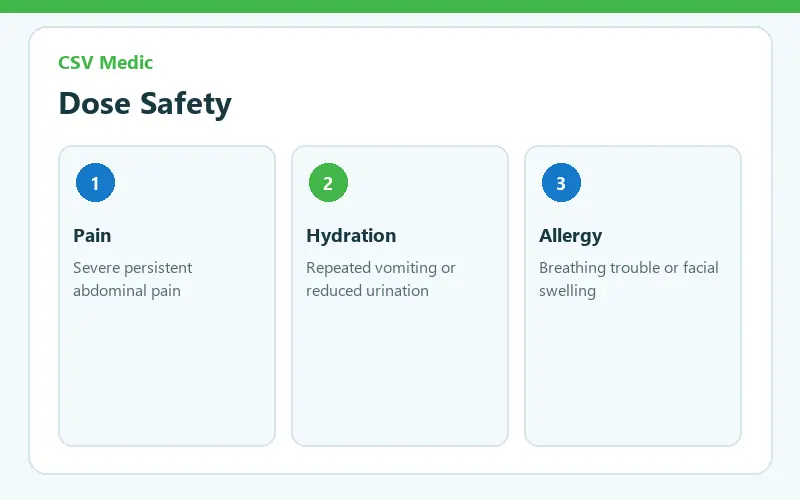
Contact a clinician promptly or seek urgent care for:
- severe, persistent abdominal pain, especially with vomiting;
- repeated vomiting or inability to drink;
- signs of dehydration or reduced urination;
- severe constipation with swelling, vomiting, or inability to pass gas;
- facial or throat swelling, breathing trouble, or widespread hives;
- new major vision changes;
- jaundice, fever, or severe right upper abdominal pain;
- symptoms of very low glucose that do not respond to the prescribed plan.
Who Should Not Use Wegovy?
Wegovy is contraindicated with a personal or family history of medullary thyroid carcinoma, MEN 2, or a prior serious hypersensitivity reaction to semaglutide or an excipient. Other medical situations require careful assessment.
Semaglutide should be discontinued before a planned pregnancy according to the label because of its long washout period. It is not recommended in severe gastroparesis. Patients should discuss pancreatitis, gallbladder disease, kidney problems, diabetic retinopathy, eating disorders, procedures, and all other medicines.
Compounded Semaglutide Is Not a Wegovy Dose
A syringe marked in “units” does not by itself identify a semaglutide dose. Concentrations vary, and FDA has received reports of compounded-product dosing errors, including patients administering substantially more than intended.
Compounded drugs are not FDA approved. They should not be marketed as generic Wegovy or as the same as an approved product. FDA’s unapproved GLP-1 concerns include fraudulent labels, salt forms, quality concerns, and adverse events.
Use a licensed prescriber and pharmacy. CSV Medic’s online consultation guide explains how to verify care.
Nutrition and Exercise Across the Dosing Schedule
Dose escalation should not crowd out nutrition. Appetite suppression can reduce protein, fiber, fluids, and micronutrients as well as calories.
Practical priorities include:
- protein distributed through the day based on medical and kidney needs;
- vegetables, fruit, legumes, and whole grains as tolerated;
- resistance exercise to support strength and lean tissue;
- aerobic activity appropriate to health and fitness;
- a hydration plan adapted to kidney and heart conditions;
- sleep and stress support;
- tracking symptoms and function, not only scale weight.
The CDC physical-activity guidance offers general targets. A dietitian or clinician can individualize them.
Patients comparing weekly options can also review Wegovy versus Mounjaro and Zepbound versus Wegovy. These comparisons should not be used to convert doses between products.
The STEP 1 semaglutide trial provides clinical context for standard-dose injection outcomes, while the current FDA label remains the source for an individual prescription.
Patient Discussion: Useful Questions, Not Dosing Instructions
A Reddit thread about the Wegovy titration schedule and a Mayo Clinic Connect Wegovy discussion show that patients commonly ask whether to increase when a lower dose feels effective or causes symptoms.
These are anecdotes. The writers’ diagnoses, products, medical histories, and prescriber plans may differ. Forum comments should not override the FDA label or a clinician who knows the patient.
Frequently Asked Questions
What are the Wegovy doses?
The standard injection escalation is 0.25 mg, 0.5 mg, 1 mg, 1.7 mg, and usually 2.4 mg weekly, generally in four-week stages.
Is 0.25 mg a maintenance dose?
No. It is the standard initiation dose for injection, intended to support tolerability during escalation.
Can Wegovy dosing be increased faster?
Patients should not accelerate the label schedule. Faster escalation may increase adverse effects and dosing errors.
What if I cannot tolerate the next dose?
Contact the prescriber. The label permits consideration of delayed escalation, and severe symptoms may require evaluation or discontinuation.
Where should I inject Wegovy?
Use the abdomen, thigh, or upper arm as shown in the Instructions for Use, and rotate sites.
Can I use an Ozempic pen for a Wegovy dose?
Do not substitute devices or create a dose by click counting. The brands have different approvals, pens, strengths, and instructions.
What is Wegovy HD?
It is a 7.2 mg weekly semaglutide injection approved in 2026 for certain adults with obesity. It is not appropriate for everyone.
Are Wegovy tablets equivalent to injections?
No. Route, schedule, strengths, absorption, and instructions differ. Switching requires the current label and prescriber guidance.
What happens after missing several injections?
Contact the prescriber. Reinitiating escalation may be considered to reduce gastrointestinal effects.
Can Wegovy be taken with another GLP-1 drug?
Wegovy should not be used with another semaglutide-containing product or another GLP-1 receptor agonist unless current product directions and a specialist explicitly support the situation.
Conclusion
Wegovy doses are structured to balance benefit and tolerability. The standard injection moves through 0.25 mg, 0.5 mg, 1 mg, and 1.7 mg before the usual 2.4 mg maintenance dose, while newer Wegovy HD and tablet presentations have product-specific rules. The safest schedule is the one on the current label, matched to the patient and monitored by a qualified clinician.
Explore CSV Medic’s weight-loss medications or contact the team for information about legally available products, pharmacy services, and consultation options. Product availability does not establish eligibility or replace a prescription.
Medical disclaimer: This article provides general education only. It is not personal dosing advice and does not replace the FDA label, pharmacist instructions, or care from a qualified prescriber.
Editorial review: Prepared for CSV Medic and intended for Dr Spencer’s review before publication. Label and regulatory information checked September 1, 2026.
