
Weight Loss Education, Weight Loss Medication
Semax Peptide: 10 Important Research and Safety Facts

Aug
Semax peptide is often promoted online as a nootropic nasal spray for focus, memory, stress resilience, or brain recovery. The scientific picture is more limited. Semax has been investigated in laboratory studies and in selected human research, especially outside the United States, but it is not an FDA-approved medicine in the United States and its long-term safety is not established.
Patients should be especially careful when a seller turns early neurobiology research into a promise of sharper thinking or faster recovery. A study can justify more research without justifying self-treatment.
This guide explains what Semax peptide is, what researchers have studied, what the FDA has reviewed, why dosage charts are unreliable, and how to discuss cognitive or neurologic symptoms safely with a licensed clinician.
Key Takeaways
- Semax is a synthetic peptide derived from a short sequence related to adrenocorticotropic hormone, but it is designed without the hormone’s usual corticosteroid-stimulating activity.
- Research has explored stroke recovery, neuroprotection, attention, memory, stress, and inflammatory signaling.
- Evidence is limited by study size, geography, methods, language access, and the absence of large U.S. approval trials.
- Semax peptide is not FDA approved for stroke, cognitive enhancement, anxiety, ADHD, brain injury, or wellness use.
- FDA reviewers have raised concerns about limited safety information and possible immunogenicity, aggregation, and peptide-related impurities.
- There is no FDA-approved Semax peptide dosage or validated Semax dosing chart for self-treatment.
- Sudden neurologic symptoms require emergency care, not an online peptide.
What Is Semax Peptide?
Semax peptide is a synthetic heptapeptide, meaning it contains seven amino acids. It was designed from the ACTH(4-7) fragment with an added Pro-Gly-Pro sequence. Researchers developed it to investigate neurologic effects without reproducing the full hormonal actions of ACTH.
The compound is sometimes described as a Semax nootropic peptide because online communities associate it with cognition and focus. “Nootropic” is a broad marketing and research term, not an FDA approval category. It does not establish that a product is effective, safe, or appropriate for a particular patient.
Semax may also be labeled Semax acetate or sold as Semax nasal spray. Those names can describe chemical form or delivery, but they do not confirm identity, purity, sterility, dose accuracy, or legal status.
What Is Semax Peptide Used For in Research?
Semax has been investigated in several areas:
- ischemic stroke and neurologic recovery;
- learning, attention, and memory pathways;
- stress-related signaling;
- inflammatory and neurotrophic pathways;
- animal models of brain injury or neurodegeneration.
A small study indexed in PubMed examined gene-expression changes in patients with ischemic stroke who received Semax alongside standard treatment. The publication is relevant to mechanism research, but it does not establish broad effectiveness or U.S. approval. Readers can review the Semax stroke publication and the wider PubMed Semax literature.
The FDA’s scientific briefing also reviews the available literature and its limitations. The FDA Semax briefing document is particularly useful because it distinguishes reported research from the evidence needed for a favorable compounding or approval decision.
Why Mechanism Studies Are Not Clinical Proof
Laboratory findings may suggest that Semax influences neurotrophic factors, inflammatory signaling, neurotransmitter systems, or gene expression. These observations can help researchers form hypotheses.
They do not answer the practical questions patients need answered: Does the product improve daily function? Which patients benefit? What dose works? How long should it be used? What are the uncommon or delayed adverse effects? How does it compare with established care?
Those questions require well-designed, replicated clinical trials with standardized manufacturing and transparent adverse-event reporting.
Semax Peptide Benefits: Claims vs Evidence
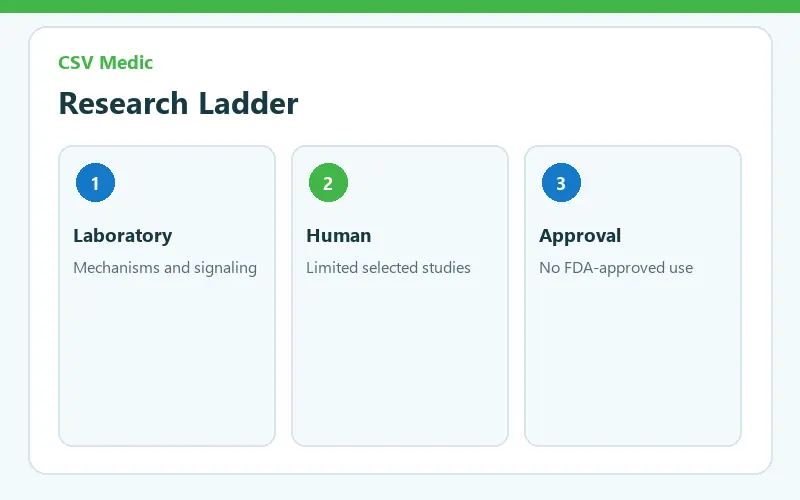
Online Semax peptide benefits often include improved concentration, memory, mood, motivation, stress tolerance, or stroke recovery. The strength of evidence varies, and none of these claims represents an FDA-approved U.S. indication.
| Common claim | Evidence-based interpretation |
|---|---|
| Better focus | Cognitive pathways have been investigated, but reliable benefit for healthy adults is not established |
| Improved memory | Preclinical and limited clinical research exists; no approved memory indication |
| Reduced anxiety | Online claims exceed the quality of current clinical evidence |
| Stroke recovery | Studied in selected settings, but not a substitute for emergency or guideline-directed stroke care |
| Brain protection | Mechanistic and animal findings do not prove patient benefit |
| Faster exercise or work recovery | No established treatment indication or validated protocol |
A responsible interpretation uses phrases such as “has been investigated” or “early research suggests.” It avoids turning a biological possibility into a medical promise.
Is Semax Peptide FDA Approved?
No. Semax peptide is not FDA approved for any medical condition in the United States.
FDA identifies Semax among bulk drug substances that may present significant safety risks in compounding. The agency notes limited safety information for proposed routes and concerns that peptide-related impurities, aggregation, or immune reactions may create risk. See the FDA’s bulk-substance safety information.
The Pharmacy Compounding Advisory Committee, or PCAC, can make recommendations about whether a bulk substance should be included on a compounding list. A PCAC vote is advisory. It is not drug approval, and it does not establish that Semax is proven safe or effective. The FDA’s July 2026 PCAC meeting page provides the official meeting record.
FDA approval is a separate process involving a specific product, indication, manufacturing system, clinical evidence package, and reviewed label.
Semax Peptide Dosage and Dosing Charts
There is no FDA-approved Semax peptide dosage for focus, memory, anxiety, stroke recovery, ADHD, brain injury, or general wellness. There is also no validated U.S. Semax peptide dosing chart for patient self-use.
Online protocols may describe drops, sprays, micrograms, cycles, or concentrations. These instructions can vary widely because there is no single approved product label anchoring the advice. Even when a number resembles one from a study, the product, population, route, formulation, and monitoring may be different.
CSV Medic does not provide self-dosing instructions for unapproved Semax nasal spray or injectable products. Patients can review general peptide safety education and discuss approved options during an online consultation.
Why Nasal Delivery Still Requires Caution
Nasal administration can sound less risky than injection, but it is not automatically safe. Absorption can vary with formulation, nasal inflammation, device performance, technique, and product quality. Repeated exposure may irritate tissue, and an inaccurately concentrated product can deliver an unintended amount.
A nasal bottle also cannot prove that its contents match the label. Identity and contamination remain important concerns.
Semax Peptide Side Effects and Unknowns
The evidence is not strong enough to provide a complete, reliable frequency table for Semax peptide side effects. Reported or plausible concerns may include nasal irritation, headache, dizziness, fatigue, agitation, sleep changes, allergic reactions, or unexpected neurologic symptoms, but online reports cannot establish true incidence.
Additional safety questions include:
- immune reactions to the peptide or impurities;
- aggregation during manufacturing or storage;
- inconsistent concentration;
- contamination or mislabeling;
- interactions with psychiatric, neurologic, cardiovascular, or stimulant medicines;
- effects in pregnancy, breastfeeding, children, older adults, or people with serious disease;
- consequences of repeated or long-term exposure.
FDA explains that compounded drugs are not FDA approved and are not reviewed for safety, effectiveness, or quality before marketing. Its compounding questions and answers provides useful context.
Sudden Neurologic Symptoms Are an Emergency
Semax should never delay emergency evaluation for stroke or another acute neurologic condition. Call emergency services immediately for sudden facial drooping, arm weakness, speech difficulty, loss of balance, severe unexplained headache, confusion, vision loss, or numbness on one side.
The National Institute of Neurological Disorders and Stroke explains stroke warning signs and why rapid treatment matters. An experimental peptide purchased online is not emergency stroke care.
Who Should Avoid Experimental Semax Products?
Self-directed use is especially concerning for:
- pregnant or breastfeeding people;
- children and adolescents;
- people with seizures or unstable neurologic disease;
- patients with bipolar disorder, psychosis, severe anxiety, or recent suicidal thoughts;
- anyone taking multiple stimulants, psychiatric medicines, or neurologic drugs;
- people with serious cardiovascular, liver, or kidney disease;
- patients recovering from stroke or brain injury without specialist oversight;
- anyone who cannot verify a licensed prescriber, pharmacy, and product source.
Symptoms involving memory, concentration, mood, or fatigue can have treatable causes, including sleep disorders, anemia, thyroid disease, medication effects, depression, nutrient deficiencies, infection, or metabolic illness. Evaluation should come before experimentation.
Semax vs Selank
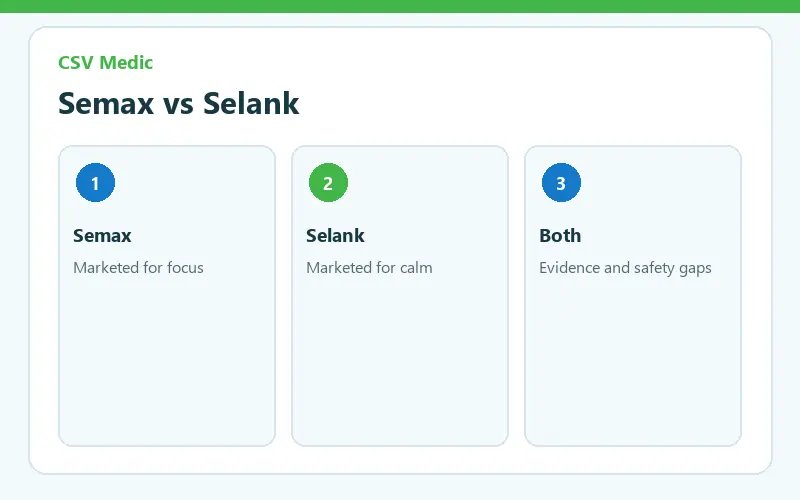
Semax and Selank are often compared in nootropic communities, but they are different peptides with different proposed mechanisms and research histories.
| Feature | Semax | Selank |
|---|---|---|
| Common online positioning | Focus, memory, neuroprotection | Anxiety, stress, calm |
| Evidence status | Experimental; limited clinical literature | Experimental; limited clinical literature |
| FDA approval | None | None |
| Validated U.S. dose | None | None |
| Main patient concern | Uncertain benefit, safety, identity, and interactions | Uncertain benefit, safety, identity, and interactions |
A Semax vs Selank comparison cannot determine which is “better” for an individual because neither has an FDA-reviewed U.S. indication or validated self-treatment protocol.
Product Quality and Compounding Questions
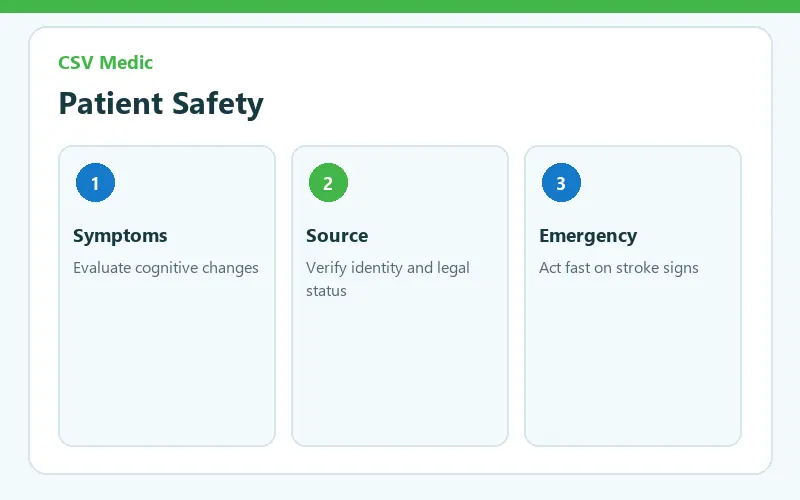
When a product is described as compounded, patients should understand what that term means. Compounding can serve important patient needs when an FDA-approved drug cannot meet a specific medical requirement, but compounded drugs carry greater risk because they do not undergo FDA premarket review.
Ask:
- Is the pharmacy licensed in the patient’s state?
- Is a patient-specific prescription required?
- What lawful basis supports use of the bulk ingredient?
- How are identity, potency, sterility, and endotoxins tested?
- Is a certificate of analysis tied to the actual lot?
- What is the beyond-use date and storage requirement?
- Who provides adverse-event support and follow-up?
The FDA describes quality failures and enforcement activity on its compounding oversight page. CSV Medic’s medical disclaimer also explains the limits of online education.
Myths vs Facts About Semax Peptide
Myth: Semax is approved because it has been used in another country
Fact: Regulatory authorization differs by country and product. Foreign use does not equal FDA approval in the United States.
Myth: A nasal spray cannot have systemic risks
Fact: Nasal products can be absorbed, may interact with other medicines, and can have quality or dosing problems.
Myth: Positive Semax Reddit reviews prove effectiveness
Fact: A Semax Reddit discussion reflects personal experiences, not verified product identity or controlled evidence.
Myth: A PCAC recommendation makes Semax legal or approved
Fact: PCAC advises FDA on compounding questions. FDA approval and rulemaking are separate processes.
Myth: Peptides cannot trigger immune reactions
Fact: Peptides and peptide-related impurities may be immunogenic. Manufacturing and aggregation can affect that risk.
Safer Ways to Support Focus and Brain Health
Persistent cognitive symptoms should be evaluated rather than covered with a stimulant or experimental product. Depending on the cause, a clinician may assess sleep, mood, medications, substance use, thyroid function, anemia, vitamin status, blood pressure, glucose, or neurologic signs.
Practical foundations include:
- consistent sleep and treatment of sleep apnea;
- regular aerobic activity and resistance training;
- adequate nutrition and hydration;
- management of blood pressure, cholesterol, and diabetes;
- limiting alcohol and avoiding unverified drugs;
- addressing depression, anxiety, or burnout;
- using prescribed medications exactly as directed.
Patients managing weight can explore CSV Medic’s weight loss education and medically supervised programs. Better metabolic health can support overall wellbeing, but no program guarantees cognitive or weight-loss outcomes.
Frequently Asked Questions About Semax Peptide
What is Semax peptide?
Semax is a synthetic seven-amino-acid peptide investigated for neurologic and cognitive effects. It is not FDA approved in the United States.
What is Semax peptide used for?
Research has explored stroke recovery, cognition, stress, and neurobiological signaling. These investigations have not created an approved U.S. treatment indication.
Is Semax a nootropic?
It is often marketed as a nootropic peptide, but that label does not prove clinical benefit or safety.
Is Semax peptide FDA approved?
No. A compounding advisory committee discussion or vote is not FDA approval.
What are Semax peptide benefits?
Potential cognitive and neurologic effects have been investigated, but evidence is insufficient to promise benefits for patients or healthy adults.
Is there a Semax peptide dosage chart?
No FDA-approved or clinically validated U.S. dosing chart exists for routine self-treatment.
What are Semax peptide side effects?
The safety database is incomplete. Nasal irritation, headache, sleep or mood changes, allergic reactions, product-quality problems, and unknown interactions are concerns.
Is Semax nasal spray safer than injected Semax?
Nasal delivery avoids injection-related infection risk, but it still carries absorption, dosing, interaction, irritation, and product-quality concerns.
Can Semax be used after a stroke?
Patients recovering from stroke should follow their neurologist’s treatment plan. Semax is not an FDA-approved substitute for emergency care, rehabilitation, or secondary prevention.
Can Semax be combined with weight loss medication?
There is no established guidance supporting self-combination with semaglutide, tirzepatide, or another therapy. Disclose every substance to the prescribing clinician. Our weight loss medication guide explains why medical screening matters.
Where can patients check Semax studies?
Use ClinicalTrials.gov, PubMed, FDA documents, and peer-reviewed publications. Seller blogs and testimonials should not be treated as equivalent evidence.
Questions to Ask Before Considering Any Peptide
- Is this product FDA approved for my condition?
- What quality of human evidence supports it?
- Could my symptoms signal a condition that needs diagnosis?
- What interactions are known or unknown?
- Is the pharmacy licensed, and is a prescription required?
- How will adverse effects be reported and treated?
- What approved alternatives should I consider first?
CSV Medic’s contact page can help readers request information about legally available, medically supervised services. Contact does not imply that Semax or another unapproved product is available or appropriate.
Conclusion
Semax peptide is scientifically interesting, but interest is not the same as an approved treatment. Existing studies do not establish a dependable benefit for healthy cognition, and important questions remain about dose, long-term safety, interactions, manufacturing, and product identity.
Patients with cognitive, mood, sleep, or neurologic symptoms should begin with a licensed medical evaluation. That route is slower than an online promise, but it is far more likely to identify the real problem and an evidence-based plan.
About the Author
This article was medically reviewed and published by the CSV Medic editorial team in collaboration with licensed healthcare providers specializing in weight management and peptide therapy. CSV Medic content is developed under professional guidance and supported by regulatory or peer-reviewed sources so readers can distinguish established care from preliminary research.
Medical Disclaimer
This article is for educational purposes only and does not constitute medical advice, diagnosis, or a prescription. Semax peptide is not FDA approved in the United States. Always consult a licensed healthcare professional before starting, stopping, combining, or changing any medication, nasal product, or injectable substance. Call emergency services for sudden stroke symptoms or other severe reactions.
