
Weight Loss Education, Weight Loss Medication
DSIP Peptide: 9 Clear Facts About Sleep and Safety

Aug
People usually discover DSIP peptide while searching for better sleep, deeper rest, stress recovery, or a way to reset a disrupted sleep schedule. The important answer is less dramatic than many online claims: delta sleep-inducing peptide has been investigated for decades, but the evidence does not establish DSIP as an FDA-approved or reliably effective treatment for insomnia.
That distinction matters. Poor sleep can come from sleep apnea, medication effects, anxiety, pain, hormonal changes, alcohol use, circadian disruption, or another medical condition. An experimental peptide cannot replace a proper evaluation when sleep problems are persistent.
This patient guide explains what DSIP peptide is, what early studies have explored, why the evidence remains uncertain, what regulators have said, and which safer questions to discuss with a licensed healthcare professional.
Key Takeaways
- DSIP stands for delta sleep-inducing peptide and is also called emideltide in regulatory documents.
- Limited and often older research has examined sleep, stress, pain, and neuroendocrine effects, but results have not produced an established clinical indication.
- No FDA-approved DSIP peptide product exists for insomnia, sleep improvement, recovery, or wellness use.
- The FDA has said it lacks sufficient safety information for proposed compounded routes of administration.
- There is no validated DSIP peptide dosage, dosing chart, or routine treatment schedule for patients.
- Products sold online may present identity, purity, sterility, labeling, and dosing risks.
- Persistent insomnia, loud snoring, breathing pauses, or severe daytime sleepiness deserve medical evaluation.
What Is DSIP Peptide?
DSIP peptide is a small chain of nine amino acids, which makes it a nonapeptide. The name came from early experiments exploring whether the compound influenced sleep-related brain activity. It later appeared in research under the name emideltide.
The name can create the impression that delta sleep inducing peptide is a proven sleep medication. It is not. A name based on an early laboratory observation does not establish clinical effectiveness, an approved use, or an appropriate dose.
A frequently cited scientific review described a complicated research history involving sleep, stress, pain, temperature regulation, and hormonal signaling. It also emphasized inconsistent findings and unanswered questions. Patients can review that background in this published DSIP review, but the review should not be mistaken for approval or a modern prescribing guideline.
How Has Delta Sleep-Inducing Peptide Been Studied?
Early DSIP peptide research included laboratory experiments, animal studies, and small human investigations. Researchers looked at whether the peptide altered sleep stages, sleep onset, stress responses, withdrawal symptoms, pain, or endocrine activity.
Those studies do not all point in the same direction. Some reported changes in selected sleep measurements, while others did not demonstrate a dependable clinical effect. Many studies were small, used different formulations or routes, and were conducted before current standards for large randomized trials became common.
The most useful way to interpret the evidence is as a research signal, not a treatment verdict. A compound may produce a biological effect in a laboratory without becoming a safe, effective medicine. The PubMed database shows the scope and age of the literature, while ClinicalTrials.gov can be used to check for registered studies.
Evidence Questions That Still Need Answers
- Does DSIP consistently improve patient-important sleep outcomes?
- Which formulation and route would be appropriate?
- What short-term and long-term adverse effects might occur?
- How does it interact with sleep medicines, antidepressants, alcohol, or other sedatives?
- Which patients, if any, are most likely to benefit?
- Can manufacturing remain consistent and sterile?
Until these questions are answered through stronger clinical research, claims about DSIP peptide benefits should remain cautious.
DSIP Peptide Benefits: What Is Claimed vs What Is Known?
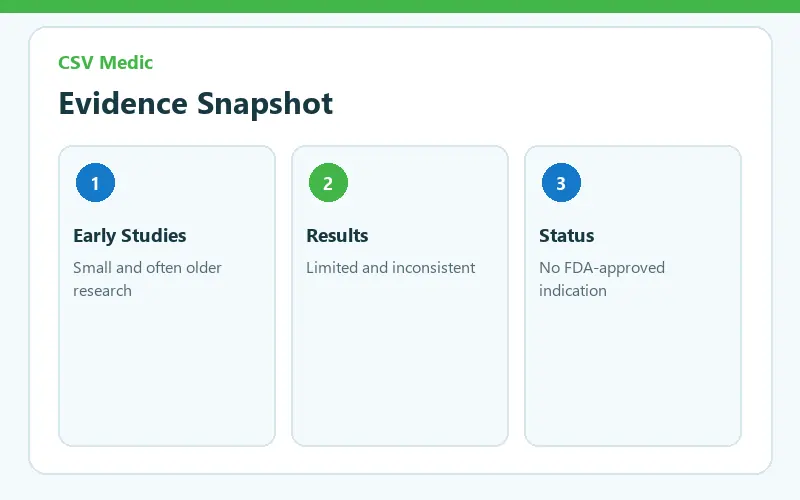
Online descriptions often claim that DSIP peptide can deepen sleep, shorten the time needed to fall asleep, reduce stress, improve recovery, ease pain, or balance hormones. These claims combine preliminary observations with marketing language.
| Claimed use | What the evidence currently supports |
|---|---|
| Deeper sleep | Investigated, but no dependable FDA-reviewed clinical benefit is established |
| Faster sleep onset | Limited and inconsistent evidence; not a validated insomnia treatment |
| Stress reduction | Biological pathways have been explored, but clinical usefulness is uncertain |
| Exercise recovery | No established patient treatment indication or validated protocol |
| Pain relief | Early research exists, but evidence is insufficient for routine care |
| Hormone regulation | Experimental observations do not establish a safe therapeutic use |
This does not mean every laboratory observation is meaningless. It means patients should not treat early-stage evidence as a promise. The difference between “has been investigated” and “has been proven” is central to safe medical decision-making.
Is DSIP Peptide FDA Approved?
No. DSIP peptide is not FDA approved as a prescription medicine, over-the-counter sleep aid, dietary supplement, or wellness injection.
The FDA lists emideltide, the regulatory name associated with DSIP, among bulk substances that may present significant safety concerns in compounding. The agency states that it lacks safety-related information for the proposed route of administration and does not have enough information to determine whether the substance would cause harm in humans. See the FDA’s significant safety risks for compounded bulk substances.
The FDA’s Pharmacy Compounding Advisory Committee may discuss or vote on whether a substance should be included on a compounding list. A committee recommendation is advisory. It is not FDA approval, and it does not immediately change the legal status of a product. The official July 2026 PCAC meeting page contains meeting materials and regulatory context.
What Section 503A Does and Does Not Mean
Section 503A of the Federal Food, Drug, and Cosmetic Act describes conditions under which a state-licensed pharmacy or physician may qualify for certain exemptions when compounding a patient-specific prescription. It does not turn an unapproved ingredient into an FDA-approved drug.
FDA explains that compounded drugs are not FDA approved and that the agency does not verify their safety, effectiveness, or quality before marketing. Patients can read the agency’s compounding questions and answers before interpreting any pharmacy claim.
DSIP Peptide Dosage and Dosing Charts
There is no FDA-approved DSIP peptide dosage for sleep, recovery, anxiety, pain, or another medical condition. There is also no clinically validated DSIP peptide dosing chart for routine patient use.
Online protocols may list micrograms, timing before bed, cycling instructions, or escalating schedules. These figures are not a substitute for an approved label or evidence-based guideline. A dosage copied from a forum does not account for product concentration, route, sterility, medical history, drug interactions, or the possibility that the vial contains something different from its label.
CSV Medic does not provide a self-injection schedule for an unapproved peptide. Patients researching peptide therapy should first confirm whether the specific product is legally available for patient use and whether a licensed clinician has recommended an appropriate, evidence-supported option.
Why “How Many Units?” Is the Wrong First Question
Syringe units measure liquid volume, not peptide mass. The number of units corresponding to a dose changes with concentration. Without a verified formulation and medical order, converting milligrams or micrograms into syringe units can create a serious dosing error.
The safer first questions are:
- Is the ingredient approved or lawfully compounded for this patient?
- Has the product identity and concentration been verified?
- Is the dispensing pharmacy properly licensed?
- What evidence supports the intended use?
- What monitoring and follow-up will occur?
DSIP Peptide Side Effects and Safety Gaps
An incomplete safety database means there is no reliable list of common DSIP peptide side effects with known frequencies. That uncertainty is itself a safety concern.
Potential risks may come from the active substance, its metabolites, an immune reaction, a contaminant, an incorrect concentration, or the route of administration. Injectable products add risks such as infection, abscess, local tissue injury, and bloodstream infection when sterility fails.
People taking sedatives, sleep medicines, opioids, antidepressants, antihistamines, alcohol, or other substances that affect alertness should be especially cautious about adding an experimental compound. Unknown interactions can affect breathing, coordination, blood pressure, mood, or daytime functioning.
Seek urgent medical care for breathing difficulty, facial or throat swelling, fainting, chest pain, severe confusion, a seizure, signs of infection, or rapidly worsening symptoms after any injection.
Who Should Avoid Experimental DSIP Products?
Because the evidence and product quality are uncertain, self-directed DSIP use is not appropriate. Extra caution is warranted for:
- pregnant or breastfeeding people;
- children and adolescents;
- people with untreated sleep apnea or serious breathing disorders;
- anyone using opioids, benzodiazepines, or multiple sedating medicines;
- people with severe liver, kidney, neurologic, or psychiatric conditions;
- patients with a history of serious allergic reactions;
- competitive athletes subject to anti-doping rules;
- anyone unable to verify the prescriber, pharmacy, and product source.
A licensed clinician can help identify whether an approved treatment or a sleep evaluation is more appropriate.
DSIP for Sleep vs Established Insomnia Care

For chronic insomnia, the strongest first-line intervention is often cognitive behavioral therapy for insomnia, commonly called CBT-I. It addresses the thoughts, behaviors, and sleep patterns that maintain insomnia without relying only on medication.
The American Academy of Sleep Medicine explains CBT-I and sleep-care options. The National Heart, Lung, and Blood Institute also outlines evidence-based insomnia treatment, including behavioral care and appropriately selected medications.
| Approach | Evidence status | Important consideration |
|---|---|---|
| CBT-I | Established first-line care for chronic insomnia | Requires participation and consistent practice |
| Sleep schedule and environment changes | Helpful foundation | Best when tailored to the cause of poor sleep |
| FDA-approved sleep medicines | Approved for defined uses | Benefits and risks vary by patient |
| Sleep apnea evaluation | Essential when symptoms suggest breathing pauses | Untreated apnea can affect cardiovascular and daytime health |
| DSIP peptide | Experimental and unapproved | No validated dose or established benefit |
For people also working on metabolic health, sleep is one part of a wider plan. CSV Medic’s weight loss programs and online consultation process explain how licensed care can evaluate sleep, nutrition, activity, medications, and medical history together.
Practical Sleep Habits That Support Metabolic Health
No routine can guarantee perfect sleep, but these habits can improve the conditions for rest:
- Keep wake time reasonably consistent, including on weekends.
- Get morning daylight and regular daytime movement.
- Limit caffeine late in the day.
- Avoid using alcohol as a sleep treatment.
- Keep the room dark, quiet, and comfortably cool.
- Move intense exercise earlier if late workouts disrupt sleep.
- Reduce stimulating screen use close to bedtime.
- Discuss loud snoring, gasping, morning headaches, or severe sleepiness with a clinician.
People using weight-management medication should report persistent nausea, reflux, nighttime vomiting, or low food and fluid intake if these symptoms disturb sleep. Our guide to online weight loss consultation describes what information to prepare for a provider visit.
Myths vs Facts About DSIP Peptide
Myth: Its name proves it induces deep sleep
Fact: The name reflects early research. It does not prove a consistent clinical effect in patients with insomnia.
Myth: A peptide is natural, so it must be safe
Fact: Peptides can have powerful biological effects. Safety depends on the molecule, dose, route, manufacturing quality, interactions, and patient.
Myth: A compounding discussion means FDA approval is close
Fact: PCAC recommendations are advisory and relate to compounding policy. They are not approval decisions.
Myth: Positive DSIP peptide Reddit stories prove it works
Fact: Personal accounts cannot verify product identity, rule out placebo effects, or measure adverse events reliably. A DSIP discussion on Reddit may show what people ask, but it is not clinical evidence.
How to Evaluate a DSIP Product Claim
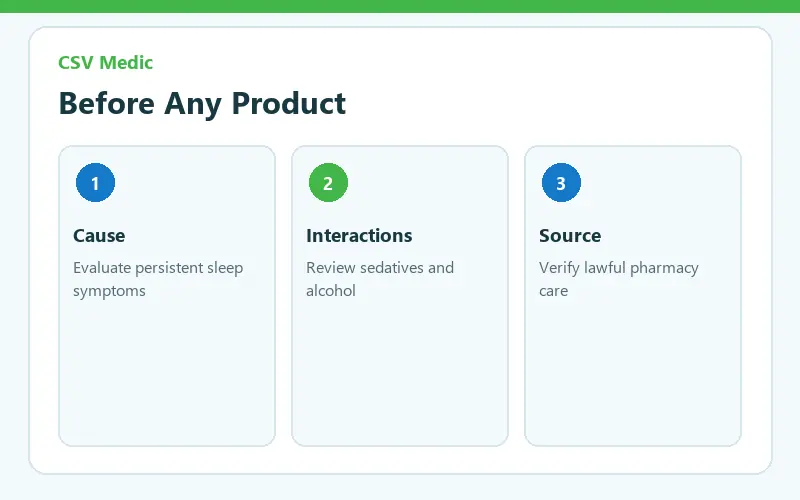
Treat the following statements as warning signs:
- “FDA registered” used to imply FDA approval;
- guaranteed deep sleep or recovery;
- a universal DSIP peptide dosage for everyone;
- no requirement for a prescription or medical screening;
- missing pharmacy license information;
- no lot number, concentration, beyond-use date, or storage instructions;
- “research use only” sold alongside instructions for human injection;
- claims based only on testimonials or before-and-after stories.
The FDA explains that poor-quality compounded drugs can cause serious harm, including contamination or too much active ingredient. Review its page on compounding oversight and compliance when evaluating a seller.
Frequently Asked Questions About DSIP Peptide
What is DSIP peptide?
DSIP is delta sleep-inducing peptide, a nine-amino-acid compound studied experimentally in relation to sleep and other biological processes. It is not an FDA-approved sleep medicine.
Is DSIP peptide the same as emideltide?
Emideltide is the name used for DSIP in FDA compounding materials. Neither name indicates FDA approval.
Does DSIP peptide help insomnia?
Available research is limited and inconsistent. It has not established DSIP as a reliable, approved treatment for insomnia.
What are DSIP peptide benefits?
Sleep, stress, pain, and neuroendocrine effects have been investigated. These areas of research should not be presented as proven patient benefits.
Is there a DSIP peptide dosage chart?
No FDA-approved or clinically validated DSIP peptide dosing chart exists for routine patient treatment.
What are the side effects of DSIP peptide?
The safety database is too limited to provide dependable frequencies. Product-quality and injection-related risks add further uncertainty.
Can a compounding pharmacy make DSIP?
Compounding legality depends on federal and state requirements, the ingredient’s regulatory status, the prescription, and the pharmacy. Compounded drugs are not FDA approved. Patients should verify the current status with a licensed pharmacist and regulator.
Is DSIP safer than prescription sleep medication?
There is not enough evidence to make that conclusion. Approved medications have reviewed labeling, indications, contraindications, and adverse-event information; DSIP does not.
Can DSIP be combined with GLP-1 medication?
No well-established interaction guidance supports self-combining DSIP with semaglutide, tirzepatide, or other therapy. Discuss sleep problems and all substances with the prescribing clinician. CSV Medic’s GLP-1 education explains the role of medical review.
When should sleep problems be evaluated?
Seek care when insomnia persists, affects daytime safety, occurs with breathing pauses or loud snoring, or is accompanied by severe mood changes. Drowsy driving is an urgent safety concern.
Questions to Ask a Licensed Healthcare Professional
- Could sleep apnea, medication effects, anxiety, pain, or another condition explain my symptoms?
- Is CBT-I available to me?
- Which approved treatments fit my medical history?
- Could my current weight-management plan be disturbing sleep?
- What should I do if I already used an unverified peptide product?
- Which symptoms require urgent care?
CSV Medic’s contact page can help patients request general information about medically supervised services. Contacting a clinic does not guarantee that a particular medicine or experimental peptide is appropriate or available.
Conclusion
DSIP peptide remains an experimental compound with an interesting but uncertain research history. It is not an FDA-approved insomnia treatment, no validated DSIP peptide dosage exists, and regulators have identified major gaps in safety information for proposed compounded use.
Patients deserve more than a persuasive product page. They deserve a careful assessment of why sleep is poor, evidence-based options, transparent pharmacy information, and follow-up that protects daytime and nighttime safety.
About the Author
This article was medically reviewed and published by the CSV Medic editorial team in collaboration with licensed healthcare providers specializing in weight management and peptide therapy. CSV Medic content is developed under professional guidance and linked to regulatory or peer-reviewed sources so readers can distinguish established care from early research.
Medical Disclaimer
This article is for educational purposes only and does not constitute medical advice, diagnosis, or a prescription. DSIP peptide is not FDA approved for sleep, weight loss, recovery, or wellness treatment. Always consult a licensed healthcare professional before starting, stopping, combining, or changing any medication or injectable product. Seek urgent care for severe or rapidly worsening symptoms.
