
Weight Loss Education, Weight Loss Medication
Cagrilintide Peptide: 9 Essential Facts Before Treatment

Jul
Cagrilintide peptide is an investigational long-acting amylin analogue being studied for chronic weight management, both alone and with semaglutide. Interest increased after phase 2 and phase 3 studies reported meaningful average weight reduction. The results are important, but they do not turn cagrilintide into a routine self-treatment or justify online dosing charts.
As of July 2026, patients should verify the latest FDA status before assuming cagrilintide peptide or the cagrilintide-semaglutide combination is approved and commercially available for weight loss. Trial evidence describes a controlled research program with eligibility criteria, standardized products, gradual titration, and safety monitoring. It does not validate research-use-only vials sold directly to consumers.
What Is Cagrilintide Peptide?
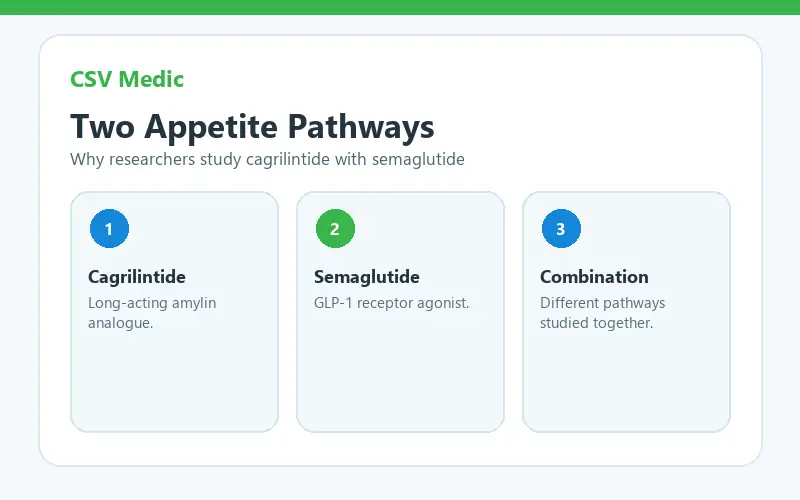
Cagrilintide is designed to act like amylin, a hormone co-secreted with insulin by pancreatic beta cells. Amylin signaling can affect fullness, food intake, and gastric emptying. Native amylin is short-lived, so cagrilintide was engineered for longer activity suitable for once-weekly study dosing. That mechanism differs from GLP-1 receptor agonism, which is why researchers have examined the two pathways together.
Patients often use ‘cagrilintide peptide’ to distinguish it from familiar GLP-1 medicines. The phrase is technically reasonable, but it can also appear on seller pages that omit the investigational status. A patient-focused explanation must keep the science, approval status, and product source together.
Nine Essential Cagrilintide Peptide Facts
1. Cagrilintide is an amylin analogue
The cagrilintide mechanism is based on amylin-receptor activity, not direct GLP-1 receptor activation. That may influence satiety and eating behavior. Mechanistic differences matter because they shape expected effects, adverse events, and combination research. They do not prove that one pathway is universally better for every patient.
2. Human trial evidence exists
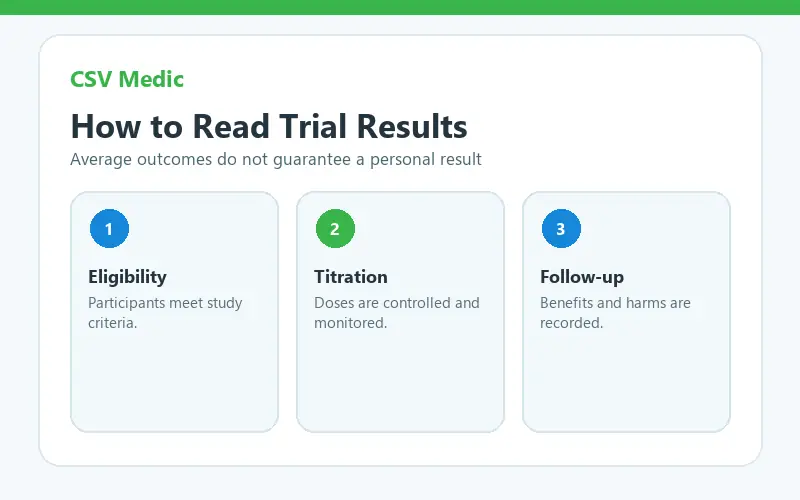
In a phase 2 trial of adults with overweight or obesity, once-weekly cagrilintide at several studied doses produced greater average weight reduction than placebo over 26 weeks. Gastrointestinal effects were common. This trial provides genuine human evidence, but it was designed to evaluate prespecified doses and outcomes under research supervision.
Later studies extended the evidence base, including longer phase 3 programs for the cagrilintide-semaglutide combination. Patients should still distinguish peer-reviewed findings from a marketing summary. Important details include who entered the study, how missing data were handled, how many participants stopped treatment, which adverse events occurred, and whether the product under discussion is the same regulated formulation used by researchers.
3. CagriSema combines two pathways
CagriSema is the name used for coadministered cagrilintide and semaglutide in a fixed-dose development program. Phase 3 trials have studied the combination in adults with obesity and in adults with obesity plus type 2 diabetes. Results reported in peer-reviewed journals support the scientific rationale for combining amylin and GLP-1 activity, while the current label and regulatory status must still be checked before patient use.
4. Cagrilintide peptide is not the same as semaglutide
Semaglutide is a GLP-1 receptor agonist with approved products for defined diabetes and weight-management indications. Cagrilintide is an amylin analogue. The combination is not simply a stronger version of semaglutide, and cagrilintide alone should not be substituted for an approved prescription. Our GLP-1 prescription guide explains screening for established treatment options.
5. The headline result is an average
Cagrilintide weight loss results in trials represent group averages. Individual participants may lose more, less, or no clinically meaningful weight, and some discontinue because of adverse effects or other reasons. Trial outcomes also include lifestyle intervention and regular contact. Patients should not interpret an average percentage as a personal guarantee.
6. There is no patient-approved cagrilintide dosage chart to copy online
Cagrilintide dosage and cagrilintide dosage chart searches often lead to trial tables or seller protocols. Trial doses are research details, not personal instructions. The phase 2 study examined a range of once-weekly doses and used escalation to improve tolerability. A cagrilintide dosage with tirzepatide is not established by an FDA-approved label, and combining unapproved products can create unpredictable risk.
7. Gastrointestinal effects are important
Reported cagrilintide side effects in trials have included nausea, constipation, diarrhea, vomiting, and abdominal symptoms. Appetite reduction can also make adequate protein, fluids, and micronutrients harder to maintain. Severe or persistent symptoms require medical assessment, especially when dehydration, intense abdominal pain, repeated vomiting, or inability to eat or drink is present.
8. Online research products do not reproduce a clinical trial
A cagrilintide peptide vial sold online may not match the identity, purity, formulation, storage, or strength of the investigational product used in a published study. Trial participants also undergo screening and follow-up. ‘For research only’ does not become safe patient labeling because a seller provides a mixing guide. Read our peptide legality and FDA safety guide before evaluating online claims.
9. Approved alternatives are available now
Patients do not need to wait for an investigational medicine to discuss weight-related health. A licensed provider can review approved options, contraindications, coverage, lifestyle support, and realistic goals. CSV Medic’s weight loss programs are designed around medical screening rather than automatic access to one product.
Cagrilintide vs Semaglutide vs Tirzepatide
| Feature | Cagrilintide | Semaglutide | Tirzepatide |
|---|---|---|---|
| Primary pathway | Amylin analogue | GLP-1 receptor agonist | GIP/GLP-1 receptor agonist |
| Development context | Investigational alone/with semaglutide | Approved products for defined uses | Approved products for defined uses |
| Typical discussion | Satiety and combination research | Diabetes and chronic weight management | Diabetes and chronic weight management |
| Patient action | Check current status; avoid research vials | Use only after screening and prescription | Use only after screening and prescription |
This comparison is not a recommendation to switch or combine medicines. The best option depends on diagnosis, prior treatment, gastrointestinal history, pregnancy plans, other prescriptions, cost, and the ability to continue monitoring. Patients can also review the Zepbound side-effects guide when discussing tirzepatide-based treatment.
What Should Patients Ask About Cagrilintide?
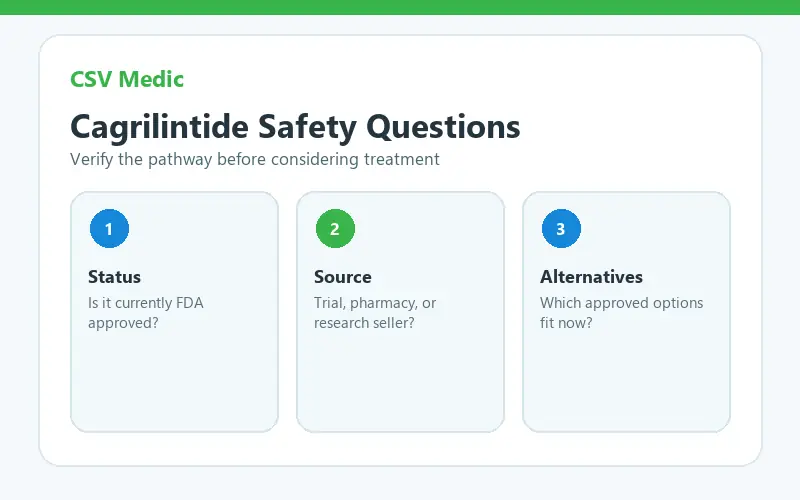
- Is the proposed product currently FDA approved for my condition?
- Is this a clinical trial, an approved prescription, or an unapproved product?
- Which human trial supports the expected benefit for someone like me?
- What side effects and warning signs require medical care?
- How will nutrition, muscle retention, and hydration be monitored?
- What approved alternatives can we consider today?
A provider should answer these questions without turning cagrilintide peptide research into a sales promise. If participation in a study is appropriate, confirm the listing through ClinicalTrials.gov and contact the official research site. Do not pay a retail seller for supposed access to a clinical-trial product.
Frequently Asked Questions About Cagrilintide Peptide
Is cagrilintide FDA approved?
Patients should check the current Drugs@FDA record and official sponsor updates. Published trial results alone do not equal approval, and an online cagrilintide peptide product is not validated by those trials.
How does cagrilintide work?
Cagrilintide is designed as a long-acting amylin analogue. Amylin signaling can influence fullness, food intake, and gastric emptying.
What is CagriSema?
CagriSema combines cagrilintide with semaglutide in a development program intended to engage amylin and GLP-1 pathways.
What cagrilintide dosage did trials use?
Studies evaluated specific weekly doses with controlled titration and monitoring. Those protocols are research descriptions, not a cagrilintide dosage chart for self-treatment.
Can cagrilintide be combined with tirzepatide?
There is no routine FDA-approved cagrilintide dosage with tirzepatide. Combining investigational and prescription products without specialist oversight may increase risk and should not be attempted.
What are common cagrilintide side effects?
Gastrointestinal symptoms such as nausea, constipation, diarrhea, and vomiting have been reported in trials. The complete risk profile depends on further study and current regulatory review.
Where can I get cagrilintide?
Use official clinical-trial registries and licensed medical care. Avoid research-use-only sellers and any service that promises an investigational medicine without explaining approval status.
The Bottom Line
Cagrilintide peptide is a serious research candidate with meaningful human trial data, particularly in combination with semaglutide. It is equally important to respect the boundary between a clinical trial and patient treatment. Verify current approval status, do not copy online cagrilintide dosage charts, and use a licensed clinician to compare available evidence-based options.
Medical Sources and Further Reading
The following independent medical and regulatory sources support the clinical and safety information in this article:
- PubMed: Phase 2 cagrilintide trial in adults with overweight or obesity
- PubMed: Cagrilintide-semaglutide phase 3 trial in obesity
- PubMed: Cagrilintide-semaglutide phase 3 trial in type 2 diabetes
- ClinicalTrials.gov: Cagrilintide study search
- FDA: Drugs@FDA approved drug database
About the Author and Medical Review
This article was medically reviewed and published by the CSV Medic editorial team in collaboration with licensed healthcare providers specializing in weight management. CSV Medic content is developed under the guidance of medical professionals and checked against current regulatory information, prescribing information, and peer-reviewed research.
Medical Disclaimer
This article is for informational purposes only and does not constitute medical advice, diagnosis, or a prescription. Always consult a licensed healthcare provider before starting, stopping, or changing a medication or peptide product. Approval status, availability, insurance coverage, and individual suitability can change. Seek urgent medical care for severe or rapidly worsening symptoms.
