
Weight Loss Medication
Zepbound Side Effects Explained: Essential Safety Facts Before Treatment

Jun
Zepbound side effects are one of the first safety topics patients should understand before starting treatment. Zepbound is the brand name for tirzepatide, a prescription injection used with nutrition and activity changes for adults with obesity or certain weight-related health conditions. It can be helpful for some people, but it can also cause symptoms that need to be tracked carefully.
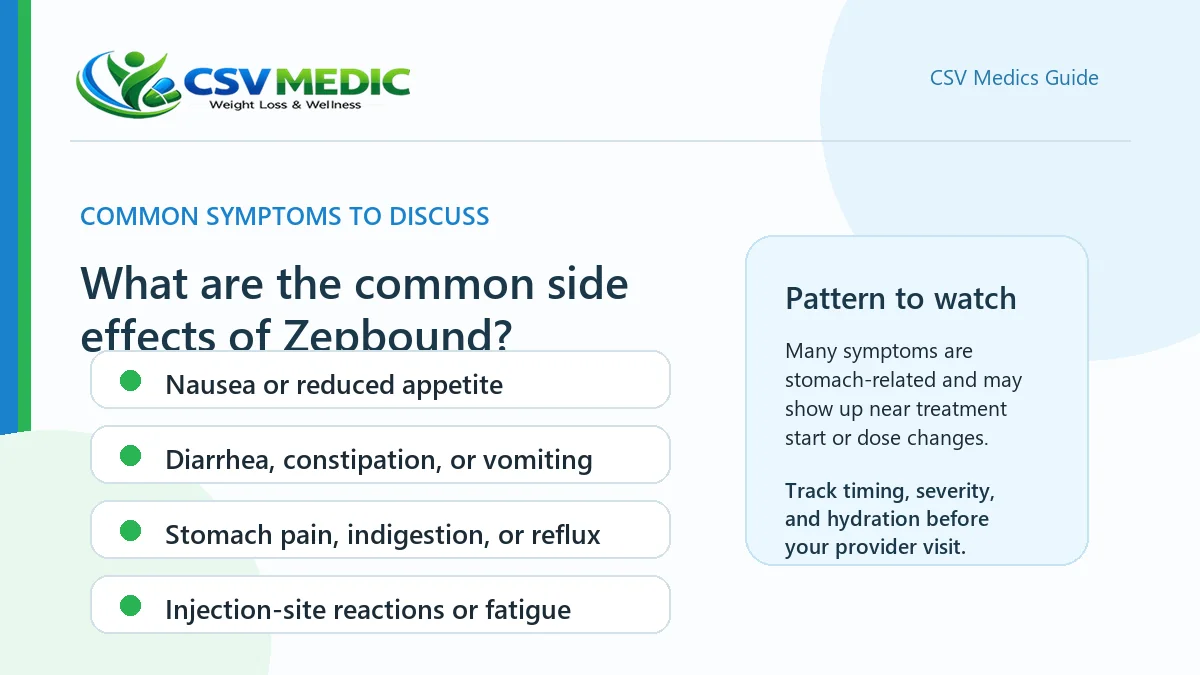
If you are asking what are the common side effects of Zepbound, the short answer is that many are stomach-related. Nausea, diarrhea, vomiting, constipation, stomach pain, indigestion, belching, heartburn, fatigue, hair loss, allergic reactions, and injection site reactions are listed among common reactions in official safety information. This guide explains Zepbound side effects in plain language so you know what to watch, what to document, and when to speak with a licensed provider.
Quick answer: Zepbound side effects most often involve the digestive system. They may appear when treatment starts or when the dose changes. Mild symptoms can sometimes improve as the body adjusts, but severe, persistent, or unusual symptoms should be discussed with a healthcare provider. This article is educational only and does not replace medical advice, diagnosis, or treatment.
What Zepbound Is and Why Side Effects Happen
Zepbound contains tirzepatide. It works through pathways involved in appetite, fullness, and blood sugar regulation. Because the medication can slow stomach emptying and change how the digestive system responds to food, stomach symptoms are common in the beginning. Understanding Zepbound side effects before treatment helps you prepare realistic expectations instead of feeling surprised by every symptom.
CSV Medics takes a safety-first view of treatment education. Before a patient considers any prescription option, it helps to understand medical weight loss programs, review how the online consultation process works, and prepare questions for a licensed healthcare provider.
What Are the Common Side Effects of Zepbound?
Common Zepbound side effects can vary from person to person. Some people notice only mild symptoms. Others may need help adjusting meals, hydration, or timing around dose changes. The important point is not to ignore symptoms that are strong, unusual, or lasting longer than expected.
- Nausea or reduced appetite
- Diarrhea, constipation, or vomiting
- Stomach or abdominal pain
- Indigestion, belching, or heartburn
- Injection site reactions
- Fatigue or feeling unusually tired
- Hair loss or allergic-type reactions in some people
These typical side effects of Zepbound are also listed in official resources, including Lilly?s Zepbound side effects information and the DailyMed Medication Guide. Reading those references is useful, but a provider should help you interpret symptoms based on your own medical history.
Zepbound Nausea, Constipation, and Digestive Symptoms
Zepbound nausea is one of the most talked-about symptoms because it can affect meals, hydration, and daily comfort. Some patients also report zepbound constipation, diarrhea, reflux, or stomach fullness. These symptoms may be more noticeable after starting treatment or after a dose increase.
A practical way to monitor Zepbound side effects is to keep a simple symptom log. Write down the day of your dose, what you ate, when symptoms started, how intense they felt, and whether fluids or smaller meals helped. This gives your provider better information than trying to remember everything during a visit.
Zepbound Injection Side Effects
Zepbound injection side effects may include redness, itching, tenderness, swelling, or discomfort around the injection site. Rotating injection areas as directed may help reduce repeated irritation in one spot. If the skin reaction is spreading, painful, blistering, or paired with symptoms like trouble breathing or swelling of the face or throat, seek medical help right away.
When Do Zepbound Side Effects Start?
Many patients ask, ?when do Zepbound side effects start?? They can happen soon after the first doses, but timing is not identical for everyone. Digestive symptoms may become more noticeable near the beginning of treatment or around dose changes. In studies described by Lilly, nausea, diarrhea, and vomiting were often seen around dose increases and generally decreased over time for many patients.
That does not mean every symptom should be dismissed as normal. Zepbound side effects that are severe, worsening, or interfering with hydration deserve attention. A symptom that feels mild on day one but becomes stronger over several days should be tracked and discussed.
Warning Signs That Need Medical Attention
Some Zepbound side effects need prompt medical attention because they may point to a more serious problem. Official medication information lists warnings such as severe stomach problems, dehydration that may affect the kidneys, gallbladder problems, pancreatitis, allergic reactions, low blood sugar when used with certain diabetes medicines, and vision changes in patients with type 2 diabetes.
- Severe stomach pain that will not go away, especially if it moves toward the back
- Vomiting or diarrhea that does not stop
- Signs of dehydration, such as very low fluid intake, dizziness, or reduced urination
- Yellowing of the skin or eyes, fever, or upper stomach pain
- Trouble breathing, swelling of the face or throat, fainting, or a rapid heartbeat
- Low blood sugar symptoms if you also use insulin or a sulfonylurea
The Mayo Clinic tirzepatide side effects page also highlights symptoms that should be checked promptly. If you believe you are having a medical emergency, do not wait for a blog article or website message. Use urgent medical care. Side effects can also be reported through FDA MedWatch.

Long Term Side Effects of Zepbound: What We Know
Questions about long term side effects of Zepbound are reasonable because weight management treatment is often not a one-week decision. Longer-term Zepbound side effects may include ongoing digestive issues for some people, and official safety information also warns about specific risks that need provider review before treatment. These include personal or family history of medullary thyroid carcinoma, MEN 2, pancreas problems, severe stomach problems, gallbladder symptoms, pregnancy planning, and medication interactions.
The safest approach is regular follow-up. Zepbound side effects should be reviewed alongside weight trend, appetite, blood sugar history if relevant, hydration, bowel habits, current medications, and any new symptoms. This is where provider supervision matters: the goal is not just weight change, but safe decision-making.
What to Ask Your Provider Before Treatment
Before treatment, bring your medical history and ask direct questions. You do not need to sound technical. You need clear answers that match your health situation.
- Do I have any risk factors that make this medication inappropriate for me?
- What symptoms should I track during the first month?
- What should I do if nausea, constipation, or diarrhea becomes difficult?
- Could this interact with my current medications or supplements?
- How often should I follow up after starting or changing dose?
- What symptoms mean I should stop and seek urgent help?
If you are comparing options, the CSV Medics FAQ may help answer general questions, and you can contact CSV Medics if you need help understanding the next step for a consultation. Keep the conversation focused on safety, eligibility, and whether treatment is appropriate for you.
How to Make the First Weeks Safer and Easier
You cannot predict every reaction, but you can make the first weeks more organized. Eat slowly, avoid very heavy meals if they trigger symptoms, drink fluids consistently, and keep notes on what changes after each weekly dose. Do not adjust prescription timing or dose without provider guidance.
If Zepbound side effects are mild, tracking may be enough until your next scheduled check-in. If symptoms are getting stronger, affecting hydration, or making it hard to eat normally, contact your provider sooner. This is especially important if you already have medical conditions that could make dehydration or digestive problems more risky.
FAQ About Zepbound Side Effects
Are Zepbound side effects dangerous?
Many Zepbound side effects are not dangerous for every patient, but some can become serious. Severe stomach pain, persistent vomiting or diarrhea, dehydration signs, allergic reaction symptoms, or gallbladder-type symptoms should be treated as important warning signs.
Can Zepbound side effects go away over time?
Some digestive symptoms may improve as the body adjusts, especially when they occur around dose changes. That said, symptoms that bother you, continue, or get worse should be discussed with a healthcare provider.
Should I stop treatment because of side effects?
Do not stop, restart, or change prescription treatment based only on internet content. If Zepbound side effects are concerning, contact your provider and explain what you are experiencing, when it started, and how severe it is.
Final Safety Takeaway
Zepbound side effects are worth understanding before treatment because they affect comfort, safety, and follow-up decisions. The best approach is simple: know the common symptoms, recognize warning signs, keep a symptom log, and speak with a qualified provider before making treatment decisions. Education should make you calmer and more prepared, not careless.
CSV Medic Medical Review
This article was published by Dr Spencer and the CSV Medic editorial team in collaboration with healthcare-focused reviewers experienced in medical weight loss education, prescription medication safety, and patient support. Our content is written for education, reviewed for clarity, and updated when clinical guidance or product information changes.
CSV Medic content is informational only and does not replace care from a licensed medical provider. Always speak with a qualified clinician before starting, stopping, or changing any medication or weight loss program.
