
Weight Loss Education, Weight Loss Medication
Peptide Injections: 11 Essential Safety and Cancer Facts

Jul
Peptide injections now appear in conversations about weight loss, metabolic health, recovery, healthy aging, and experimental wellness treatments. Yet the products grouped under that label are not interchangeable. They include FDA-approved medicines, legitimately compounded prescriptions, investigational drugs in clinical trials, and unapproved powders sold online.
Patients therefore need more than a simple yes-or-no answer to the question “are peptides safe?” The available evidence does not show that all peptide injections cause cancer. Risk depends on the exact molecule, its biological target, dose, product quality, length of exposure, and the person receiving it. Approved GLP-1 medicines have extensive clinical data and specific FDA warnings. Investigational and research-only peptides often have far less human safety information.
Recent reviews of randomized trials have not found a clear increase in overall cancer risk from GLP-1 receptor agonists. However, semaglutide and tirzepatide labels still carry boxed warnings about thyroid C-cell tumors observed in rodents. It remains unknown whether that finding translates to humans. The warning is especially important for anyone with a personal or family history of medullary thyroid carcinoma or Multiple Endocrine Neoplasia syndrome type 2.
This guide explains what current research can and cannot tell us about peptide injections and cancer risk. It also separates approved medications from compounded drugs, investigational therapies such as retatrutide, and products labeled “research use only.”
Quick answer: Current human evidence does not establish that peptide injections as a class cause cancer. Some approved GLP-1 medicines have a rodent thyroid tumor warning, while long-term human data continue to develop. Unapproved research peptides are more uncertain because product quality, dose, sterility, and long-term effects may not have been adequately studied.
Table of Contents
- What is a peptide?
- Can peptide injections cause cancer?
- Why peptide type matters
- GLP-1 medicines and cancer evidence
- Thyroid, pancreatic, colorectal, and other cancer concerns
- Research peptides and investigational drugs
- Cancer metabolism, sugar, fasting, and ketogenic diets
- Benefits, side effects, and dosage considerations
- Weight-loss timeline and monitoring
- Who should avoid treatment or seek specialist review
- Diet, exercise, and muscle preservation
- Buying and product-selection guidance
- Myths versus facts
- Future research
- Frequently asked questions
1. What Is a Peptide?
A peptide is a short chain of amino acids. The body naturally makes many peptides that act as signals. Insulin, glucagon, and glucagon-like peptide-1 are familiar examples. Other peptides are manufactured as medicines, cosmetic ingredients, diagnostic tools, or research compounds.
This definition matters because asking whether “peptides” cause cancer is like asking whether “medicines” cause cancer. The category is too broad to support one universal answer. A GLP-1 receptor agonist used for obesity has a different structure and purpose from a growth-hormone secretagogue, antimicrobial peptide, skin-care peptide, or experimental repair compound.
When patients compare peptide therapy, they should identify five things first:
- The exact active ingredient
- Whether it is FDA approved for the intended use
- Whether human trials evaluated that use
- The source and dispensing pharmacy
- The patient’s personal cancer and endocrine history
CSV Medic’s patient guide to peptides explains the basic differences among natural, prescription, compounded, and research peptides.
2. Can Peptide Injections Cause Cancer?
There is no evidence-based basis for saying that every peptide causes cancer. There is also no basis for promising that every peptide is cancer-safe. The responsible answer is ingredient-specific.
Cancer can develop through a complex interaction of genetic changes, cell signaling, immune escape, tissue environment, inflammation, metabolism, and other factors. A peptide could theoretically affect one of these pathways, but a theoretical mechanism is not the same as proof that a product causes cancer in people.
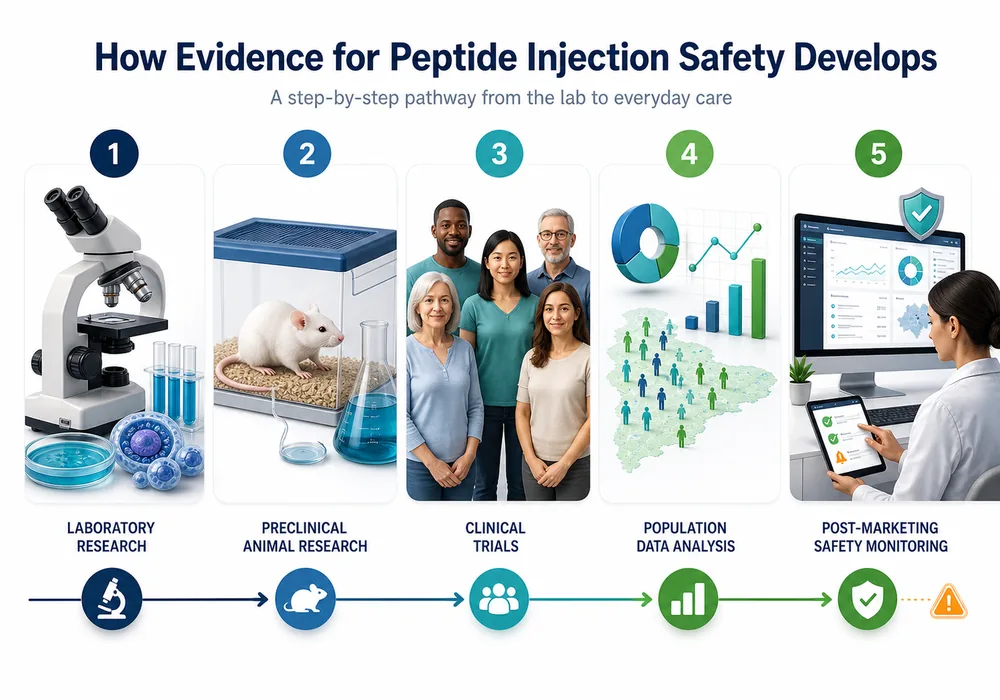
Researchers use several evidence levels when assessing risk:
| Evidence level | What it can tell us | Main limitation |
|---|---|---|
| Cell studies | Whether a compound changes a pathway in isolated cells | Does not reproduce a whole human body |
| Animal studies | Toxicity signals and possible mechanisms | Species biology and exposure may differ from humans |
| Randomized clinical trials | Comparative safety during a controlled period | Cancer is uncommon and may take years to appear |
| Observational cohorts | Real-world associations in large populations | Confounding can make cause and effect uncertain |
| Postmarketing surveillance | Rare events after approval | Reports do not automatically prove causation |
This hierarchy explains why cancer questions about peptide injections cannot be answered from a laboratory headline or social-media testimony alone. Strong conclusions require converging evidence, appropriate comparators, sufficient follow-up, and careful review of alternative explanations.
3. Approved Medicines, Compounded Drugs, and Research Peptides Are Not Equivalent
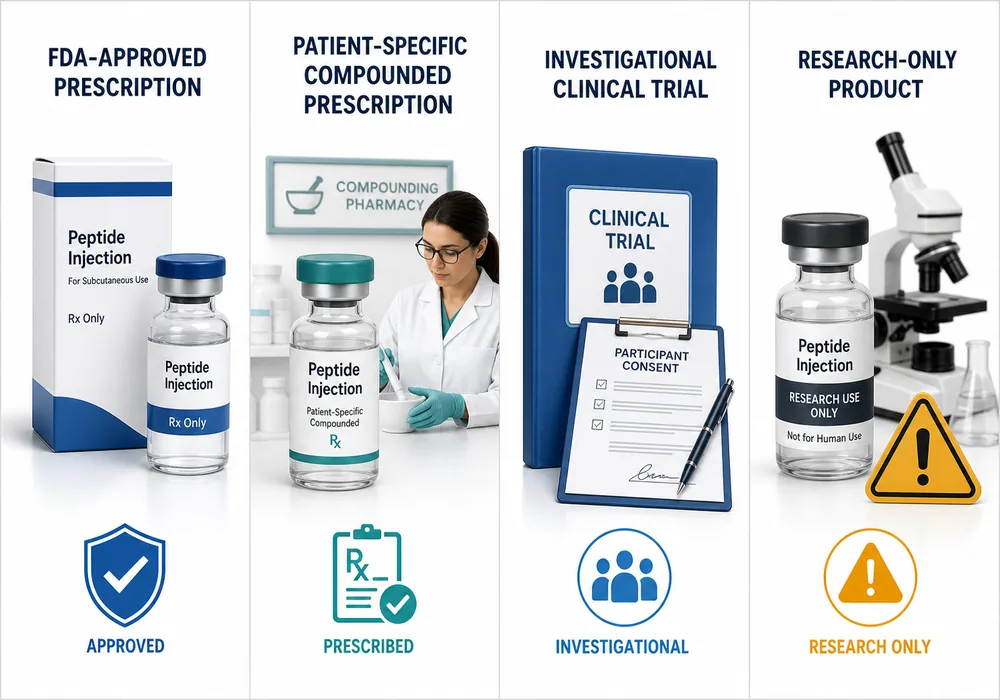
The terms “peptide therapy” and “peptide injections” often hide three very different product groups.
FDA-approved peptide medicines
Approved medicines have a defined ingredient, manufacturing standard, labeled indication, prescribing information, and safety-monitoring process. Approval does not mean zero risk. It means regulators reviewed evidence for a specific product and use, and the label explains known and potential risks.
Compounded peptide products
Compounded drugs can serve an important role when a patient’s medical need cannot be met by an available approved drug. However, the FDA does not review compounded products for safety, effectiveness, or quality before marketing in the same way it reviews approved drugs. The agency’s current guidance on unapproved GLP-1 products says compounded versions should be used only when a patient’s needs cannot be met by an FDA-approved option.
Research-only peptides
Products labeled “research use only” are not automatically medicines. They may lack reliable human data, standardized dosing, sterility assurance, or long-term surveillance. A label stating “not for human consumption” should not be treated as a loophole for self-injection. CSV Medic’s guide to whether peptides are legal explains why approval, intended use, and supply route must be checked separately.
The FDA lists potential safety concerns for several bulk substances used in compounding. For example, it notes limited safety information and concerns about immunogenicity and peptide-related impurities for BPC-157. That does not prove BPC-157 causes cancer; it shows why absence of evidence must not be marketed as proof of safety.
| Product type | Evidence and oversight | Cancer-risk certainty | Practical patient guidance |
|---|---|---|---|
| FDA-approved prescription | Product-specific clinical and manufacturing review | Usually the best characterized | Use only for an indicated, clinician-supervised plan |
| Legitimately compounded drug | Prepared for an identified medical need | More uncertainty than the approved product | Verify prescriber and licensed pharmacy |
| Investigational drug in a registered trial | Structured protocol and monitoring | Still developing | Access through a legitimate clinical trial |
| Research-only online peptide | Often limited or absent patient-level evidence | Frequently unknown | Do not self-inject or treat it as an approved medicine |
4. GLP-1 Medicines and Cancer Risk: What the Latest Studies Show
GLP-1 receptor agonists include medicines used for type 2 diabetes and chronic weight management. Because many are administered as peptide injections and are now widely used, much of the public discussion about peptides and cancer risk focuses on semaglutide, liraglutide, and related therapies. Tirzepatide activates both GIP and GLP-1 receptors.
A 2026 systematic review and meta-analysis in Annals of Internal Medicine evaluated 48 randomized placebo-controlled trials with more than 94,000 participants. The researchers concluded that GLP-1 receptor agonists and dual agonists probably had little or no effect on thyroid, pancreatic, breast, or kidney cancer during the available follow-up. The authors also emphasized that many trials were not designed primarily to detect cancer and that longer follow-up remains important.
Observational research has produced some encouraging associations. A 2024 *JAMA Network Open* study of people with type 2 diabetes found lower rates of several obesity-associated cancers among GLP-1 users compared with insulin users. A 2025 cohort of adults with overweight or obesity also reported a lower overall cancer rate among GLP-1 users than matched nonusers. These findings do not prove that GLP-1 medicines prevent cancer. Treatment selection, weight change, diabetes control, health-care access, and other differences may influence the results.
The balanced conclusion is neither “GLP-1 drugs cause cancer” nor “GLP-1 drugs prevent cancer.” The strongest current message is that randomized-trial evidence has not demonstrated a clear overall cancer increase, while long-term surveillance continues.
5. Understanding the Main Cancer Concerns
Thyroid C-cell tumors
Current FDA prescribing information for Wegovy and Zepbound includes a boxed warning because semaglutide and tirzepatide caused thyroid C-cell tumors in rodents. The labels state that it is unknown whether these medicines cause medullary thyroid carcinoma in humans.
These products are contraindicated in people with a personal or family history of medullary thyroid carcinoma and in people with MEN 2. Patients should contact a clinician if they develop a neck mass, persistent hoarseness, trouble swallowing, or difficulty breathing. Routine calcitonin testing or thyroid ultrasound is not automatically recommended for every patient because the labels describe the value of such screening as uncertain.
This is a real warning that deserves respect, but it is not proof that the drugs have been shown to cause thyroid cancer in humans.
Pancreatitis and pancreatic cancer
Acute pancreatitis is a labeled warning for several GLP-1 medicines. Severe, persistent abdominal pain, especially if it radiates to the back or occurs with vomiting, requires urgent medical evaluation.
Pancreatitis is not the same as pancreatic cancer. Recent randomized-trial reviews have not established an increased pancreatic cancer risk, but cancer events are uncommon and long-term follow-up is still needed. Patients should not ignore symptoms, and clinicians should consider the complete history rather than interpreting a single online report as proof of causation.
Colorectal and gastrointestinal cancers
Randomized-trial meta-analyses have generally not found an increased gastrointestinal cancer risk from GLP-1 receptor agonists. Some observational studies suggest lower colorectal cancer rates in selected groups, but this remains an association rather than a prescribing indication.
Persistent changes in bowel habits, rectal bleeding, unexplained anemia, or unexplained weight loss should be evaluated through ordinary cancer-screening and diagnostic pathways. Medication-related nausea or constipation should never be used to dismiss warning signs.
Breast, kidney, and other cancers
The 2026 randomized-trial review found little or no effect on breast and kidney cancer risk, with moderate certainty for those outcomes. Some observational studies have produced inconsistent kidney-cancer signals. That inconsistency is precisely why prospective studies and longer follow-up matter.
No peptide medicine should be promoted as a cancer-prevention drug unless it has been evaluated and authorized for that purpose.
6. Obesity, Insulin Resistance, and Cancer Risk
Cancer-risk discussions should not examine a weight-loss medicine in isolation while ignoring the condition being treated. The National Cancer Institute reports that excess body weight is associated with at least 13 cancers. Proposed mechanisms include higher estrogen exposure, insulin and IGF-1 signaling, and chronic inflammation.
This does not mean weight loss guarantees cancer prevention. It means the risk-benefit discussion should include the health consequences of untreated obesity, not only treatment side effects.
For some adults, clinically meaningful weight loss can improve blood pressure, glucose regulation, mobility, sleep apnea, and fatty liver disease. Those benefits matter even when cancer outcomes remain uncertain. Before starting peptide injections, a licensed clinician should balance them against contraindications, adverse effects, prior treatment response, and patient preferences.
7. Cancer Metabolism, Sugar, Fasting, and Ketogenic Diets
Cancer cells often alter how they generate and use energy. The Warburg effect describes the tendency of many tumors to rely heavily on glycolysis even when oxygen is available. This is an important field of cancer biology, but it does not mean cancer has one universal fuel or that removing one food cures the disease.
The National Cancer Institute addresses the popular claim that “sugar feeds cancer”. Cancer cells use more glucose than many normal cells, but human studies have not shown that eating sugar makes an existing cancer grow or that eliminating sugar makes it shrink. A high-sugar dietary pattern can still contribute to excess calorie intake and weight gain, which are relevant to long-term health.
Ketogenic diets, fasting, glucose monitoring, and metabolic therapies are being studied in selected cancer settings. A 2025 review of ketogenic diets in cancer patients reported changes in several metabolic and body-composition measures, while evidence for improved cancer survival remains limited and heterogeneous. A 2025 systematic review of intermittent fasting during chemotherapy found that it appeared feasible in small studies but did not establish treatment effectiveness. The NCI likewise states that popular diets and supplements have not been proven to cure or control cancer.
Patients receiving cancer treatment can be vulnerable to weight loss, dehydration, malnutrition, and loss of muscle. They should not begin fasting or a restrictive ketogenic diet without their oncology team and a qualified oncology dietitian. Metabolic strategies must never replace surgery, radiation, chemotherapy, immunotherapy, or targeted treatment recommended by the treating cancer team.
Myth versus fact
| Myth | Evidence-based fact |
|---|---|
| All sugar directly causes cancer | Excess added sugar can promote weight gain, but removing sugar has not been shown to make cancer disappear |
| Ketosis starves every tumor | Tumors are biologically diverse; ketogenic diets remain investigational as cancer therapy |
| A natural peptide cannot be harmful | Natural origin does not establish dose, purity, sterility, or safety |
| A rodent tumor warning proves human cancer causation | Animal signals guide caution, but human risk requires human evidence |
| No long-term data means no risk | Missing evidence means uncertainty, not proof of safety |
| Weight-loss drugs prevent cancer | Some studies show favorable associations, but these drugs are not approved as cancer-prevention treatments |
8. Benefits, Side Effects, and General Dosage Considerations
Potential benefits of approved weight-management medicines
Benefits differ by product and patient. For eligible adults, an approved peptide-based treatment may support clinically meaningful weight loss, appetite regulation, glucose control, and improvement in selected cardiometabolic risk factors. The goal is not the lowest number on a scale. It is a safer, more sustainable improvement in health.
| Potential benefit | What it may mean in practice | What it does not prove |
|---|---|---|
| Reduced appetite | Smaller portions may feel more satisfying | That nutrition quality no longer matters |
| Weight reduction | Less mechanical and metabolic burden | Guaranteed cancer prevention |
| Better glycemic control | Lower glucose exposure for some patients | That diabetes monitoring can stop |
| Cardiovascular benefit for labeled products | Reduced events in specific studied populations | A class-wide benefit for every peptide |
| Improved mobility | Activity may become more comfortable | That muscle will be preserved automatically |
Common and serious side effects
The most frequent adverse effects of approved GLP-1 and dual-agonist peptide injections are gastrointestinal. They often become more noticeable after treatment begins or a dose increases.
| Side effect or warning | Typical concern | When to seek help |
|---|---|---|
| Nausea, fullness, reflux | Common during titration | If fluids or food cannot be kept down |
| Diarrhea or constipation | May affect hydration and comfort | If severe, persistent, bloody, or accompanied by weakness |
| Vomiting | Can cause dehydration and kidney stress | Promptly if repeated or associated with severe pain |
| Gallbladder symptoms | Rapid weight loss and treatment may increase gallstone risk | Urgent review for severe right-upper abdominal pain, fever, or jaundice |
| Pancreatitis warning | Severe persistent abdominal pain | Stop and obtain urgent medical evaluation as instructed by a clinician |
| Hypoglycemia | More likely with insulin or sulfonylureas | Immediate treatment for confusion, fainting, or severe symptoms |
| Allergic reaction | Swelling, hives, breathing difficulty | Emergency care |
| Thyroid warning symptoms | Neck mass, hoarseness, swallowing or breathing difficulty | Prompt medical evaluation |
Dosage considerations
This guide does not provide a personal dose. Approved peptide injections for obesity have product-specific starting, escalation, maintenance, missed-dose, and stopping instructions. A clinician may delay an increase when side effects are not controlled, and patients should never improvise a dose from a social-media chart.
General principles include:
- Use only the formulation and schedule prescribed for that exact product.
- Do not convert milligrams to syringe units without the labeled concentration and professional instruction.
- Do not combine GLP-1 medicines or add an investigational peptide without the prescriber’s knowledge.
- Tell the prescriber about insulin, sulfonylureas, anticoagulants, oral contraceptives, and medicines that require dependable absorption.
- Reassess treatment if adverse effects, nutrition problems, or inadequate response outweigh the benefit.
An online peptide calculator cannot verify vial identity, concentration, sterility, or patient suitability. Those are clinical and pharmacy questions, not arithmetic alone.
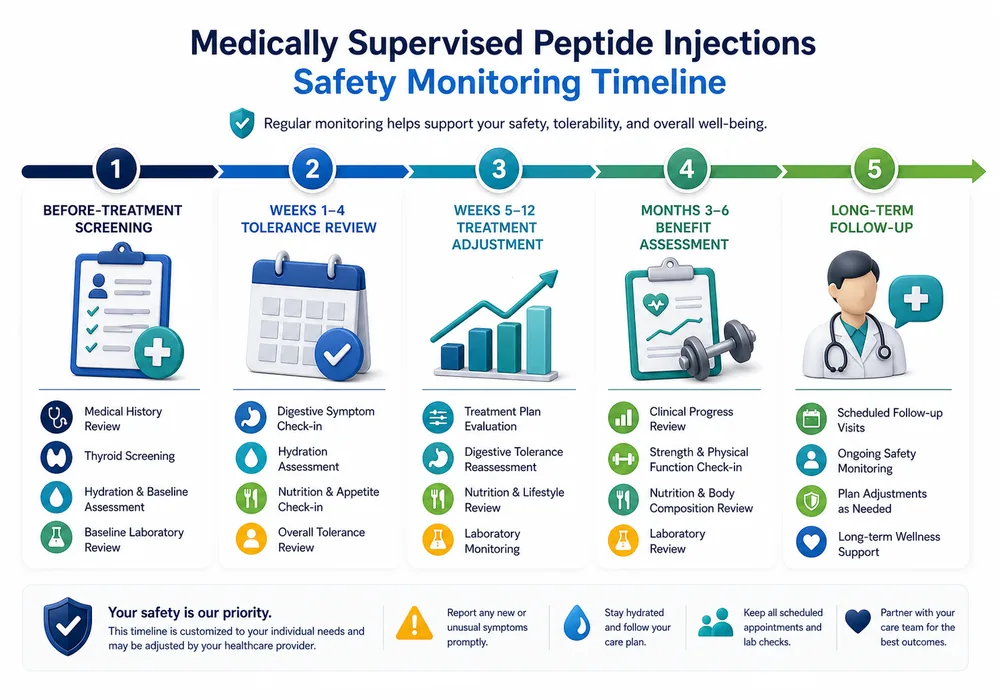
9. A Realistic Weight-Loss and Monitoring Timeline
Response to peptide injections varies by medication, dose, adherence, medical history, and lifestyle. The following timeline is an educational framework, not a promise.
| Period | What may happen | Useful monitoring |
|---|---|---|
| Before treatment | Eligibility and contraindications are reviewed | Weight history, medications, pregnancy status, thyroid/MEN 2 history, labs when indicated |
| Weeks 1–4 | Appetite and digestive changes may begin | Hydration, bowel pattern, nausea, food intake, glucose if relevant |
| Weeks 5–12 | Dose may be increased according to the label and tolerance | Side effects, weight trend, protein intake, activity, medication interactions |
| Months 3–6 | Clinician assesses whether benefit is clinically meaningful | Waist or weight trend, blood pressure, metabolic labs, strength and lean-mass protection |
| Months 6–12 | Progress may continue or slow | Sustainability, nutritional adequacy, gallbladder symptoms, mental health, treatment goals |
| Long term | Maintenance needs an individualized plan | Ongoing benefit, adverse effects, screening, access, cost, and plan if treatment stops |
Rapid change is not always better. An overly restrictive diet combined with strong appetite suppression may accelerate muscle loss, fatigue, hair shedding, constipation, or nutrient deficiencies.
10. Who Should Avoid Treatment or Seek Specialist Review?
Suitability for peptide injections depends on the specific medication. For semaglutide- and tirzepatide-based weight-management products, a personal or family history of medullary thyroid carcinoma or MEN 2 is a major contraindication stated in current FDA labeling.
Extra review is also important for people with:
- A current or previous cancer diagnosis
- An unexplained neck mass or thyroid symptoms
- Previous pancreatitis or significant gallbladder disease
- Severe gastroparesis or major gastrointestinal disease
- Kidney disease or repeated dehydration
- Diabetes treated with insulin or a sulfonylurea
- An eating disorder or high malnutrition risk
- Pregnancy, plans for pregnancy, or breastfeeding
- Multiple prescriptions that may be affected by delayed gastric emptying
- A proposed product that is compounded, investigational, or labeled for research only
A cancer survivor should involve the oncology team before starting a weight-loss medicine. Cancer type, treatment phase, nutrition status, recurrence risk, and drug interactions can change the decision.
11. Lifestyle Recommendations That Support Metabolic Health
Medication can help some patients, but it does not replace food quality, physical activity, sleep, and preventive care. These habits also address several pathways discussed in cancer-metabolism research without making unsupported treatment promises.
Diet recommendations
The American Cancer Society’s prevention guideline recommends a dietary pattern built around vegetables, fruit, legumes, and whole grains, while limiting sugar-sweetened drinks, highly processed foods, and red and processed meats. Patients using appetite-suppressing medication should prioritize nutritional density because they may eat substantially less.
Practical steps include:
- Include a protein source at each meal to support muscle.
- Choose fiber-rich carbohydrates instead of assuming every carbohydrate is harmful.
- Drink enough fluid, especially during nausea, vomiting, diarrhea, or constipation.
- Use smaller meals when early fullness is uncomfortable.
- Limit alcohol; avoiding it offers the lowest cancer risk.
- Ask for dietitian support when cancer treatment, kidney disease, diabetes, or digestive illness complicates nutrition.
Exercise recommendations
For cancer prevention, the American Cancer Society recommends 150–300 minutes of moderate activity or 75–150 minutes of vigorous activity each week, plus less sedentary time. Individual capacity varies.
Adults losing weight should add resistance training when medically appropriate. Walking supports cardiovascular fitness, but strength work gives the body a reason to retain muscle. A simple program may include two or three weekly sessions using body weight, bands, machines, or free weights. CSV Medic’s guide to peptides, muscle growth, and fat loss adds context on protecting lean mass without relying on unsupported peptide claims.
Sleep and stress
Poor sleep can worsen appetite regulation, insulin resistance, fatigue, and exercise recovery. Sleep apnea deserves evaluation, especially in adults with obesity, loud snoring, morning headaches, or daytime sleepiness. Stress management cannot prevent every disease, but it can improve adherence, sleep, and quality of life.
12. Buying Considerations and a Safer Product-Selection Guide
The safest decision about peptide injections begins with the product’s regulatory status, not price or influencer popularity.
A five-step selection check
- Confirm the exact active ingredient. A nickname such as “reta” or “healing peptide” is not adequate.
- Check FDA status for the intended use. Approved, investigational, compounded, and research-only are not interchangeable terms.
- Use a licensed prescriber and pharmacy. A seller that promises an injectable without screening is a warning sign.
- Review the label and lot information. Concentration, storage, expiration, and dispensing details should be clear.
- Plan follow-up before the first dose. Know who will answer questions, manage side effects, and stop or change treatment.
| Green flags | Red flags |
|---|---|
| Named licensed clinician | No prescription or screening required |
| Licensed pharmacy information | “Research only” product promoted for self-injection |
| Exact ingredient and concentration | Vague vial label or unexplained units |
| Evidence-based contraindication screening | Guaranteed weight loss or cancer claims |
| Follow-up and adverse-event plan | Pressure to buy quickly or combine multiple compounds |
Patients can review CSV Medic’s weight-loss programs to understand how medical screening and follow-up should fit into a treatment pathway. The peptide safety guide provides more questions to ask before considering any peptide product.
13. Pros and Cons at a Glance
| Potential advantages | Important limitations |
|---|---|
| Approved options have product-specific clinical evidence | No medication is risk-free |
| Some therapies produce substantial average weight loss | Individual response varies widely |
| Weight and glucose improvements may reduce metabolic burden | Cancer prevention has not been established as an indication |
| Once-weekly products may be convenient | Gastrointestinal effects can be significant |
| Clinical follow-up allows dose and safety review | Unapproved and research products may lack quality controls |
14. Future Developments
Several questions about peptide injections remain open. Researchers need longer cancer follow-up, direct comparisons among medicines, better data for cancer survivors, and more information about rare tumor types. Trials also need to distinguish the effects of weight loss from the direct biological effects of the drug.
Retatrutide is a triple receptor agonist still being studied in phase 3 programs. Its early weight-loss results do not establish long-term cancer safety or justify self-treatment with online products. Registered trials, regulatory review, and published peer-reviewed data should guide future conclusions. Patients can also read CSV Medic’s guide to legitimate retatrutide access rather than relying on research-vial sellers.
Cancer metabolism is also an active research area. Scientists are studying glucose use, amino-acid metabolism, mitochondrial biology, fasting, ketogenic diets, and drug combinations. These approaches may eventually complement standard care in selected settings, but compelling mechanisms and laboratory findings must still survive rigorous human testing.
15. Frequently Asked Questions
Can peptides cause cancer in humans?
Current evidence does not show that peptide injections as a broad class cause cancer in humans. Risk must be assessed for the exact compound. Approved GLP-1 medicines have extensive data and specific warnings, while many research peptides have insufficient long-term human evidence.
Do GLP-1 medications cause thyroid cancer?
Human causation has not been established. Current FDA labels carry a boxed warning because thyroid C-cell tumors occurred in rodents, and the relevance to humans is unknown. These medicines are contraindicated with a personal or family history of medullary thyroid carcinoma or MEN 2.
Does Ozempic cause cancer?
Randomized trials and systematic reviews have not established that semaglutide causes cancer. Ozempic has product-specific warnings and is not appropriate for everyone. A clinician should review thyroid history, pancreatitis risk, and other contraindications.
Can Zepbound cause cancer?
Zepbound’s label includes the rodent thyroid C-cell tumor warning. It remains unknown whether tirzepatide causes medullary thyroid carcinoma in humans. The drug should not be used by people with a personal or family history of MTC or MEN 2.
Can retatrutide cause cancer?
There is not enough long-term human evidence to provide a definitive answer. Retatrutide remains investigational, so patients should not treat research-vial sales as equivalent to an approved prescription. CSV Medic’s retatrutide safety guide explains the current evidence limits.
Do research peptides cause cancer?
For many research peptides, the honest answer is unknown. Limited evidence does not prove either safety or harm. Product impurity, incorrect concentration, contamination, immunogenicity, and unstudied biological effects add risks beyond the named ingredient.
Is BPC-157 linked to cancer?
Human evidence is too limited to establish a cancer-risk estimate. The FDA has identified safety-information gaps and concerns about immunogenicity and peptide-related impurities in compounded BPC-157. Patients should not interpret animal or cell findings as proof of benefit or safety.
Does KPV peptide cause cancer?
There are not enough high-quality long-term human studies to determine cancer risk for KPV used as a treatment. Online claims should not replace clinical evidence, and a research product should not be self-administered as medicine.
Can peptide therapy be used during cancer treatment?
Only with the oncology team’s approval. A peptide or weight-loss medicine could affect nutrition, hydration, glucose, gastric emptying, or other medications. Cancer patients should not add fasting, supplements, or injectable compounds without coordinated review.
Does sugar feed cancer?
Cancer cells often use large amounts of glucose, but the NCI states that eating sugar has not been shown to make cancer worsen or that avoiding it makes cancer shrink. Limiting added sugar is still sensible because it can support weight and metabolic health.
Can a ketogenic diet cure cancer?
No ketogenic diet has been proven to cure cancer. It is being studied as an adjunct in selected settings, but evidence is limited and varied. It must not replace standard oncology treatment.
Is fasting safe during chemotherapy?
Evidence is still limited. Small studies suggest feasibility for some patients, but fasting can worsen malnutrition, dehydration, or muscle loss. It requires approval and monitoring from the oncology team.
Can losing weight reduce cancer risk?
Obesity is associated with at least 13 cancers, and some observational evidence links intentional weight loss with lower risk. However, no individual treatment can guarantee cancer prevention. Screening, tobacco avoidance, vaccination, activity, diet, and alcohol reduction remain important.
What symptoms should be reported while taking a GLP-1 medicine?
Report a neck mass, persistent hoarseness, trouble swallowing, severe or persistent abdominal pain, repeated vomiting, jaundice, serious dehydration, or an allergic reaction. Follow the product’s medication guide and prescriber’s instructions.
How can I choose a safer peptide product?
Start with FDA-approved peptide injections when medically appropriate, use a licensed prescriber and pharmacy, confirm the exact ingredient and concentration, avoid research-only self-injection, and arrange follow-up before treatment begins.
The Bottom Line
Do peptide injections cause cancer? The evidence does not support a class-wide claim that they do. It also does not justify treating every peptide as equally safe. Approved GLP-1 and dual-agonist medicines have reassuring short- to medium-term human cancer data alongside a real rodent thyroid-tumor warning. Investigational and research-only peptides carry greater uncertainty because clinical and manufacturing evidence may be incomplete.
The right decision weighs the known risks of a specific treatment against the risks of the condition being treated. It also accounts for cancer history, thyroid and endocrine history, nutrition, other medicines, and product quality.
To compare available categories and understand which peptide injections are approved, investigational, compounded, or intended only for research, browse the CSV Medic peptide collection and discuss any patient-use decision with a licensed clinician. A product page is not a prescription, and research-only products should never be self-administered as medical treatment.
About the Author and Medical Review
This article was prepared by the CSV Medic editorial team for review by a licensed healthcare professional with experience in obesity medicine, medication safety, endocrinology, or oncology. Before publication, CSV Medic should add the reviewer’s full name, credentials, relevant license jurisdiction, review date, and a link to the reviewer profile.
Medical Disclaimer
This article is for education only and does not diagnose, prevent, or treat cancer or any other condition. It is not a substitute for advice from an oncologist, endocrinologist, obesity-medicine clinician, pharmacist, or other licensed professional. Do not start, stop, combine, reconstitute, or change the dose of a prescription, compounded product, supplement, or research peptide based on this article. Seek urgent care for severe symptoms. Retatrutide and many products sold online as research peptides are not FDA-approved treatments for weight loss or cancer.
