
Weight Loss Education, Weight Loss Medication
Peptide Therapy: 11 Essential Safety Facts for Patients
Jul
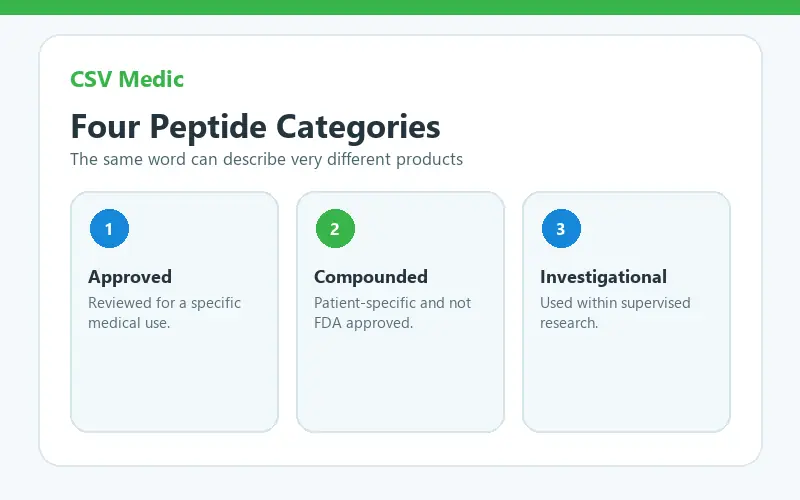
Peptide therapy is a broad term, not one treatment. It can describe established medicines such as insulin and certain GLP-1 drugs, investigational compounds being studied in clinical trials, compounded preparations made for a specific patient, or unapproved products sold online. Those categories do not have the same evidence, quality controls, or legal status.
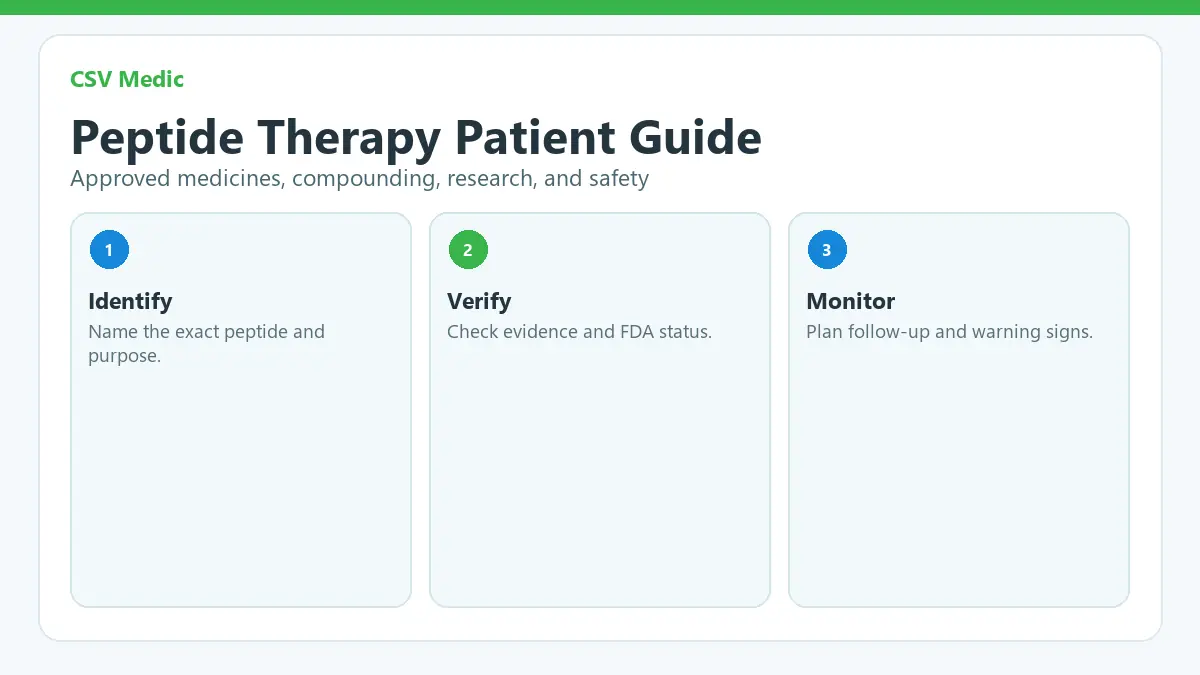
For a patient, the useful question is not simply whether peptide therapy works. The better questions are: which peptide, for which diagnosis, supported by what human evidence, supplied through which regulated pathway, and monitored by whom? This guide explains eleven safety facts that help patients separate legitimate peptide medicines from marketing claims.
What Is Peptide Therapy?
Peptides are short chains of amino acids that can act as signals in the body. Peptide therapy uses a specific peptide or peptide-like medicine to influence a biological target. Some treatments replace a missing hormone; others activate or block a receptor. Because the phrase covers many unrelated drugs, the risks and benefits of one peptide injection cannot be applied to another.
The scientific history is substantial. A PubMed review notes that dozens of peptide drugs have reached major markets, while many more candidates remain in development. Most therapeutic peptides have traditionally been given by injection because digestive enzymes can break them down and oral absorption is difficult. Our introductory article on what peptides are provides the basic biology behind that distinction.
Eleven Essential Peptide Therapy Safety Facts
1. The exact product matters
Peptide therapy should always be identified by the active ingredient, brand or formulation, indication, and source. ‘Peptides’ is too broad for a meaningful risk discussion. Insulin, semaglutide, liraglutide, cagrilintide, and KPV differ in target, evidence, approval status, and monitoring needs. A clinic should name the product before discussing expected results.
2. FDA approval is indication-specific
FDA-approved peptides have been evaluated for particular conditions and populations. Approval does not mean a drug is suitable for everyone, and it does not transfer to a different compound with a similar-sounding name. Patients can check Drugs@FDA and the current prescribing information. Our article on whether peptides are legal explains how approval, prescribing, compounding, and research use differ.
3. Peptide injections are not automatically stronger or better
Many peptide injections are used because proteins and peptides may be degraded in the digestive tract. Injection can improve delivery, but it also adds risks such as infection, bruising, incorrect technique, dosing errors, and improper storage. Peptide injection sites must follow the product label and clinical instructions; rotating or choosing a site should never be copied from an influencer. The route should match an approved label or a medically justified plan, not a belief that injectable products are always more effective.
4. Compounded peptide therapy is not FDA approved
Compounding can serve an individual patient when a licensed prescriber identifies a clinical need, but compounded drugs do not undergo FDA premarket review for safety, effectiveness, or quality. Patients should ask why an approved product cannot meet the need, which pharmacy is dispensing the preparation, and how strength and sterility are verified. A compounded label should not be presented as a generic equivalent of an approved medicine unless that claim is legally and scientifically accurate.
5. Research peptides are not patient medicines
A vial marked ‘research use only’ is not intended for self-injection. Online sellers may use laboratory terminology while showing body-composition claims, testimonials, or dosage charts. That combination can blur the boundary between research material and a drug. The FDA has warned about unapproved products marketed for human use, particularly when quality and safety cannot be verified.
6. Peptide therapy for weight loss requires diagnosis and monitoring
Some approved peptide-based medicines can support chronic weight management for eligible patients. They still require a review of BMI, weight-related conditions, pregnancy plans, gastrointestinal history, other medications, and contraindications. A medical weight loss consultation should also cover nutrition, activity, sleep, muscle preservation, and follow-up rather than focusing only on the injection.
7. Peptide injections for weight loss are not interchangeable
Patients sometimes use ‘GLP-1’ and ‘weight loss peptide’ as if every product were the same. Semaglutide, tirzepatide, liraglutide, and investigational combinations have different indications, titration schedules, contraindications, and trial data. Switching or combining peptide injections without medical direction can increase adverse effects and make it difficult to know which treatment caused a problem.
8. Side effects depend on mechanism and patient factors
Common adverse effects of some metabolic peptide medicines include nausea, vomiting, diarrhea, constipation, abdominal discomfort, and injection-site reactions. Other peptide therapy products can have completely different concerns. A responsible plan explains common effects, serious warning signs, drug interactions, and what to do when symptoms occur. Review our GLP-1 prescription guide for weight-management screening questions.
9. Monitoring should match the treatment
Follow-up may include weight trends, waist measurements, blood pressure, symptoms, hydration, medication adherence, glucose data, kidney or liver tests, and nutritional status. Peptide therapy near me searches often lead to clinics with very different care models. Location is less important than licensed oversight, transparent sourcing, urgent-care instructions, and access to follow-up.
10. Testimonials are not clinical evidence
Before-and-after photos and influencer stories cannot show what else changed, whether the product was authentic, or how many people had no benefit. High-quality evidence compares groups, defines outcomes, reports adverse events, and follows participants over time. Personal experience can help a patient prepare questions, but it should not determine treatment on its own.
11. Lifestyle support remains part of treatment
Even when an approved medicine is appropriate, peptide therapy does not replace adequate protein, resistance exercise, sleep, hydration, and management of contributing conditions. Weight loss can include lean tissue as well as fat. CSV Medic’s guide to peptides, muscle retention, and fat loss explains why preserving function matters alongside scale change.
Approved, Compounded, Investigational, and Research Products
| Category | What it means | Patient question |
|---|---|---|
| FDA approved | Reviewed for a defined indication | Is this approved for my diagnosis? |
| Compounded | Prepared for a patient under compounding rules | Why is compounding medically necessary? |
| Clinical trial | Investigational use under a research protocol | Is the study registered and who oversees it? |
| Research use only | Laboratory material, not a patient prescription | Why is this being marketed for self-use? |
These categories help patients evaluate peptide therapy without assuming that every product sold by a clinic or website is equivalent. When a proposed treatment is investigational, the consent process should state that clearly. When it is compounded, the prescriber should explain the patient-specific reason and the limits of FDA review.
What Happens at a Peptide Therapy Consultation?
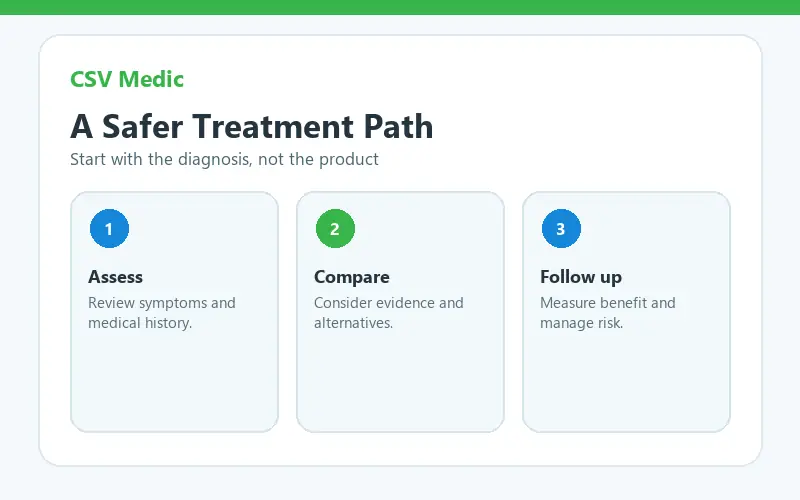
- Clarify the symptom or diagnosis being treated.
- Review previous treatments, allergies, prescriptions, and supplements.
- Check pregnancy status and relevant medical history.
- Compare approved alternatives and the quality of supporting evidence.
- Explain expected benefits, common side effects, serious warnings, and cost.
- Create a follow-up plan with measurable goals and stopping rules.
A good consultation may conclude that peptide therapy is appropriate, that another treatment is better, or that more evaluation is needed first. The purpose is informed decision-making. Patients can review how CSV Medic’s process works before arranging an online assessment.
Frequently Asked Questions About Peptide Therapy
Is peptide therapy FDA approved?
Some individual peptide medicines are FDA approved for specific conditions; the general category is not. Ask for the exact product and indication, then verify its current label.
Are peptide injections safe?
Safety depends on the specific medicine, patient, dose, source, technique, and monitoring. An approved prescription used as directed has a different evidence base from an online research vial.
What is peptide therapy used for?
Approved peptide medicines are used in areas including diabetes, weight management, hormone replacement, fertility, osteoporosis, and cancer care. Other promoted uses may be investigational or unsupported.
How much does peptide therapy cost?
Cost varies by product, diagnosis, insurance, pharmacy, clinic services, and monitoring. Patients should ask for the full monthly cost and avoid paying before the treatment and approval status are clear.
How do I find peptide therapy near me?
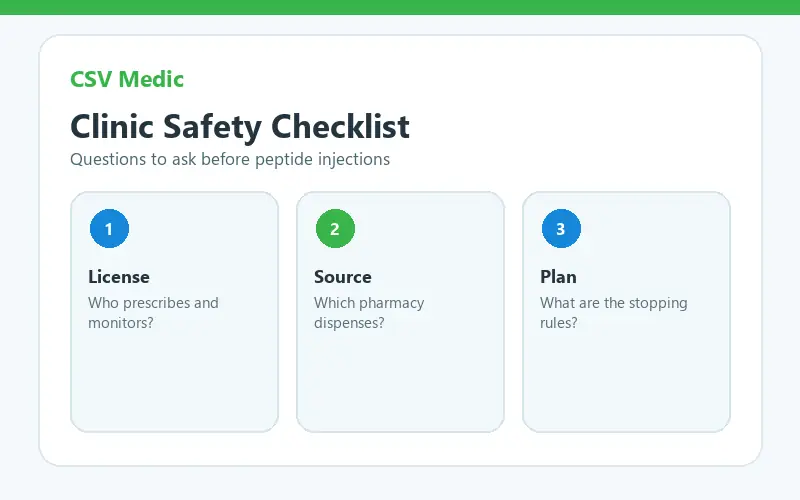
Look for a licensed clinician who names the product, explains evidence and approval status, uses a lawful dispensing pathway, and provides follow-up. Searches for peptide injections near me should be filtered by licensing and care quality; a nearby clinic is not automatically a qualified clinic.
Can peptide therapy help with weight loss?
Certain approved peptide-based medicines can help eligible patients manage weight. The best choice depends on diagnosis, contraindications, goals, coverage, and the ability to continue follow-up.
Can I buy peptide injections online?
Legitimate prescription medicines require an appropriate prescription and licensed pharmacy. Avoid products sold as research chemicals for self-injection or websites that skip medical screening.
The Bottom Line
Peptide therapy includes both valuable approved medicines and products with little human evidence. Patients can protect themselves by identifying the exact peptide, checking its current FDA status, asking why it fits the diagnosis, and confirming who will dispense and monitor it. The safest plan is specific, transparent, and willing to say when a popular peptide is not ready for routine patient care.
Medical Sources and Further Reading
The following independent medical and regulatory sources support the clinical and safety information in this article:
- PubMed: Critical review of approved peptide therapeutic products
- PubMed: Therapeutic peptide development trends
- FDA: Drugs@FDA approved drug database
- FDA: Human drug compounding information
- ClinicalTrials.gov: Registered clinical studies
About the Author and Medical Review
This article was medically reviewed and published by the CSV Medic editorial team in collaboration with licensed healthcare providers specializing in weight management. CSV Medic content is developed under the guidance of medical professionals and checked against current regulatory information, prescribing information, and peer-reviewed research.
Medical Disclaimer
This article is for informational purposes only and does not constitute medical advice, diagnosis, or a prescription. Always consult a licensed healthcare provider before starting, stopping, or changing a medication or peptide product. Approval status, availability, insurance coverage, and individual suitability can change. Seek urgent medical care for severe or rapidly worsening symptoms.
