
Weight Loss Education, Weight Loss Medication
Are Peptides Legal? 9 Essential FDA Safety Facts

Jun
Are peptides legal? That question is becoming more common because peptides are now discussed everywhere: health podcasts, TikTok clips, wellness clinics, men’s health interviews, and weight loss videos. Some online content talks about belly fat, insulin sensitivity, muscle retention, healing, sleep, fertility, testosterone, and GLP-1 medications as if every peptide works the same way.
The truth is more careful. Are peptides legal depends on the specific peptide, whether it is FDA-approved, whether it is prescribed for an appropriate medical reason, whether it is compounded lawfully, and whether the source is a licensed pharmacy. A peptide can be medically useful in one setting and risky or illegal in another.
This guide explains how patients should think about peptide legality, especially when online videos make big claims about peptides for weight loss, peptides for belly fat, and research peptides for weight loss.
Are Peptides Legal? The Quick Patient Answer
Are peptides legal in the United States? Some are. Some are not. Some are legal only with a prescription, and some are still investigational or sold in ways that patients should avoid.
A simple way to understand it is this: are peptides legal is not answered by the word "peptide" alone. Insulin is a peptide hormone. Tirzepatide is a peptide-based medication used in FDA-approved products. Other peptides may be used in research but not approved for patient treatment.
So when patients ask are peptides legal, the better question is: which peptide, for what purpose, from what source, and under whose supervision?
Why Peptides Are Trending After Viral Videos
Recent peptide videos often make peptides sound like a hidden shortcut for fat loss, healing, performance, or anti-aging. That is why more patients are asking are peptides legal before they even understand what the treatment is.
The problem is that viral content can blend several categories together. FDA-approved peptides, compounded peptides, research peptides, cosmetic peptides, and investigational drugs are not the same thing.
Some videos mention peptides for belly fat or peptide belly fat claims. Patients should be careful with that language. No treatment should be presented as a guaranteed way to "target" belly fat without a medical evaluation. Weight loss, abdominal fat, appetite, muscle preservation, and metabolic health are complex. A good provider should explain what is proven, what is still being studied, and what may not be appropriate.
FDA Approved Peptides vs Research Peptides

Are peptides legal when they are FDA-approved? Generally, FDA-approved medications can be legally prescribed when a licensed provider determines they are appropriate and the patient receives them from a legitimate pharmacy.
FDA approved peptides are different from research peptides. FDA-approved drugs have gone through a review process for safety, effectiveness, quality, labeling, and manufacturing standards. Research peptides are usually not approved for human treatment and may be labeled "for research use only" or "not for human consumption."
That wording matters. If a product is sold as a research peptide but marketed to patients with dosing instructions, that can create serious safety and legal concerns. The FDA has warned about unapproved GLP-1 products sold directly to consumers, including products labeled for research purposes.
Patients asking what peptides are FDA approved should focus on real prescription products, not social-media claims. Patients asking which peptides are FDA approved should also remember that approval is tied to a specific drug, dose, condition, and label. A peptide being discussed online does not mean it is approved for weight loss.
Are Peptides Legal in the US?
Are peptides legal in the US? The answer depends on the category.
Prescription peptide medications can be legal when prescribed correctly. Compounded peptides may be legal only when they meet specific compounding rules and a patient has a medical need that cannot be met by an FDA-approved drug. Research peptides sold online for human use are a warning sign.
This is why are peptides legal is not the same as "can I buy peptides online?" Online access does not prove legality, purity, sterility, correct dosing, or medical suitability.
Patients should be cautious when a website sells injectable peptides without a proper medical intake, prescription review, pharmacy information, storage instructions, or follow-up access to a licensed clinician.
Peptides for Weight Loss and FDA Status
Peptides for weight loss are one of the biggest reasons this topic is trending. The phrase peptide for weight loss can refer to several different things, including GLP-1 medications, GIP/GLP-1 medications, investigational options, compounded products, and unapproved online products.
Some weight loss peptides have strong clinical evidence when they are part of FDA-approved medications. For example, the FDA approved Zepbound, which contains tirzepatide, for chronic weight management in eligible adults with obesity or overweight and at least one weight-related condition. A tirzepatide peptide discussion should always separate FDA-approved use from unapproved versions sold online.
Other topics, such as retatrutide weight loss, are still investigational. Retatrutide is being studied, but it is not the same as an FDA-approved medication patients can simply order. The FDA has also stated that retatrutide and cagrilintide cannot be used in compounding under federal law.
This is why are peptides legal needs to be asked before asking what are peptides for weight loss or best peptides for weight loss. The best option is not the trendiest option. It is the option that is medically appropriate, legally available, properly prescribed, and monitored.
Are Weight Loss Peptides FDA Approved?
Are weight loss peptides FDA approved? Some peptide-based medications are FDA-approved for weight management. Others are approved for different medical conditions. Some are not FDA-approved at all.
FDA approved peptides for weight loss should be discussed with a provider who can review BMI, health history, medications, contraindications, labs, pregnancy plans, side-effect risk, and realistic goals.
Patients should be careful with research peptides for weight loss and compounded peptides for weight loss. These phrases can sound medical, but they do not automatically mean a product is approved, safe, or legal for patient use.
GLP-1 peptides for weight loss are often discussed online, but patients need to know whether they are receiving an FDA-approved medication, a lawful compounded medication, or an unapproved product. That difference can affect safety, dose accuracy, storage, side effects, and legal risk.
Compounded Peptides: What Patients Should Know
Are peptides legal when compounded? Sometimes, but not always. Compounding can serve a real medical need when an FDA-approved product cannot meet a patient’s needs. The FDA explains that compounded drugs are not FDA-approved, meaning the agency does not review them for safety, effectiveness, or quality before marketing.
Compounded peptides should come from properly licensed sources and should be prescribed only when appropriate. Patients should be cautious if a seller claims a compounded product is "the same as" an FDA-approved medication, offers deep discounts, avoids medical screening, or cannot identify the pharmacy.
Compounded peptides are not the same as generic drugs. They also are not automatically safer because they are marketed by a wellness clinic or telehealth brand. A patient should ask who made the product, whether the pharmacy is licensed, how the dose is measured, how the product is stored, and who is available if side effects occur.
Are Peptides Illegal If Sold Online?
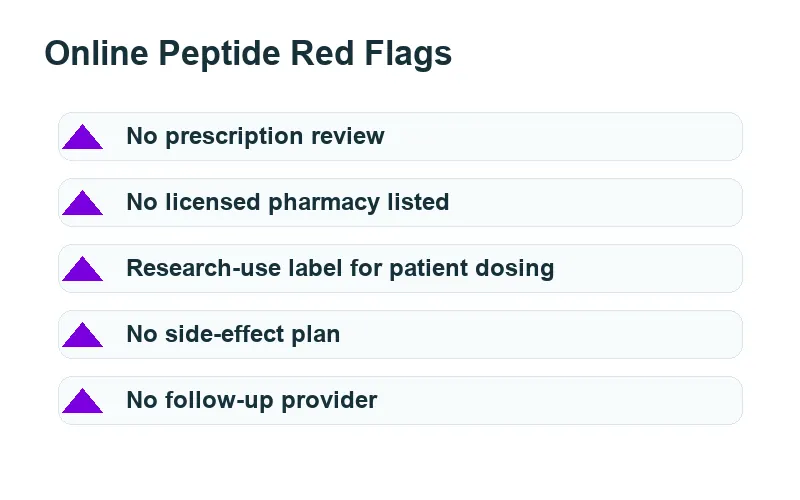
Are peptides illegal when sold online? Some online sales may be legal, but many peptide offers are risky. The internet is full of products that look medical but may be unapproved, mislabeled, contaminated, underdosed, overdosed, or sold without proper screening.
This is especially important with injectable products. If a website sells injectable peptides without requiring a prescription, patient review, or licensed pharmacy dispensing, patients should pause.
The FDA has warned consumers about unapproved GLP-1 drugs used for weight loss and has noted concerns with illegal online sales, counterfeit products, dosing errors, and products falsely labeled for research use.
So when a patient asks are peptides legal, the safest answer is: do not judge legality by whether a checkout page exists. Judge it by approval status, prescription status, pharmacy legitimacy, and medical supervision.
Peptides, Belly Fat, Insulin, and Muscle Claims
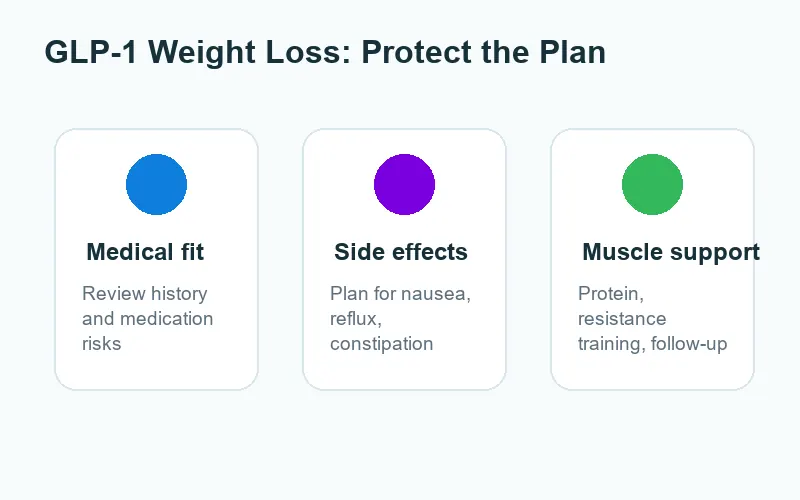
Many videos discuss peptides for belly fat, peptides and insulin sensitivity, GLP-1 muscle loss, and peptides for muscle retention. These are real patient questions, but they require careful answers.
Tesamorelin belly fat searches are common because tesamorelin has been used for a specific medical condition involving excess abdominal fat in adults with HIV-associated lipodystrophy. That does not mean tesamorelin is a general belly-fat treatment for everyone.
Peptides and insulin sensitivity may be relevant in discussions about metabolic health, but different peptides act through different pathways. Some affect appetite. Some affect glucose regulation. Some are being studied for other effects. Patients should not assume one peptide has every benefit mentioned in a video.
GLP-1 muscle loss is also an important discussion. Rapid weight loss can involve loss of lean mass if nutrition, resistance training, protein intake, and medical follow-up are not addressed. Peptides for muscle retention should not be used casually as a shortcut. Patients on weight loss medications should ask about preserving muscle during treatment.
Patients also search for a list of peptides and what they do, but that kind of list can be misleading without legal context. Are peptides legal should come before comparing benefits. GLP-1 peptides for weight loss, GLP-1 muscle loss, and muscle-support claims all need the same careful review: are peptides legal for this use, are they appropriate for this patient, and are they being supplied through a legitimate medical pathway?
9 Safety Facts Before Considering Peptide Therapy
- Are peptides legal depends on the exact product, not the marketing name.
- Are peptides legal depends on whether the peptide is FDA-approved, investigational, compounded, or sold for research only.
- Are peptides legal depends on whether a licensed provider has reviewed your health history.
- Are peptides legal does not mean every online product is safe.
- Are peptides legal does not mean a peptide is right for every patient.
- Are peptides legal can change based on FDA rules, shortages, compounding restrictions, and product status.
- Are peptides legal is separate from whether the product has strong human evidence.
- Are peptides legal should be asked before discussing dose, price, or convenience.
- Are peptides legal should always be paired with: is this medically appropriate for me?
Questions to Ask a Provider
Before starting peptide therapy for weight loss, ask:
- Is this peptide FDA-approved for my condition?
- If it is compounded, why is compounding medically necessary?
- What pharmacy is dispensing it?
- What side effects should I watch for?
- What happens if I have nausea, vomiting, constipation, abdominal pain, or dehydration?
- How will we protect muscle during weight loss?
- Could this interact with my current medications?
- Should I avoid this if I am pregnant, planning pregnancy, or breastfeeding?
- How often will follow-up be needed?
These questions matter because weight loss peptide side effects can be serious for some patients. A safe plan should include dosing education, side-effect guidance, and a clear follow-up schedule.
Frequently Asked Questions
Are peptides legal?
Are peptides legal depends on the peptide, source, approval status, prescription status, and intended use. Some peptide medications are legal with a prescription. Research peptides sold for human use may create serious safety and legal concerns.
Are peptides legal in the US?
Are peptides legal in the US when they are used according to applicable drug laws, prescription rules, and pharmacy standards. Patients should avoid assuming that online availability means legal or safe access.
Are peptides illegal?
Some peptide products may be illegal when sold as unapproved drugs, marketed for human use without approval, or distributed without proper prescription and pharmacy oversight.
Are peptides FDA approved?
Some peptide-based medications are FDA-approved. Others are not. Patients should ask whether the exact medication, dose, and indication are FDA-approved.
What peptides are FDA approved?
What peptides are FDA approved depends on the medical condition. Some peptide-based drugs are approved for diabetes, chronic weight management, hormone-related conditions, or other uses. Approval should be checked by the exact product name and indication.
Do peptides really burn belly fat?
Peptides should not be viewed as guaranteed belly-fat burners. Some treatments may support weight loss or affect abdominal fat in specific medical settings, but patients need an individualized evaluation.
Are peptides safe for weight loss?
Are peptides safe for weight loss depends on the medication, dose, medical history, source, and monitoring. FDA-approved treatment under provider supervision is different from buying research peptides online.
What peptides are used for weight loss?
Weight loss peptides may include GLP-1 or related medications, such as semaglutide or tirzepatide products when prescribed appropriately. Other investigational peptides should not be treated like routine prescriptions.
What is the difference between approved peptides and research peptides?
Approved peptides have gone through regulatory review for a specific use. Research peptides are not approved for patient treatment and may have unknown quality, dosing, or safety risks.
Can peptides improve insulin sensitivity?
Some peptide-based medications can affect glucose regulation and appetite pathways, but the effect depends on the specific medication. Patients with diabetes, prediabetes, or insulin resistance should discuss treatment with a licensed provider.
Do GLP-1 medications cause muscle loss?
GLP-1 medications can lead to weight loss, and some lean mass may be lost during weight reduction. Patients should ask about protein intake, resistance training, and follow-up to help protect muscle.
What happens when you stop taking GLP-1 medications?
Some patients may regain weight after stopping medication, especially without a long-term nutrition, activity, and follow-up plan. Stopping should be discussed with a healthcare provider.
Are compounded peptides safe?
Compounded peptides are not FDA-approved. They may be appropriate in limited medical situations, but patients should understand pharmacy quality, dosing, storage, and monitoring.
Should patients use research peptides?
Patients should not use research peptides for self-treatment. Products labeled for research use may not be reviewed for human safety, effectiveness, quality, or proper dosing.
Final Takeaway
Are peptides legal is the right question to ask before trusting any viral peptide claim. The safest path is not the fastest checkout page or the most dramatic online promise. It is a careful review of FDA approval status, prescription requirements, pharmacy source, medical history, and follow-up care.
If you are considering a peptide for weight loss, start with a licensed medical consultation. Ask what is approved, what is investigational, what risks apply to you, and how treatment will be monitored over time.
This article is for informational purposes only and does not replace medical advice. Always speak with a licensed healthcare provider before starting, stopping, or changing any medication or peptide-based treatment.
