
Weight Loss Education, Weight Loss Medication
Peptide for Weight Loss: 9 Essential Facts to Know

Jun
Many patients searching for a peptide for weight loss are not looking for hype. They are trying to understand what these treatments are, why they are being discussed so often, and whether any option may be appropriate for their health situation.
The word “peptide†can sound technical, but the idea is simple. Peptides are short chains of amino acids that can act like signals in the body. Some medications used in medical weight loss are peptide-based or peptide-like therapies because they interact with hormone pathways involved in appetite, fullness, blood sugar, and digestion.
That does not mean every peptide-based option is safe, legal, approved, or right for every patient. Some options are FDA-approved prescription medications. Others are investigational and still being studied in clinical trials. Some products sold online may be labeled as “research peptides,†which can create confusion for patients who are simply trying to find safe care.
This guide explains the popular weight loss peptide conversation in plain language, including GLP-1 medications, tirzepatide, cagrilintide, retatrutide, peptide injections for weight loss, common safety concerns, and questions to ask before treatment.
9 Essential Facts Before Considering a Peptide for Weight Loss
- A peptide for weight loss is not one single product. A peptide for weight loss can refer to different medication classes, pathways, and approval statuses.
- A peptide for weight loss should be reviewed through a medical lens. A peptide for weight loss may affect appetite, digestion, blood sugar, hydration, and medication tolerance.
- A peptide for weight loss can be FDA-approved, prescription-only, investigational, or marketed online as a research product. A peptide for weight loss should not be judged by popularity alone.
- A peptide for weight loss may involve GLP-1, GIP, amylin, glucagon, or related hormone pathways. A peptide for weight loss is safest when the pathway and risks are clearly explained.
- A peptide for weight loss may cause side effects. A peptide for weight loss plan should include instructions for nausea, constipation, reflux, dehydration signs, and severe symptoms.
- A peptide for weight loss should fit the patient’s health history. A peptide for weight loss may not be appropriate for every person with the same weight goal.
- A peptide for weight loss is not a replacement for nutrition, movement, sleep, and follow-up. A peptide for weight loss works best inside a broader care plan.
- A peptide for weight loss should come from a safe, legal, and medically appropriate source. A peptide for weight loss sold without screening can create unnecessary risk.
- A peptide for weight loss should lead to better questions, not rushed decisions. A peptide for weight loss conversation should include benefits, side effects, approval status, and monitoring.
Peptide for Weight Loss Patient Checklist
- Ask whether the peptide for weight loss is FDA-approved for your situation.
- Ask whether the peptide for weight loss is prescription-only or investigational.
- Ask how the peptide for weight loss may affect appetite and digestion.
- Ask which side effects are common with the peptide for weight loss.
- Ask which symptoms require urgent care while using a peptide for weight loss.
- Ask whether your current medications interact with the peptide for weight loss.
- Ask whether lab monitoring is needed before or during a peptide for weight loss plan.
- Ask what follow-up schedule is recommended with the peptide for weight loss.
- Ask what happens if the peptide for weight loss is not tolerated.
- Ask how long a peptide for weight loss plan should be reviewed before changing direction.
How to Compare a Peptide for Weight Loss Safely
- Compare a peptide for weight loss by approval status first.
- Compare a peptide for weight loss by medical fit, not trend value.
- Compare a peptide for weight loss by side-effect profile.
- Compare a peptide for weight loss by follow-up needs.
- Compare a peptide for weight loss by whether it has published clinical evidence.
- Compare a peptide for weight loss by whether the source is medically appropriate.
- Compare a peptide for weight loss by whether dosing instructions are clear.
- Compare a peptide for weight loss by whether it can be monitored safely.
- Compare a peptide for weight loss by whether your provider understands your history.
- Compare a peptide for weight loss by whether it supports a realistic long-term plan.
- Compare a peptide for weight loss by whether it fits your risk factors.
- Compare a peptide for weight loss by whether it is being used for the right reason.
What Is a Peptide for Weight Loss?
A peptide for weight loss usually refers to a peptide-based treatment that may affect appetite, fullness, digestion, blood sugar, or metabolic signaling. In medical practice, the most familiar examples are GLP-1 receptor agonists and related medications.
GLP-1 is a hormone involved in appetite regulation and blood sugar control. Some prescription medications are designed to act like GLP-1 or affect related hormone pathways. These medications can help some patients feel full sooner, eat less, and improve metabolic markers when used with medical supervision, nutrition changes, and follow-up care.
The important point is that a weight loss peptide should not be treated like a simple supplement. It can affect digestion, blood sugar, medication tolerance, hydration, and other health factors. That is why medical review matters before starting any peptide therapy for weight loss.
How Peptides May Support Medical Weight Loss
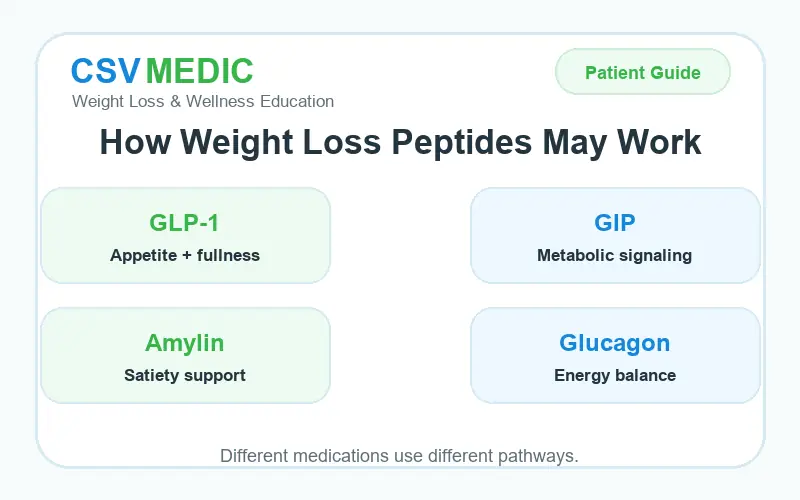
A weight loss peptide may work through one or more pathways, depending on the treatment. Some target GLP-1. Some target both GLP-1 and GIP. Some investigational medications also involve glucagon or amylin-related pathways.
These pathways may influence:
- Appetite and cravings
- Fullness after meals
- Gastric emptying
- Blood sugar response
- Insulin signaling
- Energy balance
- Weight-related metabolic markers
This is why patients may hear terms like GLP-1, GIP, glucagon, or amylin when researching weight loss peptide options. These are not interchangeable. Each pathway has a different role, and each medication has its own approval status, dose schedule, side-effect profile, and monitoring needs.
Peptide Injections for Weight Loss: What Patients Should Know
Many patients search for peptide injections for weight loss because several well-known medications are given as injections. Some are weekly injections, while others may have a different schedule depending on the medication and indication.
Injection-based treatment does not automatically mean stronger, safer, or better. The right option depends on a patient’s health history, BMI, weight-related conditions, current medications, side-effect risk, and treatment goals.
Before considering peptide injections for weight loss, patients should know:
- Whether the treatment is FDA-approved for weight management
- Whether it is investigational
- Whether it requires a prescription
- What side effects are common
- What symptoms need urgent attention
- How follow-up and monitoring will work
If a website offers peptide injections without medical screening, prescription review, or follow-up, that is a warning sign. Safe medical weight loss should include provider guidance, not just access to a product.
GLP-1 Peptides and Weight Loss
GLP-1 receptor agonists are among the best-known treatments in the medical weight loss conversation. These medications mimic or activate GLP-1 signaling, which can help regulate appetite and blood sugar.
Semaglutide is one example of a GLP-1 medication used in weight management under specific brand names and indications, with major clinical research published in the New England Journal of Medicine. Liraglutide is another GLP-1 option that has been used for chronic weight management. These medications are not casual wellness products; they are prescription treatments with specific indications, warnings, and monitoring needs.
For many patients, the question is not simply, “Can I use a GLP-1?†A better question is: “Does my health profile make this type of treatment appropriate, and how will I be monitored?â€
Is Tirzepatide a Peptide?
Yes, tirzepatide is commonly described as a peptide-based medication. It works through both GIP and GLP-1 receptor pathways. The FDA approved Zepbound, which contains tirzepatide, for chronic weight management in adults with obesity or overweight with at least one weight-related condition, along with reduced-calorie diet and increased physical activity.
The FDA notes that Zepbound is given once weekly and can cause side effects such as nausea, diarrhea, vomiting, constipation, stomach discomfort, injection site reactions, fatigue, and reflux. It also carries important warnings, including thyroid C-cell tumor risk observed in animals and precautions for patients with certain medical histories.
For this reason, tirzepatide peptide searches should lead patients toward provider education, not self-treatment. Treatments that affect major hormone pathways should be used only when appropriate and medically supervised.
Cagrilintide Peptide
Cagrilintide peptide is another term patients may see while researching newer weight loss treatments. Cagrilintide is related to amylin signaling, a pathway involved in appetite and satiety. It has also been studied in combination with semaglutide in obesity and type 2 diabetes research.
The cagrilintide conversation is important because it shows that weight loss medication research is moving beyond GLP-1 alone. Some future treatment strategies may combine appetite and metabolic pathways to improve outcomes for certain patients.
However, patients should be careful with online claims. A product being discussed in studies does not mean it is appropriate to use without a licensed provider. When researching cagrilintide peptide, focus on clinical evidence, approval status, and safety monitoring.
Retatrutide Peptide
Retatrutide peptide is one of the most searched investigational topics in the weight loss space. Retatrutide is being studied as a triple hormone receptor agonist involving GLP-1, GIP, and glucagon pathways.
As of June 2026, retatrutide is still considered investigational and is not the same as an FDA-approved prescription weight loss medication available for routine prescribing. Patients searching “what is retatrutide peptide†or “is retatrutide a peptide†should understand that the research is promising, but approval status matters.
Clinical trial databases are the safest place to check current studies. Patients can review registered retatrutide obesity trials on ClinicalTrials.gov and discuss eligibility or alternatives with a licensed medical provider.
This matters because some online sellers use “retatrutide peptide†language to make an investigational treatment sound like a regular consumer product. That can be risky. Any investigational weight loss peptide should be evaluated through medical and legal channels, not only through sales pages.
What Is the Best Peptide for Weight Loss?
The best peptide for weight loss is not the same for every patient. It depends on medical history, current medications, weight-related conditions, side-effect tolerance, treatment goals, insurance access, and whether the option is approved or investigational.
For one patient, a GLP-1 medication may be appropriate. Another patient may need a different prescription medication or a nutrition-first plan before considering medication. Some patients may not be candidates for certain treatments because of medical history, pregnancy plans, pancreatitis history, gallbladder issues, severe gastrointestinal conditions, or medication interactions.
Instead of asking only, “What is the best peptide for weight loss?†patients should ask:
- Which options are approved for my situation?
- What benefits and risks apply to me?
- What side effects should I expect?
- What symptoms require urgent care?
- How often will follow-up happen?
- What happens if I cannot tolerate treatment?
This question-based approach is safer and more useful than choosing a medication based on popularity.
Popular Weight Loss Peptide Options at a Glance
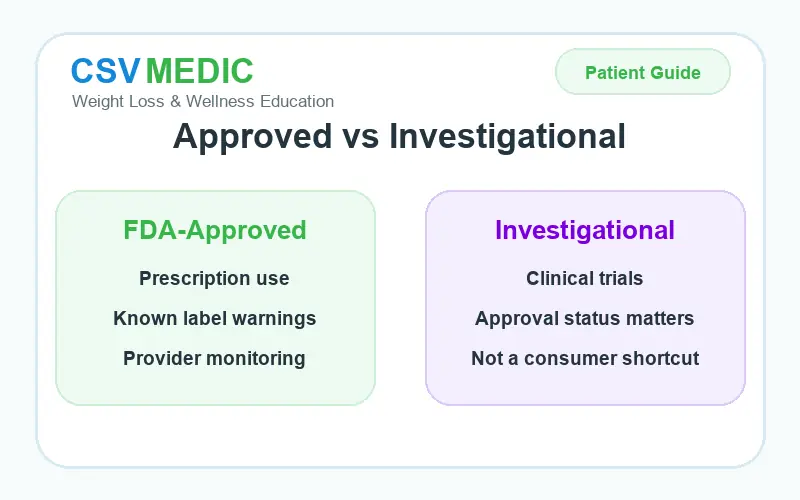
Patients often compare different names at once, which can make the search feel confusing. A helpful way to think about the topic is to separate approved prescription medications, investigational therapies, and general peptide wellness claims.
GLP-1 medications such as semaglutide and liraglutide have established roles under specific indications. Tirzepatide acts on GIP and GLP-1 pathways and has an FDA-approved weight management indication under Zepbound. Cagrilintide is connected to amylin signaling and remains part of a newer research and treatment conversation. Retatrutide is investigational and should be discussed in the context of clinical trials and future approval status.
If a patient is comparing peptide options, a provider may ask about BMI, blood sugar history, blood pressure, cholesterol, current prescriptions, pregnancy plans, prior medication tolerance, digestive symptoms, and family history. This is why the safest answer to “Which option is right?†usually starts with medical screening, not a product list.
Patients who want to understand the broader category can review CSV Medic’s weight loss peptide options and then discuss appropriate next steps through a licensed provider.
Peptide Therapy for Weight Loss: Medical Supervision Matters
Peptide therapy for weight loss should begin with a proper health review. A provider may review BMI, blood pressure, blood sugar, cholesterol, kidney function, liver markers, current medications, prior weight loss attempts, and personal or family medical history.
A responsible plan may include:
- Medical screening
- Medication review
- Nutrition guidance
- Side-effect education
- Follow-up visits
- Lab monitoring when appropriate
- Clear instructions for warning symptoms
This is where online weight loss consultation can be helpful when it is done properly. The goal should not be to push one treatment. The goal should be to determine whether peptide therapy for weight loss is appropriate and how to use treatment safely if prescribed.
If you are unsure where to begin, a medically supervised online weight loss consultation can help organize the conversation around safety, eligibility, and realistic expectations. The purpose is not to promise one result. The purpose is to match the patient with a plan that can be monitored.
Prescription Peptides vs Research Peptides
One of the biggest areas of confusion is the difference between prescription medications and research peptides. Prescription medications have regulated manufacturing, labeling, dosing instructions, safety warnings, and approved medical uses.
Research peptides may be sold online with disclaimers such as “not for human use.†Patients should be cautious. A product being available online does not mean it is safe, legal, sterile, correctly dosed, or appropriate for weight loss treatment.
This distinction is especially important for investigational products such as retatrutide. A patient may read about impressive clinical trial results, then find online sellers using similar language. That does not mean the product is approved or medically appropriate.
If you are considering any peptide-based therapy, ask a licensed provider whether the option is approved, appropriate, and safely sourced.
Some patients also need supplies or general medication support. If supplies are part of the care plan, they should come from a trustworthy source and be used only as instructed. CSV Medic’s shop can be used as a general reference point, but treatment decisions should always come from medical review.
Possible Side Effects and Safety Questions
Side effects depend on the medication, dose, patient history, and how treatment is started. Commonly discussed side effects with GLP-1 and related medications include nausea, vomiting, diarrhea, constipation, reflux, abdominal discomfort, appetite changes, and injection site reactions.
More serious concerns may include pancreatitis symptoms, gallbladder problems, dehydration, kidney concerns related to severe vomiting or diarrhea, low blood sugar risk when combined with certain diabetes medications, and worsening of some gastrointestinal conditions.
Patients should contact a healthcare provider quickly if they experience severe abdominal pain, repeated vomiting, fainting, signs of dehydration, allergic reaction symptoms, or anything that feels severe or unusual.
A medical weight loss plan should come with clear instructions for what to expect and what to do if symptoms appear.
What Questions Should Patients Ask Before Starting?
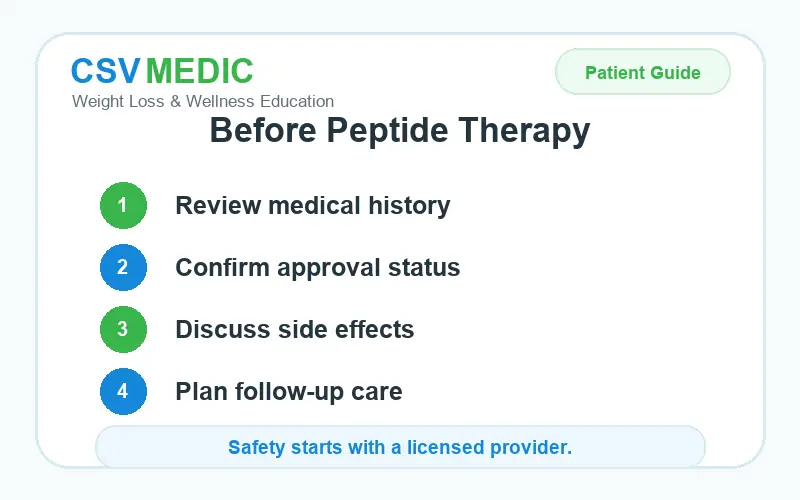
Before starting peptide therapy for weight loss, bring these questions to your provider:
- Is this medication FDA-approved for my condition?
- Is it prescription-only or investigational?
- What side effects are most common?
- What warning signs should I report urgently?
- Do my current medications increase any risks?
- Will I need lab monitoring?
- How often will follow-up happen?
- What nutrition plan should I follow?
- What happens if I miss a dose?
- What happens if I stop treatment?
These questions help turn a confusing topic into a safer care conversation.
Common Patient Questions About Weight Loss Peptides
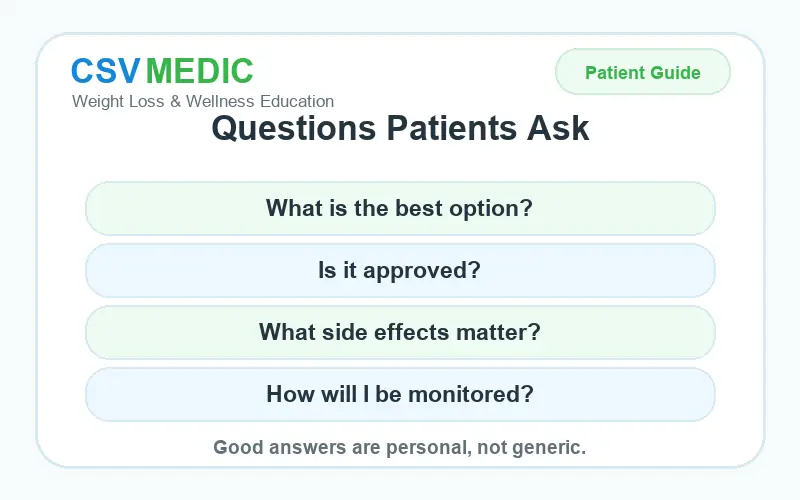
What peptide is best for weight loss? There is no single best choice for every patient. The best option depends on approval status, medical history, side-effect risk, access, and provider guidance.
What is peptide therapy? Peptide therapy refers to using peptide-based treatments to influence specific biological pathways. In weight management, this may involve appetite, fullness, glucose, or metabolic signaling.
Is tirzepatide a peptide? Yes. Tirzepatide is a peptide-based medication that acts on GIP and GLP-1 receptor pathways.
What is retatrutide peptide? Retatrutide is an investigational peptide-based medication being studied for obesity and metabolic conditions. It is not the same as an approved routine prescription product as of June 2026.
Is a peptide for weight loss safe? It depends on the treatment, source, approval status, dose, medical history, and monitoring plan. Safety should be reviewed with a licensed provider before treatment starts.
Frequently Asked Questions
What is a peptide for weight loss?
A peptide-based weight loss treatment may affect appetite, fullness, digestion, blood sugar, or metabolic signaling. Some options are FDA-approved prescription medications, while others are investigational.
Is tirzepatide a peptide?
Yes. Tirzepatide is a peptide-based medication that acts on GIP and GLP-1 receptor pathways. In the United States, tirzepatide is used under specific brand names and indications, including chronic weight management when prescribed appropriately.
What is retatrutide peptide?
Retatrutide peptide is an investigational treatment being studied for obesity and metabolic conditions. It acts on GLP-1, GIP, and glucagon pathways. As of June 2026, patients should treat retatrutide as investigational, not as a routine consumer product.
Is retatrutide a peptide?
Yes, retatrutide is a peptide-based investigational medication. The key issue for patients is not only what it is, but whether it is approved, legally available, and medically appropriate.
What peptide is best for weight loss?
There is no single best peptide for every patient. The best option depends on medical history, approval status, treatment goals, side-effect risk, and provider guidance.
Are peptide injections for weight loss safe?
They may be appropriate for some patients when prescribed and monitored by a licensed provider. Safety depends on the medication, source, dosing, health history, side-effect monitoring, and follow-up care.
How do I get peptide therapy for weight loss?
Start with a medical consultation. A provider can review your health history, current medications, goals, risks, and whether an approved treatment may be appropriate.
Bottom Line
Peptide-based treatment can be part of a medically supervised plan for some patients, but it should not be treated like a trend, shortcut, or simple online product. The safest path is to understand approval status, side effects, realistic expectations, and the need for follow-up.
Peptide therapy for weight loss is moving quickly, with GLP-1, GIP, amylin, and investigational triple-agonist pathways shaping the future of obesity treatment. But patients still need the same foundation: accurate information, licensed medical guidance, safe sourcing, and a plan that matches their body.
If you are comparing weight loss peptide options, use the conversation as a starting point for medical review. The right treatment is not just the one getting attention online. It is the one that fits your health profile and can be monitored safely.
About the Author
This article was medically reviewed and published by the CSV Medic editorial team in collaboration with licensed healthcare providers specializing in weight management and peptide therapy. CSV Medic’s content is developed under the guidance of medical professionals to support patient education and safe decision-making. All medical claims in this article are supported by regulatory information, clinical trial data, or peer-reviewed sources linked throughout the text.
Medical Disclaimer
This article is for informational purposes only and does not constitute medical advice. Always consult with a licensed healthcare provider before starting, stopping, or changing any medication. Individual results may vary. Some peptide-based treatments discussed in this article are FDA-approved for specific indications, while others are investigational and not approved for routine prescribing. If you are considering weight loss treatment, speak with a licensed medical provider who can review your health history, risks, and treatment options.
